Introduction
In the last two days of July 2026, the Spanish exclave of Ceuta in North Africa faced an unprecedented migrant surge. Approximately 50,000 migrants attempted to swim from Morocco into Spanish territory in a short period, an event that quickly escalated into a complex crisis involving humanitarian issues, border security, and political maneuvering.
How the Mass Crossing Unfolded
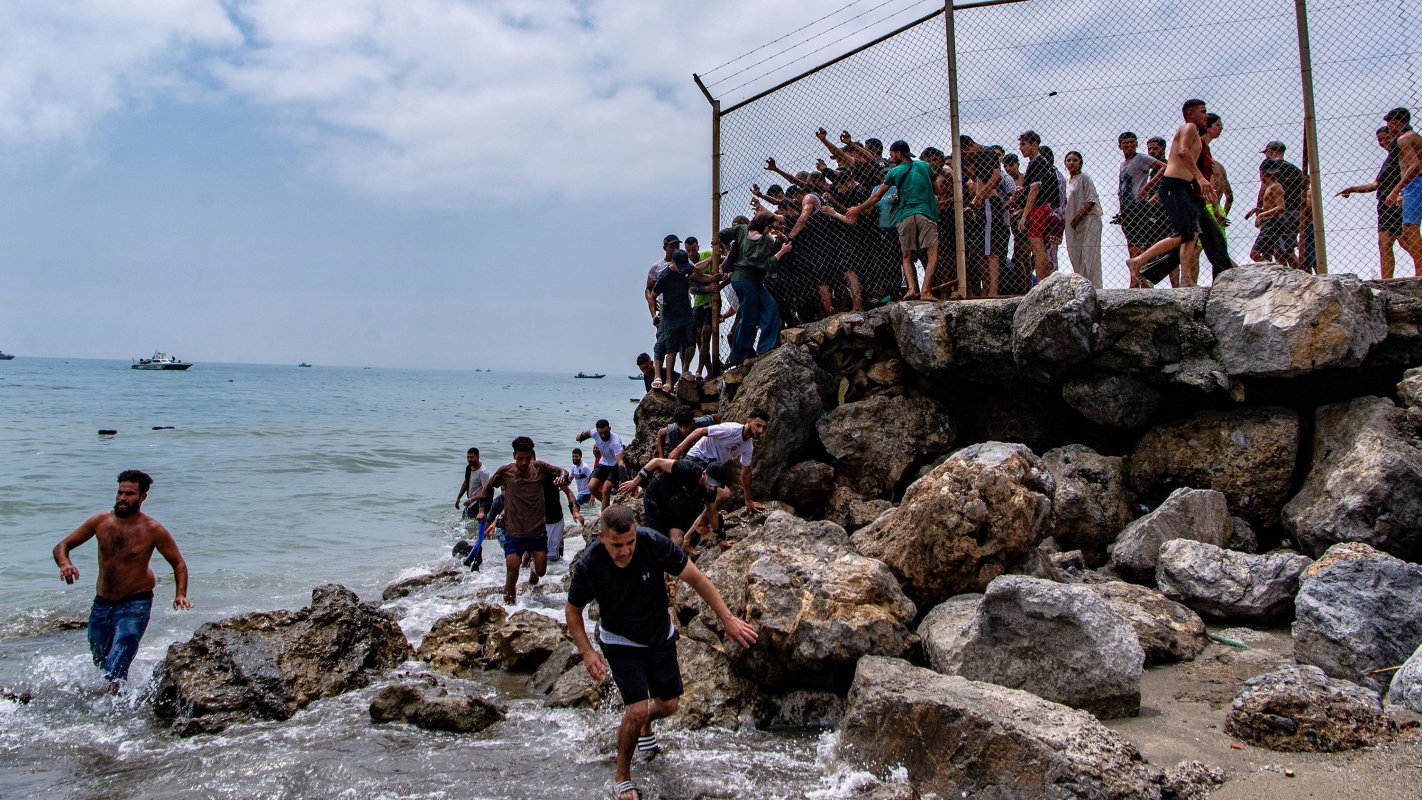
The event took place between July 30 and 31, 2026. Large groups of migrants gathered at the border between Ceuta and Morocco, particularly near Tarajal beach in the south. Instead of climbing the fortified land fences, they entered the water en masse, attempting to swim a few hundred meters around the breakwater to reach Ceuta.
According to analysis by the Spanish Ministry of the Interior, the event was highly organized. Human smuggling networks reportedly used social media platforms like TikTok and WhatsApp to spread false information about “relaxed border controls,” charging thousands of euros to incite and orchestrate the mass crossing. The vast majority of those who crossed were not Moroccan citizens but sub-Saharan African migrants who had been gathering in northern Morocco, originating from countries such as Mali, Senegal, Guinea, and Sudan.
Spain’s Response and the Political Game
In the aftermath, the Spanish government faced immense pressure. Then-Prime Minister Pedro Sánchez publicly condemned the act as an “assault on Spain’s territorial integrity.” However, Spain’s domestic political scene quickly devolved into finger-pointing. The opposition People’s Party (PP) blamed the Sánchez administration for its weak border policies. Ironically, the mayor of the autonomous city of Ceuta, Juan Jesús Vivas Lara, is himself a member of the PP, which complicated the accusations.
On the ground, Spain’s Civil Guard and army played a dual role. On one hand, they were responsible for enforcing border control and preventing migrants from entering. On the other, facing the perilous situation of countless people struggling in the sea, they also launched large-scale rescue operations, pulling many from the water.
Humanitarian Tragedy and the Aftermath
Despite the rescue efforts, the perilous crossing attempt ended in tragedy. According to official figures, Spanish authorities recovered the bodies of 57 victims along the coast of Ceuta. For the migrants who made it ashore, the reality was a stark contrast to the “European dream” promised by traffickers. They stayed briefly in the city of Ceuta, facing homelessness, and a lack of food and shelter.
Unable to obtain legal status or a way to travel to mainland Spain or other European countries, the vast majority of migrants eventually chose to return. According to data released by the Spanish government, of the approximately 50,000 who entered, 48,300 were gradually repatriated or voluntarily returned to Morocco. About 1,700 people remain unaccounted for, believed to have gone into hiding in Ceuta.
The EU’s Stance and Regional Impact
The Ceuta crisis quickly triggered a chain reaction at the EU level. Countries like Italy expressed concerns over border security and announced a temporary suspension of the Schengen Agreement, reinstating random border checks on travelers from Spain and putting immense pressure on the Spanish government. The EU officially did not offer to grant legal status to this group of migrants, holding firm to its existing border management principles.
This event once again highlighted the complexity of Europe’s migration issue. It is not merely a matter of border management but is deeply intertwined with humanitarian principles, national sovereignty, EU internal solidarity, and diplomatic relations with neighboring countries like Morocco. Against a backdrop of economic downturn and rising conservative sentiment, finding a balance between humanitarian compassion and effective control continues to test the wisdom and resolve of Spain and the entire European Union.
