Archaeological research in Spain has recently achieved a major breakthrough. Researchers have discovered a human skull fossil dating back over 200,000 years at the Ruidera archaeological site in the province of Ciudad Real, Castile-La Mancha. This significant finding has been published in the prestigious international academic journal, the Journal of Human Evolution, providing crucial new evidence for the study of human evolution in Europe during the Middle Pleistocene.
Key Discovery: The RVH-1 Skull Fossil
The newly discovered fossil has been officially designated RVH-1 and identified as a fragment of an ancient human’s parietal bone. This is the first human skull remain to be discovered and announced from the site.
To determine its precise age, the research team employed a combination of techniques, including Uranium-series dating and Optically Stimulated Luminescence (OSL), to cross-verify and analyze both the fossil and its surrounding sediments. The results indicate that the skull fossil is at least 200,000 years old, placing it in the Middle Pleistocene geological epoch.
Challenging Traditional Views: A Non-Linear Evolution
The most significant scientific value of the RVH-1 fossil lies in its morphological features. Studies show that the skull preserves some anatomical traits more primitive than those of other contemporary European hominins. This phenomenon suggests that human evolution on the European continent at that time was not a simple, linear process.
Traditional views have tended to favor a single evolutionary path for European hominins. However, the existence of RVH-1 strongly implies a more complex scenario over 200,000 years ago in Europe, where multiple hominin groups at different evolutionary stages, and possibly from different lineages, coexisted for extended periods. This demonstrates that human evolution in Europe was a diverse and complex process.
The Ruidera Site: A New Focus in Inland Spain
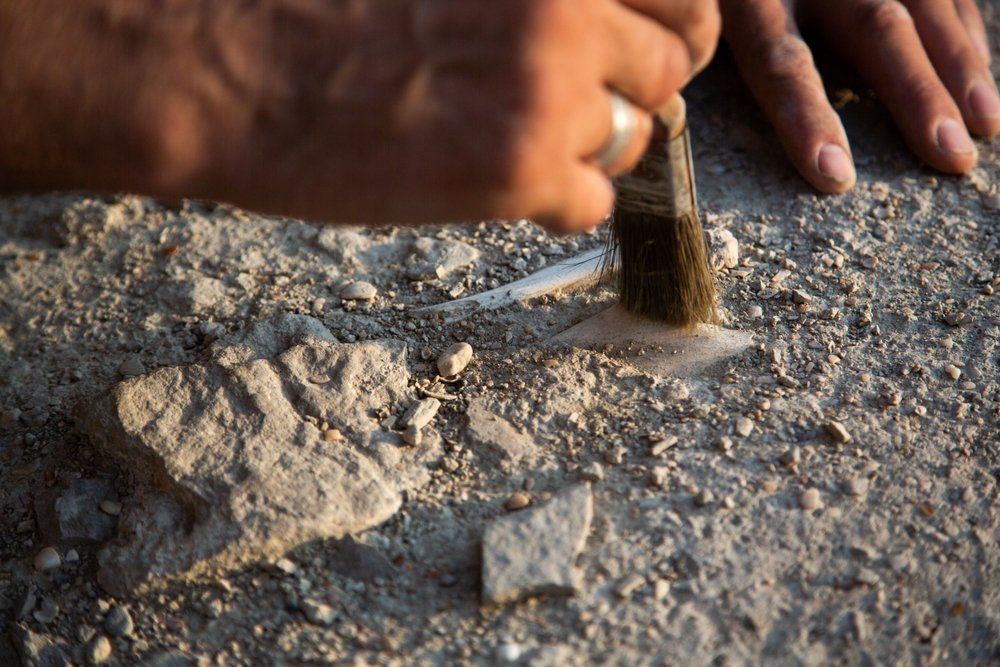
Prior to this discovery, the Ruidera site had already garnered attention for its wealth of animal fossils, stone tools, and other traces of ancient human activity. The unearthing of the first human skull fossil has significantly elevated the site’s scientific value, establishing it as another crucial location for studying human evolution in the Middle Pleistocene of Europe.
Researchers point out that this finding fills a significant gap in the hominin fossil record for inland Spain during this period. With its immense archaeological potential, the Ruidera site is poised to become another top-tier paleoanthropological research center in Spain and internationally, following the legacy of the UNESCO World Heritage site of Atapuerca.
Future Prospects: Uncovering More Ancient Secrets
Currently, the archaeological team is continuing systematic excavations at the Ruidera site. Researchers are optimistic about future discoveries, believing this skull fossil may just be the ‘tip of the iceberg’.
As excavations progress, there is hope of finding more complete hominin fossils and related artifacts. This new evidence will provide more crucial clues to unveil the migration routes, lifestyles, technological levels, and complex evolutionary network of European hominins 200,000 years ago, contributing significantly to solving the puzzle of human origins and evolution.
