Ceuta Crisis Sparks Internal EU Divisions After Nearly 70,000 Migrants Return to Morocco
Two days after the mass border crossing, the Spanish autonomous city of Ceuta in North Africa is slowly returning to order. However, the political fallout from this humanitarian crisis is spreading across Europe, directly challenging the Schengen Area’s principle of free movement.
Order Restored in Ceuta as Border is Reinforced
According to data released by the Spanish government on the morning of Saturday, August 1, approximately 69,500 migrants have since returned to Morocco. This figure is higher than the number who crossed on a single day, July 30 (estimated at 50,000 by Spain’s Ministry of the Interior and 60,000 by Ceuta’s local government), as it includes individuals who entered earlier in the week and have since returned. For a city with a permanent population of only about 80,000, the recent migrant surge had brought it to a standstill.
With most of the migrants having left, commercial activity in Ceuta is beginning to recover. Shops that had closed since July 30 started reopening on August 1, although the local business federation has urged everyone to “remain cautious.” To reassure the public, security forces have deployed additional police officers throughout the city.
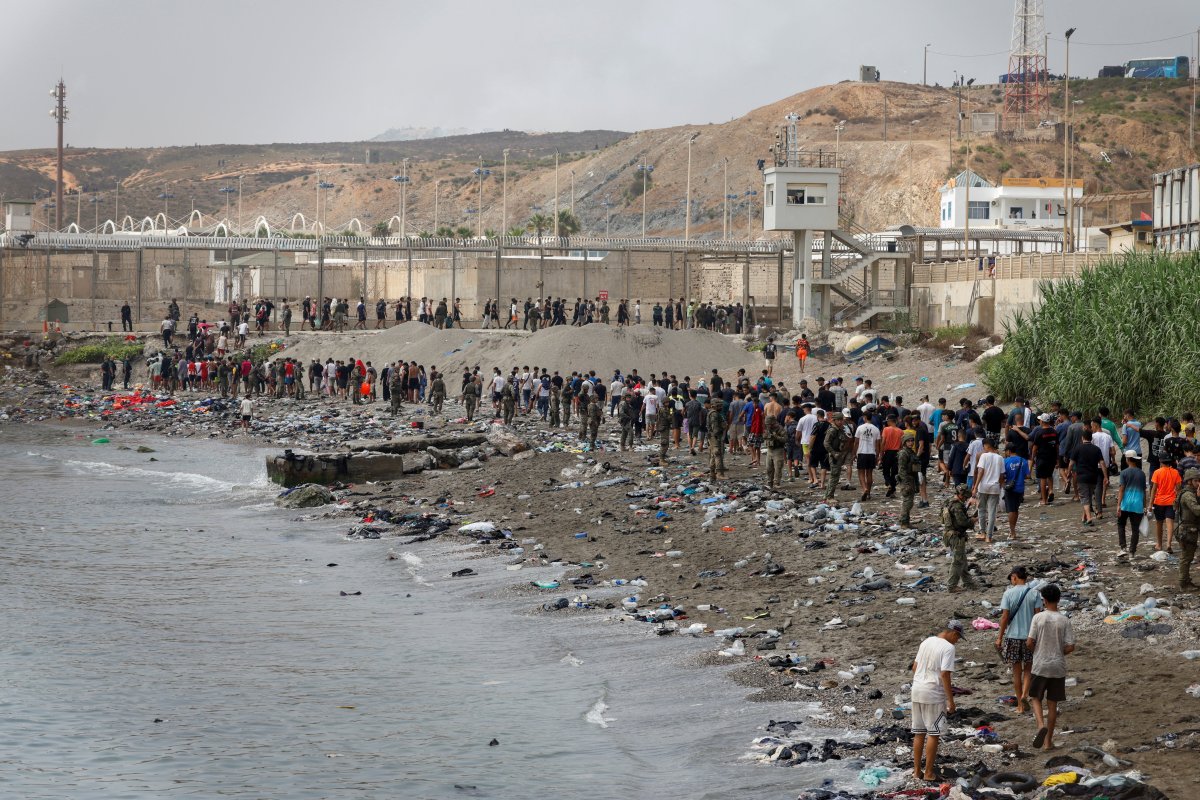
Meanwhile, Spain is reinforcing its border infrastructure. Workers have installed new anti-climb mesh barriers in the Tarajal breakwater area to prevent migrants from entering again by swimming or walking around the fence. Tragically, the death toll from the crisis continues to rise, with the bodies of 67 victims recovered from the nearby waters to date.
Crisis Spillover: Schengen’s Free Movement Principle Challenged
While the streets of Ceuta are gradually calming, a political storm over EU border security has been brewing. The Italian government was the first to announce it would implement temporary border checks on travelers from Spain, a move supported by countries like Finland, Denmark, and Sweden. These nations are concerned that migrants who entered Ceuta could travel to mainland Spain and then move on to other European countries through the Schengen Area’s open borders.
The Spanish government has strongly refuted this. Interior Minister Fernando Grande-Marlaska emphasized that the migrants have not been authorized to travel to the Iberian Peninsula and that Ceuta itself is not fully subject to the Schengen free movement rules. He argued that some countries are using the crisis to question Spain’s Schengen membership, exaggerating the event’s impact for political purposes.
Spain Seeks EU Support Amid Mixed Reactions from Member States
As the dispute escalates, Spanish Prime Minister Pedro Sánchez has written to European Commission President Ursula von der Leyen, expressing “grave concern” over the “aggressive” rhetoric from some member states. In his letter, Sánchez stated that Spain, as a guardian of the EU’s southern border, has not received the support it deserves while under immense pressure. Instead, it has faced unjust accusations and threats of exclusion, which he suggested may stem from “prejudice, disinformation, or political interests.”
However, the EU has not formed a united front on the issue. French Interior Minister Laurent Nuñez has clearly opposed suspending Spain’s Schengen membership, stressing the two countries’ good cooperation on controlling irregular migration. Estonian Interior Minister Igor Taro also voiced his opposition, calling such a move tantamount to a “betrayal” of an ally and comparing the crisis to the geopolitical pressures previously faced by the Baltic states.
Although social life in Ceuta is returning to normal, the reinforced border and the heated debate among European nations indicate that the far-reaching consequences of this crisis, which began on Spain’s North African coast, are far from over.
