Crisis Aftermath: A High Humanitarian Cost and Security Upgrades
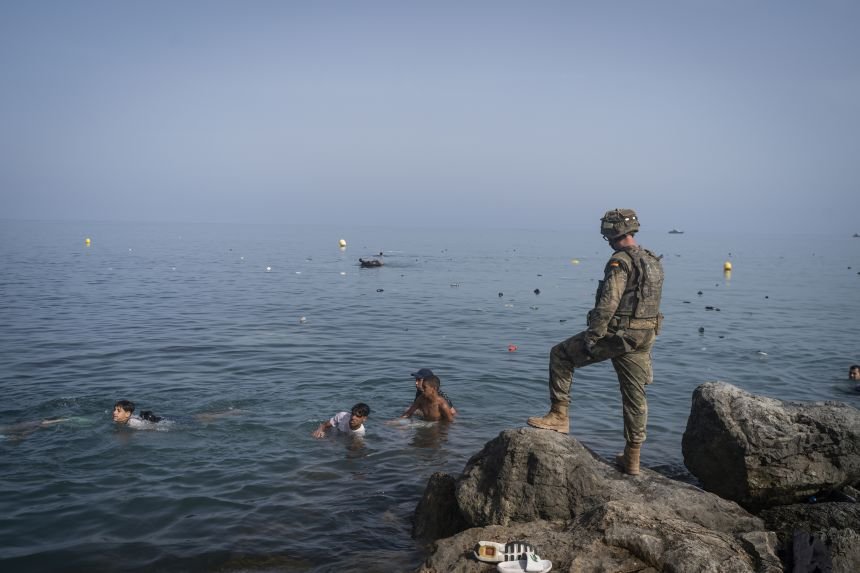
Following the massive migrant influx into the Spanish autonomous city of Ceuta on July 30, social order is slowly being restored, but at a heavy cost. According to a central government report in early August, approximately 73,500 migrants have been repatriated from Ceuta to Morocco. However, the humanitarian tragedy of the crisis continues to unfold, with the official death toll rising to 72. The Spanish Civil Guard Association estimates the actual number of fatalities could exceed one hundred, as body identification is hampered by a lack of reports from families.
To prevent a recurrence, Spanish authorities have implemented strict border reinforcement measures. In the critical Tarajal breakwater area, a 500-meter-long, 1.7-meter-high inflatable maritime barrier has been deployed and is fully operational. This barrier, along with naval buoys and continuous patrols by the Civil Guard, forms a new multi-layered defense line. Additionally, around 3,000 security personnel from the National Police, Civil Guard, and the military have been stationed in Ceuta and will remain for as long as necessary. The border with Melilla, which was temporarily closed, has since reopened, currently prioritizing vehicle traffic for ‘Operation Crossing the Strait’ (Operación Paso del Estrecho).
Diplomatic Storm: Isolation and Division Within the EU
The border crisis quickly escalated into a diplomatic storm across Europe, putting Spain on the defensive. A coalition of 22 EU member states, led by Italy, Germany, and Denmark, sent a joint letter to Spain questioning its immigration policy and suggesting its response was the root cause of the crisis. In response, Spain’s Minister of the Interior, Fernando Grande-Marlaska, dismissed the accusations from EU partners as ‘selfish’ and blamed the incident on human trafficking rings. Meanwhile, Spanish Prime Minister Pedro Sánchez, alongside the Interior Minister, publicly praised Morocco as an ‘absolutely reliable partner,’ aiming to strengthen ties with the southern neighbor amidst pressure from within the EU.
Some EU countries have taken unilateral action. Italy announced it would implement checks on non-EU citizens arriving from Spain. France, while reinforcing its border police, has stated it will not suspend the Schengen Agreement. EU interior ministers have scheduled an emergency video conference to coordinate their positions, but divisions among member states are already apparent.
Humanitarian Plight: Stranded Migrants and a Battered City
Despite the mass repatriations, the humanitarian situation in Ceuta remains critical. The President of the Autonomous City of Ceuta, Juan Jesús Vivas, stressed that the city has ‘not yet returned to normal,’ with ‘thousands’ of people still stranded on the streets. These migrants face shortages of food and shelter. While some have opted to return to Morocco, many others have chosen to hide in alleys or nearby hills, unwilling to leave.
During this period, authorities have provided over 1,149 instances of medical assistance to migrants. However, the crisis has dealt a severe blow to Ceuta’s socio-economic fabric. Commercial activity came to a standstill, with many shops closing due to panic and chaos. The government is now exploring economic aid packages to support affected local businesses.
International Concern and Domestic Political Pressure
The impact of the Ceuta crisis has extended beyond Spain and the EU, drawing broader international attention. The U.S. Department of State has raised its travel advisory for Ceuta to ‘Level 3: Reconsider Travel,’ a move that could cause long-term damage to local tourism and the city’s international image. Meanwhile, Pope Francis has also publicly called for all parties to seek ‘peaceful, stable, and just solutions’.
Domestically, the Spanish government is facing immense political pressure. Opposition parties have harshly criticized Prime Minister Sánchez’s handling of the situation, demanding he take responsibility for the crisis. However, after a brief visit to Ceuta to calm the situation, Sánchez proceeded with his planned vacation, a move that sparked further public controversy. This crisis has undoubtedly dealt a multi-faceted blow to Spain’s social stability, international reputation, and the political credibility of the ruling party.
