Application Numbers Surge, Far Exceeding Official Forecasts
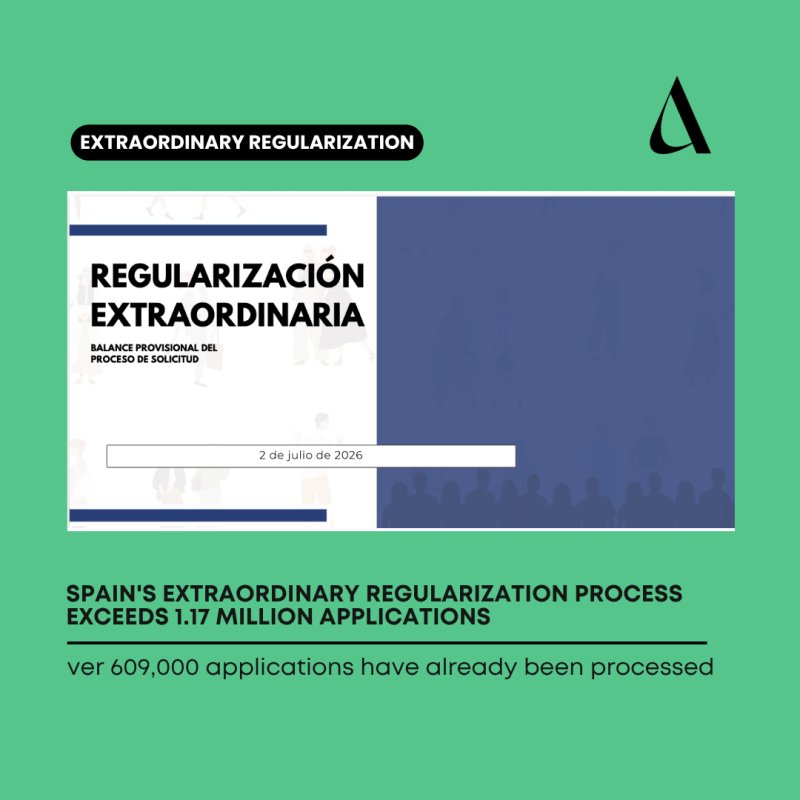
According to data released on July 2 by the government of Prime Minister Pedro Sánchez, Spain’s extraordinary migrant regularization program received 1,174,978 applications between mid-April and June 30. This figure far surpasses the government’s initial estimate that “nearly 500,000 people” would benefit.
Pilar Cancela, Spain’s Secretary of State for Migration, confirmed that of the applications submitted, over 600,000 have already been preliminarily deemed “eligible for processing,” pending further review. This suggests the actual number of qualified individuals may also be much higher than anticipated.
Applicant Nationalities: Latin America and Morocco Dominate
In terms of applicant nationality, migrants from Latin American countries are the most prominent group, with Colombians accounting for the largest share at 25.9%.
They are followed by applicants from Spain’s neighboring country, Morocco, at 13.3%. Other major source countries include Venezuela (11.8%) and Peru (8.8%), with these four nations combined making up nearly 60% of all applicants.
Government Review Process and Timeline
Officials have stated that government departments will have three months to conduct a comprehensive review of all submitted applications. During this period, relevant agencies will assess the compliance of each application individually and make a final decision on whether to grant permits for legal residence and work in Spain.
This massive volume of applications undoubtedly poses a significant challenge to the government’s administrative capacity, with results expected to be announced progressively over the coming months.
Domestic Reaction: A Mix of Support and Opposition
The large-scale regularization plan has created sharp political divides within Spain. Prime Minister Sánchez and his Socialist Workers’ Party (PSOE) view the program as a key social policy, particularly as the government faces pressure from corruption investigations. The move aims to distinguish their administration’s approach from the stricter immigration policies of some other EU countries.
The plan has received public support from Spain’s main employers’ association (CEOE). Its leader described the measure as pragmatic, helping to supplement the labor market amid hiring difficulties in several sectors. However, the policy has been met with fierce criticism from right-wing parties. The main opposition People’s Party (PP) has condemned it as an “absurd” policy, while the far-right Vox party has criticized it for condoning an “invasion of migrants.”
