Sudden Crisis and Intelligence Failure
Recently, Ceuta, Spain’s autonomous city in North Africa, experienced an unprecedented migrant crisis, with thousands of migrants surging into the area in a short period, posing a severe challenge to local order. Spanish Interior Minister Fernando Grande-Marlaska revealed that the scale of the incident far exceeded expectations.
In a statement, Minister Marlaska clarified that neither the National Intelligence Center (CNI) nor the intelligence divisions of the National Police and Civil Guard were able to provide an effective early warning. He noted that previous assessments had only anticipated a slight, seasonal increase in illegal entries during the summer, as is typical, and did not foresee it escalating into such a large-scale border crossing event.
Strengthening Border Deployment and Security
To quickly control the situation and secure the EU’s external border, the Spanish government has taken decisive action. Officials confirmed that approximately 3,000 military and police personnel have been deployed to the Ceuta region to bolster local security and order. This joint force will be stationed long-term as needed, with the primary mission of ensuring the safety and stability of Ceuta and preventing similar mass entry events from recurring.
Diplomatic Cooperation with Morocco
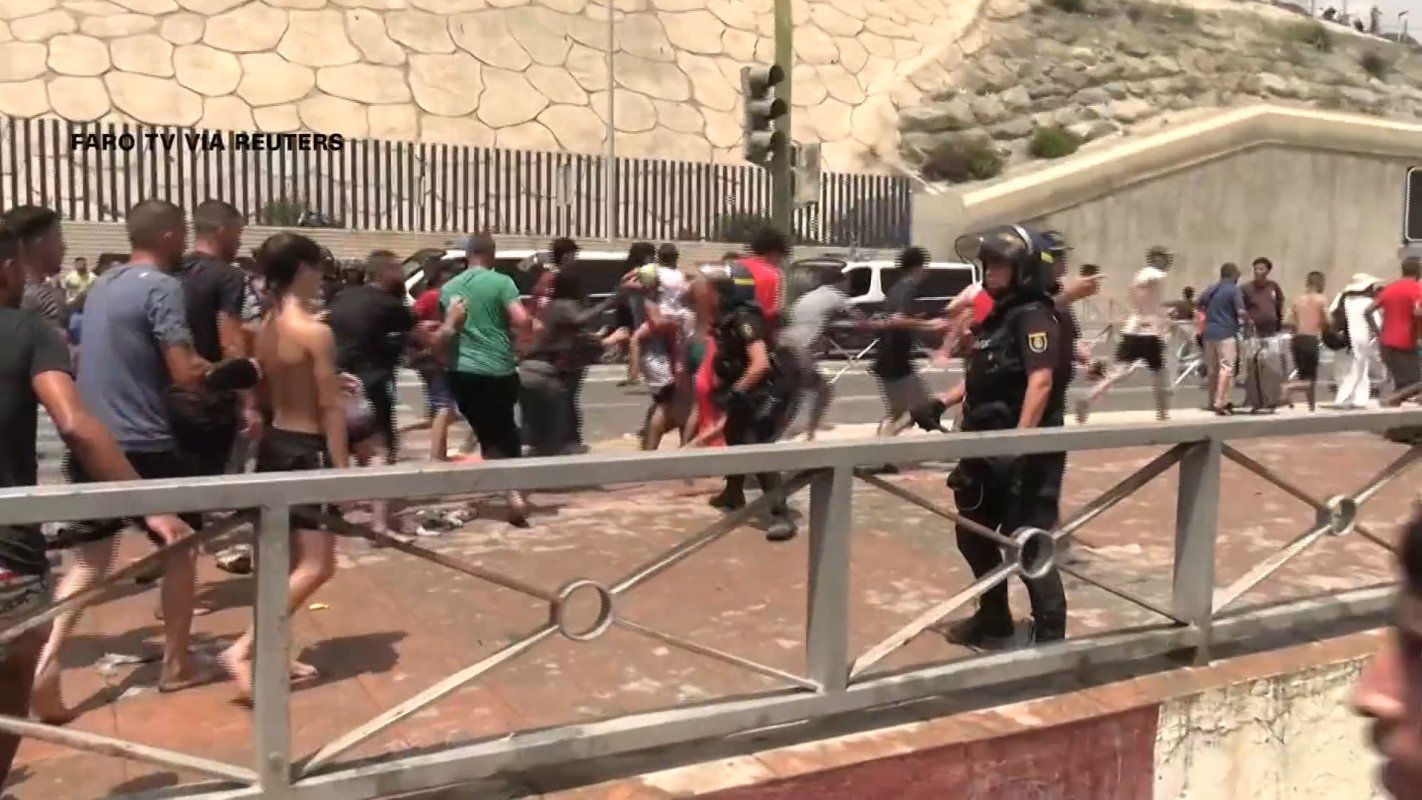
During the crisis, cooperation between Spain and neighboring Morocco became a focal point of international attention. Despite recent tensions in their relationship, Interior Minister Marlaska publicly defended Morocco’s role. He specifically praised Morocco’s cooperative stance in assisting with the repatriation of undocumented arrivals, describing it as an act of “loyalty.” It is reported that the vast majority of the thousands of migrants who entered have been successfully returned to Morocco.
Seeking Joint Support from the EU
Facing severe border pressure, Spain has actively sought solidarity and support from the European Union. During an emergency meeting of EU interior ministers, Minister Marlaska reiterated Spain’s commitment as a member state to defending the common border. Concurrently, Spanish Prime Minister Pedro Sánchez wrote to European Commission President Ursula von der Leyen, requesting joint European assistance. In her reply, von der Leyen acknowledged the efficiency shown by both Spain and Morocco in resolving the crisis.
