The latest demographic data released by the Spanish National Statistics Institute (Instituto Nacional de Estadística, INE) shows that the country’s population continues to expand, approaching a significant milestone.
Population Reaches New High, Increasing by Over 440,000 Annually
According to INE data, as of July 1, 2026, Spain’s registered population reached 49,801,559, setting a new historical record. In the second quarter of 2026 alone, the national population saw a net increase of 104,178 people. Over the past year, Spain’s net population growth amounted to a staggering 444,000. At this rate, surpassing the 50 million mark seems imminent.
Immigration: The Sole Engine of Population Growth
Notably, the driver behind this population growth is almost entirely singular. Data reveals that behind the overall increase, the native-born population is actually declining. In the second quarter of 2026, the native-born population decreased by 20,367 people, highlighting the ongoing impact of low fertility rates and an aging population. Consequently, the current population growth relies almost exclusively on the influx of foreign immigrants.
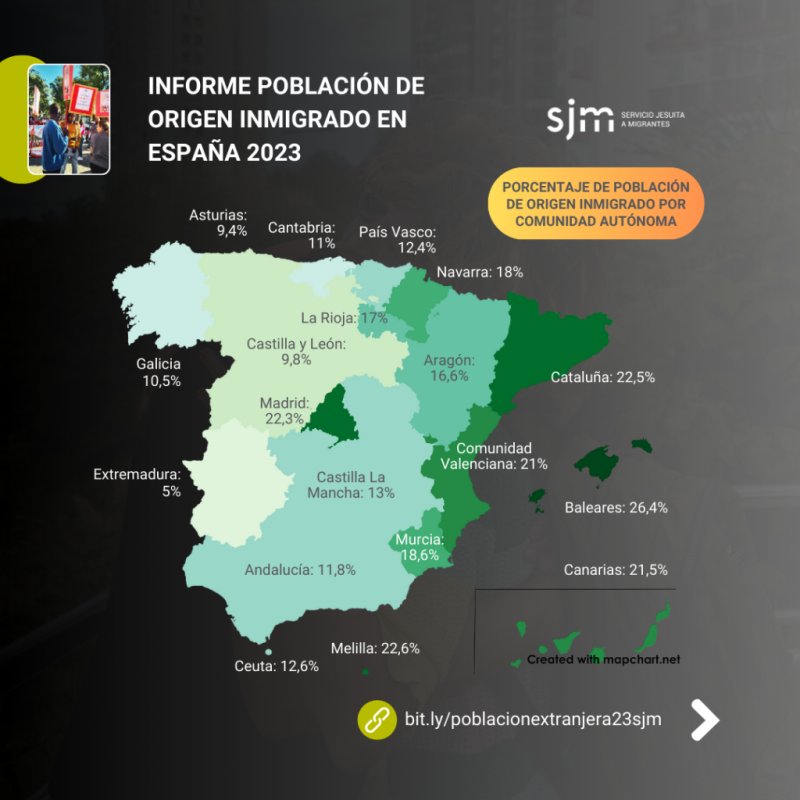
As of the census date, the total foreign-born population has surpassed 10.29 million, meaning that one in every five residents in Spain was born abroad. Concurrently, the number of residents with foreign nationality has risen to 7.43 million. Furthermore, a significant number of immigrants have obtained Spanish citizenship through legal processes, further transforming the country’s demographic makeup.
Latin American and North African Immigrants as Main Drivers of Growth
An analysis of the immigrants’ countries of origin shows that the main sources for new arrivals in the second quarter of 2026 were:
- Colombia: Approximately 34,000
- Venezuela: Approximately 23,300
- Morocco: Approximately 21,100
Immigrants from these three countries constituted the bulk of new arrivals during the quarter, underscoring the continued importance of Latin America and North Africa as key sources of immigration to Spain.
Widespread Growth in Autonomous Communities and Pressure on Social Resources
In terms of regional distribution, population growth was observed across all of Spain’s autonomous communities. The Valencian Community, the Balearic Islands, and Asturias were the regions with the fastest population growth. Major population hubs like Madrid and Catalonia also continued to experience steady growth.
While this continuous inflow of people brings vitality to society, it also poses challenges for public services. Areas such as housing supply, healthcare, educational resources, and public transport systems are facing increasing pressure.
