Spain’s 2026 Total Solar Eclipse: An Official Guide to Safe Viewing
1. A Celestial Spectacle: Total Solar Eclipse Meets Meteor Shower
On August 12, 2026, a total solar eclipse, hailed as a once-in-a-century astronomical wonder, will grace the skies of Spain. This marks the first total solar eclipse visible from mainland Spain since the early 20th century. Adding to the rarity, the event coincides with the peak of the Perseid meteor shower, offering a double treat for astronomy enthusiasts. According to astronomical forecasts, several cities will be in the prime viewing path, including La Coruña, Oviedo, León, Bilbao, Zaragoza, Valencia, and Palma de Mallorca.
2. The Core Risk: Retinal Damage from Eclipse Viewing
Experts warn that the most dangerous moments during a solar eclipse are just before and after totality. Although the sun’s light appears diminished, its intensity is still strong enough to burn the retina in seconds. This damage, known as solar retinopathy, often occurs without pain, meaning viewers can suffer permanent vision loss without realizing it. Therefore, it is strictly forbidden to look directly at the sun with regular sunglasses, tinted glass, film, or any homemade filters. These items do not adequately block the intense visible light and the invisible ultraviolet (UV) and infrared (IR) radiation that can cause blindness.
3. Scientific Protection: Use Internationally Certified Eclipse Glasses
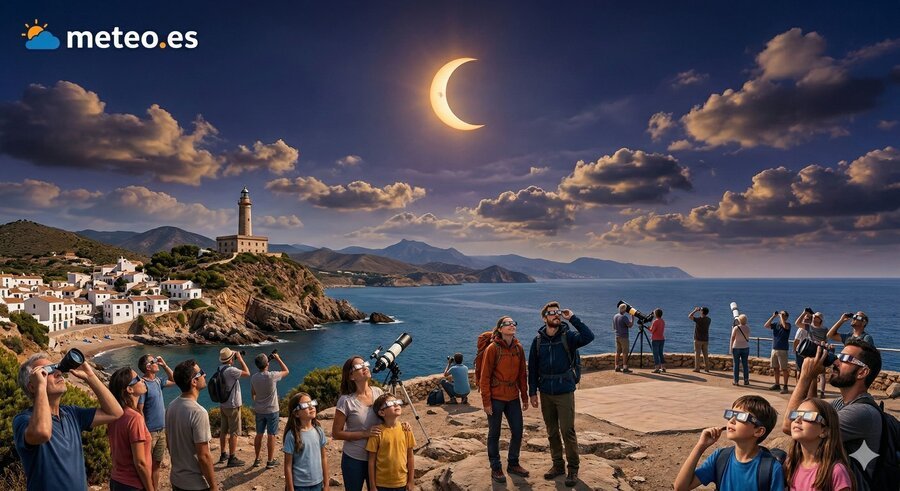
The only truly safe way to directly observe the sun is by wearing certified, special-purpose solar eclipse glasses. When purchasing, consumers must ensure the product complies with the ISO 12312-2:2015 international safety standard. This standard guarantees the lenses filter out 99.99% of intense visible light and 100% of harmful UV and IR radiation. Before use, always inspect your eclipse glasses for any scratches, bubbles, or damage to the lenses. If any defects are found, discard them immediately.
4. Safety Know-How: Correct Viewing Steps and Precautions
To ensure complete safety, follow these steps: First, put on your eclipse glasses while looking down or away from the sun. Once they are securely in place, you can look up at the sun. To stop viewing, look away or down first, and then remove your glasses. It is recommended to limit continuous viewing to no more than 3 minutes at a time, taking short breaks to rest your eyes. If you wear prescription glasses, place the eclipse glasses over them. Children’s eyes are especially vulnerable, so they must be under constant adult supervision to prevent them from removing their glasses out of curiosity.
5. Protecting Your Devices and Alternative Viewing Methods
In addition to protecting your eyes, your optical equipment also needs special protection. If you plan to use a camera, smartphone, binoculars, or a telescope to view or photograph the sun, you must attach a dedicated solar filter to the front of the lens. Otherwise, the intense light will instantly destroy the device’s internal sensors. Individuals with pre-existing retinal conditions or who have recently had eye surgery are advised against any form of direct observation. Safer alternatives, such as creating a simple pinhole projector or watching a live stream online, allow you to enjoy the charm of this celestial event without risk.
