Rumors Swirl as FIFA Issues Urgent Denial
Recently, a rumor circulated within the international football community claiming that FIFA President Gianni Infantino had privately promised the 2030 World Cup final to Morocco in exchange for support in his re-election. This news caused a major uproar in Spain, one of the co-bidding nations. In response, FIFA quickly issued an official statement, labeling the claims as “false and misleading” and explicitly denying them. However, the official clarification has not fully quelled the “genuine concerns” within the Spanish football community, who see this as a matter of procedural justice and the core values of the sport.
Reason 1: Unparalleled Sporting Glory
Spain believes its strongest case for hosting the final stems from its unmatched competitive strength. Set against a backdrop of August 2026, the Spanish men’s national team has just won the World Cup on North American soil, adding a second star to their jersey. Meanwhile, the Spanish women’s team are also reigning world champions. This positions Spain as the only nation in world football to currently hold both the men’s and women’s World Cup titles, placing it in an unprecedented golden age of football. Spanish public opinion holds that the World Cup final, the pinnacle of the sport, should be held in the country with the deepest football pedigree and highest competitive level, not be used as a bargaining chip in political games.
Reason 2: Historical Contribution to the Joint Bid
From the bid’s history, Spain was the core initiator of the 2030 World Cup proposal. The plan was originally launched by Spain and Portugal to commemorate the centenary of the World Cup and pay homage to the inaugural 1930 tournament. Morocco joined as a co-bidding partner later on. Therefore, Spain argues that as the project’s founder and primary driver, it rightfully deserves to host the final. To transfer this honor to a later partner due to unconfirmed backroom deals would not only disregard the years of effort by Spain and Portugal but also damage FIFA’s own credibility.
Reason 3: World-Class Facilities and Hosting Experience
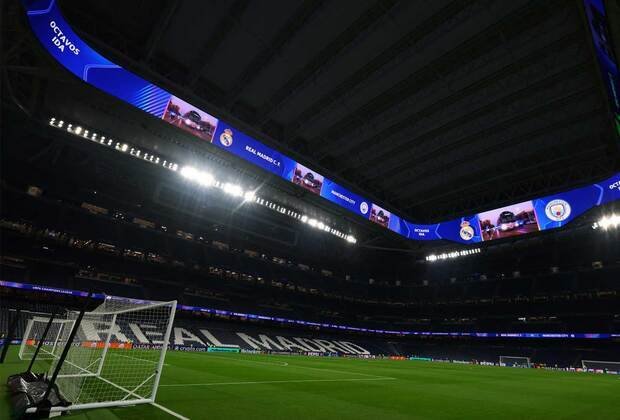
Spain possesses the proven experience and robust infrastructure to host top-tier global events. From Real Madrid’s Santiago Bernabéu Stadium to FC Barcelona’s Camp Nou, the country boasts several world-class, modern venues. Its advanced transportation network, comprehensive infrastructure, and the security and organizational expertise gained from successfully hosting countless major tournaments, including the 1982 World Cup, provide a strong guarantee for a seamless final. It is also reported that a FIFA technical team’s evaluation report had pointed to the renovated Bernabéu as the ideal venue for the 2030 World Cup final. These public, transparent, and objective advantages are considered factors that should be prioritized in the decision-making process.
Spain’s Position and Outlook
Facing the current complex situation, the Spanish sports world is remaining calm and continuing dialogue with FIFA. The statement from Spain’s Minister for Sport, Milagros Tolón, represents the prevailing sentiment across the nation: “We hope, and we deserve, for the World Cup final to be held in Spain.” This assertion is not an empty slogan but a serious appeal based on the aforementioned facts, history, and the spirit of football. Spain is confident that once the dust settles, the final decision will return to the pure essence of the sport, resulting in a choice that is the most just and in the best interest of football.
