After a recent mass illegal entry event, the Spanish autonomous city of Ceuta in North Africa is once again facing a severe border security challenge. A highly mobilizing call circulating on social media plans a new mass border rush for August 15, 2026, putting Spanish authorities on high alert.
Online Mobilization: A Plan for a Mass Rush Emerges
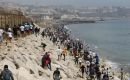
The Spanish Civil Guard has confirmed that organized messages are circulating on platforms like WhatsApp, Instagram, and Facebook, calling for interested individuals to gather in the Moroccan border town of Castillejos and enter Spanish territory together on August 15. One group, named “Haraga mrc,” reportedly has up to 400,000 members. The term “Haraga” is often used in North Africa to refer to illegal border crossers. The group is filled with inflammatory statements like “This is our last chance” and “Everything will be decided on that day.” The Civil Guard assesses these calls as “not a hoax” and representing a genuine risk.
Authorities on High Alert: Multiple Forces Deployed to the Border
To address the potential crisis, the Spanish government has deployed multiple security forces in Ceuta. Currently, a reinforcement unit of over 100 Civil Guard members is stationed there, working with the National Police to patrol sensitive areas, including the city’s periphery. The Spanish Ministry of Defence has also confirmed that troops deployed in Ceuta will “remain until the Ministry of the Interior deems their withdrawal possible.” Although the army’s law enforcement powers are limited outside a state of emergency, its mere presence serves as a powerful deterrent.
Spain’s Ministry of the Interior has publicly stated it will “be prepared for any situation” but denies a repeat of the massive border crossing event from a week ago is possible. However, sources indicate that organizers might advance the operation by one or two days to avoid the heavy security presence on the 15th.
Internal Disagreements: Strategies and Long-Term Concerns
Despite a unified official message, there are differing opinions within the security apparatus regarding response strategies. Some within the Civil Guard believe the current situation is under control mainly due to proactive measures taken by border forces and newly established coordination with Morocco, rather than the government’s newly installed floating anti-trespassing barrier. They worry that once August 15 passes without incident and media attention wanes, the government might withdraw reinforcements as it has in the past, leaving the border vulnerable again.
Therefore, the Civil Guard is once again calling for long-term deployments, with specific demands including: assigning at least 200 more officers to Ceuta, extending the breakwaters at Tarajal and Benzú, and establishing clear, written protocols for responding to mass border rush events. They emphasize: “This is not just Ceuta’s border; it is Europe’s southern border.”
Crisis Context: The Aftermath of the Previous Mass Crossing
The backdrop for this tension is a severe border crisis Ceuta experienced not long ago. At that time, approximately 72,000 migrants poured in, placing immense strain on the city’s public services and reception facilities. According to subsequent statistics, about 2,500 people remained after the crisis, including around 1,100 unaccompanied minors, forcing the local government of Ceuta to request their relocation to mainland Spain. The severe consequences of the previous crisis are the direct reason why Spanish authorities dare not be complacent this time.
