Hello everyone! I’ve recently seen a lot of people on the forums asking if it’s possible to study at a university in Spain after graduating from a vocational or technical high school. I struggled with this question myself and consulted many agencies and senior students. Today, I’m sharing what I’ve learned to help those who come after me. Let’s get straight to the point: Yes, it’s absolutely possible
! But it’s definitely not as simple as just showing up with your diploma.
Admissions to Spanish universities are based on a score called the ‘Nota de Acceso,’ which you can think of as a university entrance score. For international students, this score is typically calculated from two parts: your home country’s high school grades + a Spanish university entrance exam. So, the key question becomes: Can a vocational high school diploma be officially recognized as equivalent to a Spanish high school diploma? The answer is yes, as long as your vocational school is nationally accredited and its curriculum and credit hours meet the requirements. You can go through the ‘homologación’ (academic credential evaluation)
process to gain the same application eligibility as a Spanish high school graduate.
Core Steps to Apply for a Bachelor’s Degree in Spain
While this path is viable, every step requires advance planning. It’s essentially a three-step process:
1. Academic Credential Evaluation (Homologación)
This is the first and most time-consuming step. You’ll need to have your vocational school diploma, transcripts, and other documents notarized and doubly legalized, then submit them to the Spanish Ministry of Education for official recognition. This process, which is central to the question of whether Spanish universities admit vocational school students, can take six months to a year, so you must start well in advance!
2. Prepare for the PCE Exam
The PCE (Pruebas de Competencias Específicas) is a university entrance exam designed for international students, administered by Spain’s National University of Distance Education (UNED). You’ll need to choose 2-4 subjects relevant to your desired university major. For example, if you want to study business, you might take exams in mathematics and economics.
| Common PCE Exam Subjects | Corresponding Fields of Study |
|---|
| Mathematics II | STEM, Business |
| Business Economics | Business, Management |
| Physics / Chemistry | STEM, Medicine |
| Spanish Language and Literature | Humanities, Education |
3. Language Preparation
While not all universities strictly require a DELE or SIELE certificate, proof of B2-level Spanish proficiency will give you a significant advantage and ensure you can understand your lectures. Don’t underestimate the importance of language! Thinking you can just pick it up after you arrive will lead to a very tough time.
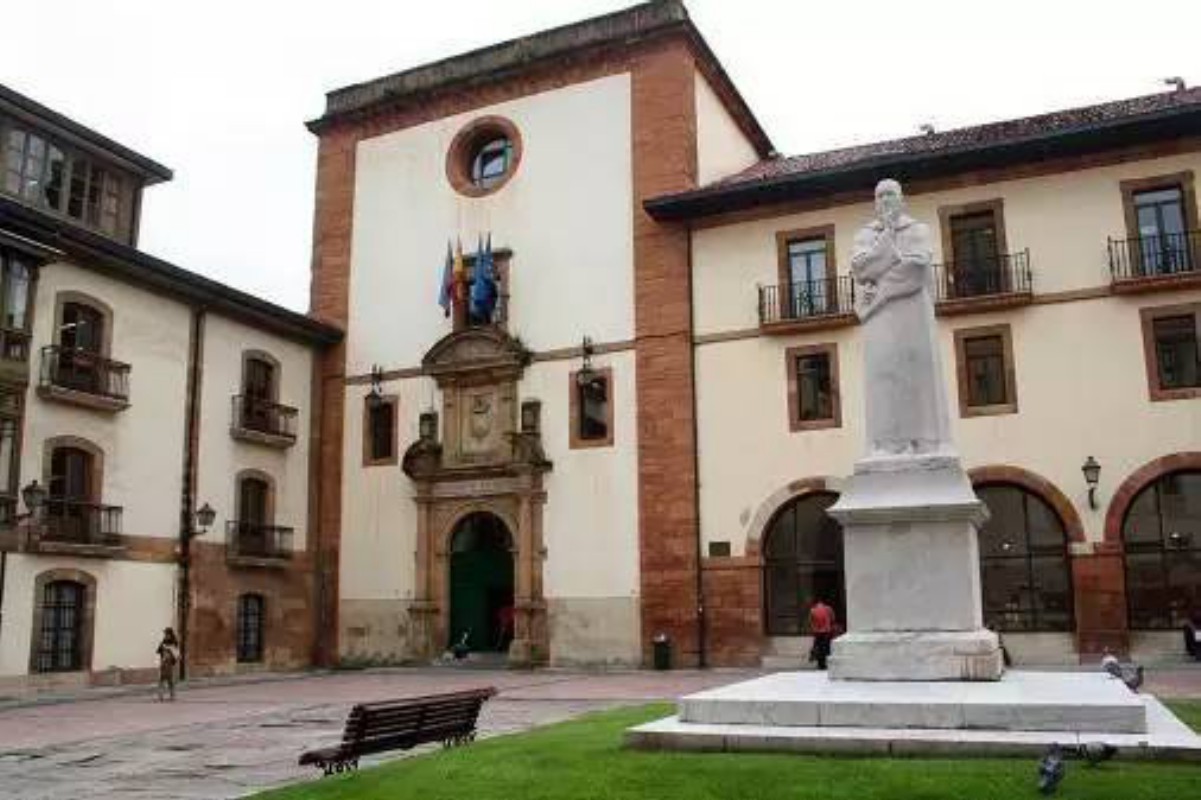
Although the path is clear, it demands a high level of self-discipline and independent study. Here’s a photo of the University of Salamanca to inspire you—it’s one of the oldest universities in Europe and absolutely beautiful!
If applying directly for a bachelor’s degree seems too daunting, you could also consider enrolling in a Higher-Level Vocational Training program (Ciclo Formativo de Grado Superior) first. The transition is often smoother for vocational school graduates. After completing the program, you can either enter the workforce directly or gain admission to a related university bachelor’s program, giving you more options.
So, for vocational high school graduates, studying at a Spanish university is entirely feasible. The key is to plan ahead and conquer the two major hurdles: the academic credential evaluation and the PCE exam. The journey may be long, but taking the first step will get you there. I hope my sharing has been helpful, and I welcome anyone with experience to add their thoughts and join the discussion below!
