2026 Summer Heatwave Overview
The summer of 2026 has seen Spain gripped by continuous heatwaves. The highest temperature so far this year was recorded in early July, when the mercury in Pobla Llarga, Valencia, climbed to 45.5°C. While alarming, this figure is still 2.1°C shy of Spain’s all-time temperature record.
Overall data shows this summer’s heat is also exceptional. Records indicate that the combined average temperature for June and July 2026 reached 24.5°C, making it one of the hottest June-July periods since complete meteorological records began in 1961.
A Look Back at Spain’s Historic Heat Records
According to official data confirmed by the State Meteorological Agency (Agencia Estatal de Meteorología, AEMET), Spain’s absolute highest temperature on record is 47.6°C. This record was set on August 14, 2021, in La Rambla, Andalusia. On the same day, the nearby Córdoba Airport also recorded a high of 46.9°C, highlighting the intensity of that extreme heatwave.
Long-Term Trends in the Context of Global Warming
Recent data clearly reveals a trend of intensifying high temperatures in Spain. Statistics show that the five hottest June-July periods in Spain’s history have all occurred after 2015. Expanding the scope to the ten hottest such periods, nine have taken place since the beginning of the 21st century. This indicates that extreme heat events are becoming more frequent and intense in Spain, consistent with the broader context of global climate change.
Extreme Temperature Records in Europe and Globally
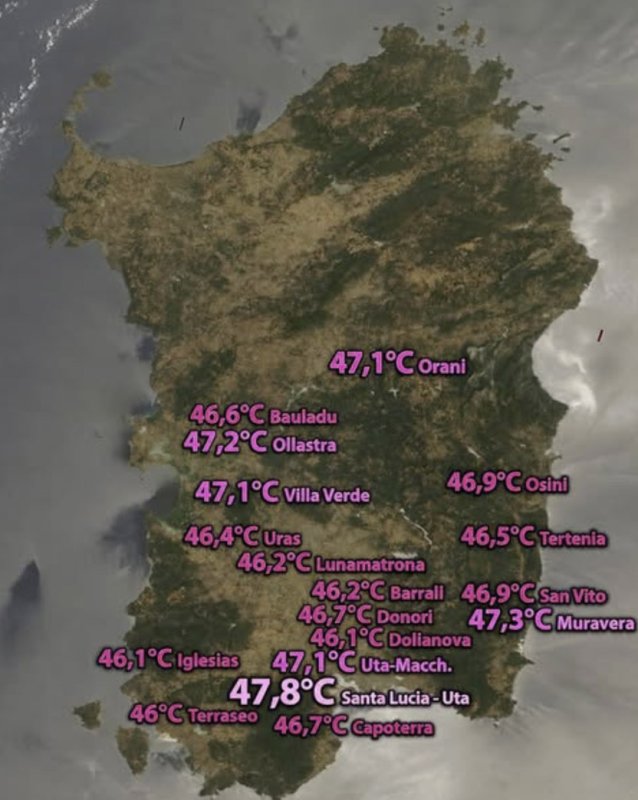
Looking across the European continent, Spain’s high-temperature record is not the highest. The official European record, certified by the World Meteorological Organization (WMO), is 48.8°C. This was set in Syracuse, on the island of Sicily, Italy, on August 11, 2021, just three days before Spain’s record.
Globally, the records for extreme temperatures are even more staggering. The currently recognized highest temperature worldwide is 56.7°C, measured in Furnace Creek, Death Valley, California, USA, in July 1913. At the other extreme, the officially certified lowest temperature is -89.2°C, recorded at Vostok Station in Antarctica in 1983. These extreme figures paint a picture of our planet’s climatic diversity and fragility, while also serving as a warning of the severe challenges that continued warming may bring.
