Disputed Numbers: Stark Discrepancy Between Local and Central Government Data
Following the mass border crossing on July 30th, the situation in the Spanish autonomous city of Ceuta remains tense. After a special government meeting on August 8th, President of the Autonomous City Juan Vivas stated that according to local government estimates, between 8,000 and 11,000 people who entered at that time are still stranded in Ceuta.
This figure stands in stark contrast to the approximately 2,500 people previously reported by the Spanish central government. Vivas questioned this number, calling on Madrid for greater transparency and for emergency measures that match the actual scale of the crisis.
Core Demand: Immediate Repatriation to Alleviate Social Pressure
Vivas emphasized that the “only realistic solution” to alleviate the crisis in Ceuta is to repatriate these stranded individuals to Morocco via the Tarajal border crossing. He pointed out that a large number of migrants are currently dispersed throughout the city’s streets, residential areas, mountains, and even beaches. Many lack shelter and basic necessities, which has placed significant pressure on public safety, social cohesion, and the daily lives of residents.
He firmly argued that these individuals should not be given the false expectation of obtaining residency permits or being allowed to travel to mainland Spain, insisting that repatriation procedures must be carried out decisively.
Security Upgrade: Request for 1,000 More Police and for Army to Remain
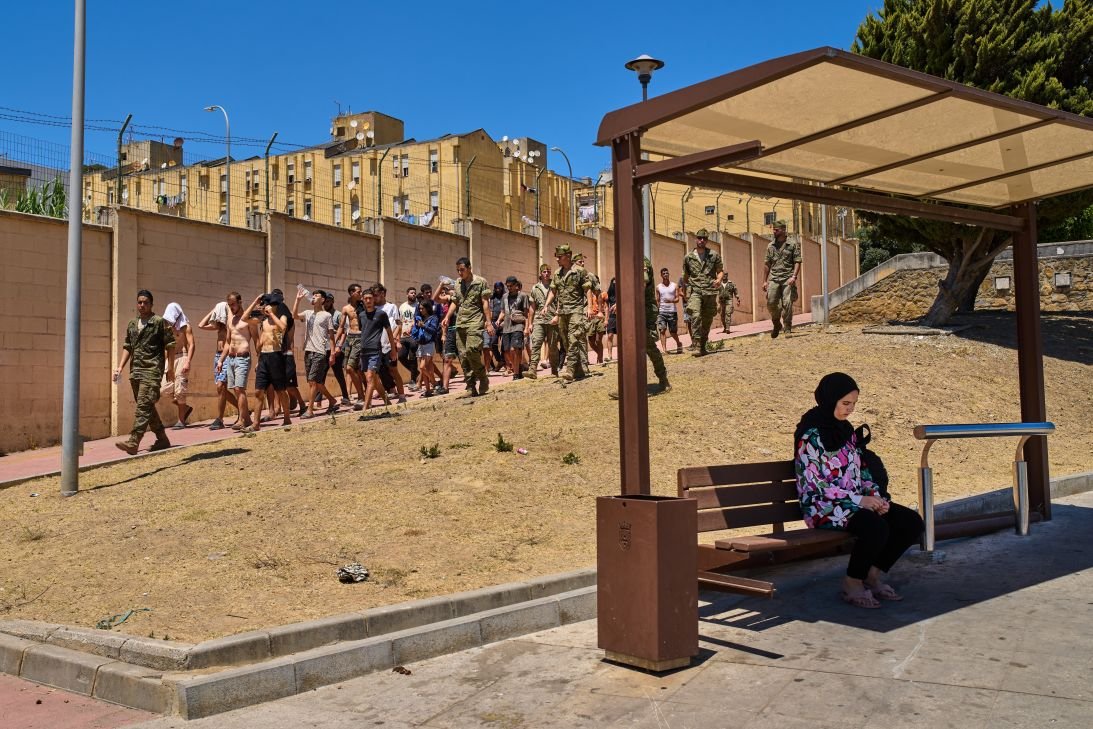
To address the tense security situation, the Ceuta government has submitted a series of specific security requests to the central government. Vivas called for Madrid to immediately dispatch at least 1,000 additional National Police and Civil Guard officers to enhance street patrols and maintain public order.
Furthermore, he expressed his hope that the military units currently stationed in Ceuta will remain, believing their presence is crucial for boosting residents’ sense of security.
The Future of the Border: Strengthening Defenses and Addressing Potential Risks
Vivas expressed deep concern about future border security. He noted that the border security of Spain and the European Union cannot be entirely dependent on the cooperation of a third country (referring to Morocco). He demanded that the central government must establish an independent mechanism for prevention, deterrence, and emergency response to “reinforce” the border defenses and ensure that an event like the one on July 30th does not happen again.
Addressing rumors of a potential new mass crossing around August 15th, Vivas acknowledged the palpable anxiety among residents but urged the community to remain calm. He reiterated that Ceuta alone cannot handle a crisis of this magnitude and expressed hope that the central government would fulfill its responsibilities by deploying the necessary security forces in advance. He concluded by stating that while Ceuta will maintain its “institutional loyalty,” the central government must act quickly, as this is not just a short-term security issue but one that affects the future stability and development of Ceuta.
