A New Path to Decarbonization: Spanish Airlines’ Electrification Strategy
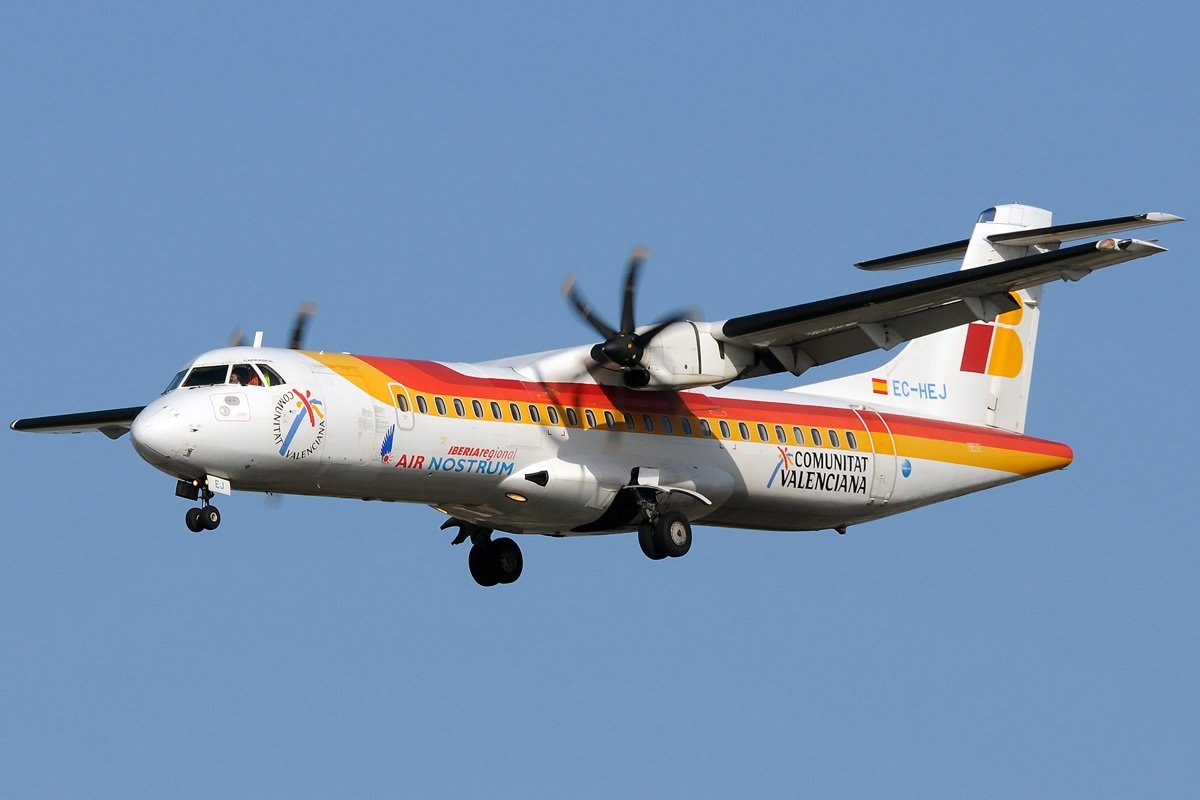
In the aviation industry’s push for sustainability, electric aircraft technology is moving from concept to reality. Two major Spanish airlines, Volotea and Air Nostrum, have placed a clear bet on this field by jointly investing in the electrification technology project of the Spanish-Australian joint venture, Dovetail. The project, which focuses on converting traditional small aircraft to electric or hybrid-electric models, has already received an experimental flight permit from the Spanish Aviation Safety and Security Agency (AESA) and is undergoing a pre-certification review by the European Union Aviation Safety Agency (EASA), marking a critical step in its commercialization process.
The Core Technology: Economic Viability of Retrofitting
Dovetail’s core strategy is not to design a new electric aircraft from scratch but to retrofit existing small aircraft (such as 10-12 seat models). CEO David Doral points out that this conversion costs around €1.5 million, offering a significant economic advantage compared to the hundreds of millions of euros required to develop a brand-new aircraft. Dovetail is developing two power systems in parallel: a fully electric system for short routes of 100 to 150 kilometers, and a hybrid-electric system that extends the range to 200 to 300 kilometers with a range extender. The retrofitted aircraft are expected to carry up to 20 passengers.
Commercial Prospects: Revitalizing the Short-Haul Regional Market
The core business logic behind this technology is to make previously unprofitable short-haul routes, often discontinued due to low passenger demand, commercially viable again by significantly reducing operating costs. The 20-seat aircraft market, which had shrunk due to high operational expenses, could be revitalized by electrification. This is particularly appealing for specific markets within Spain, such as inter-island flights in the Balearic and Canary Islands, and short-haul routes connecting cities like Barcelona, Valencia, and Palma. According to EASA data, 25% of all flights in the EU are under 500 kilometers, presenting a vast market for small electric aircraft.
Challenges and the European Competitive Landscape
Despite the promising outlook, the commercialization of electric aircraft faces multiple challenges, including battery energy density, stringent airworthiness certification processes, and the development of ground charging infrastructure. Competition across Europe is also fierce, with startups like Germany’s Vaeridion (aiming for a 90-seat model by 2030) and France’s Aura Aero (aiming for a 19-seat hybrid model by 2029) advancing similar projects. However, compared to Sustainable Aviation Fuel (SAF), which is expensive (currently five times the cost of conventional jet fuel) and not fully zero-emission, electrification is seen as a more economically viable and environmentally sound long-term solution. The investment by Volotea and Air Nostrum shows that Spain’s regional aviation industry could play a pioneering role in this technological revolution. If all goes well, by around 2030, flying between Spanish cities and islands on a zero-emission aircraft could become a reality.
