A Market Anomaly: Transactions Shrink as Prices Defy the Trend
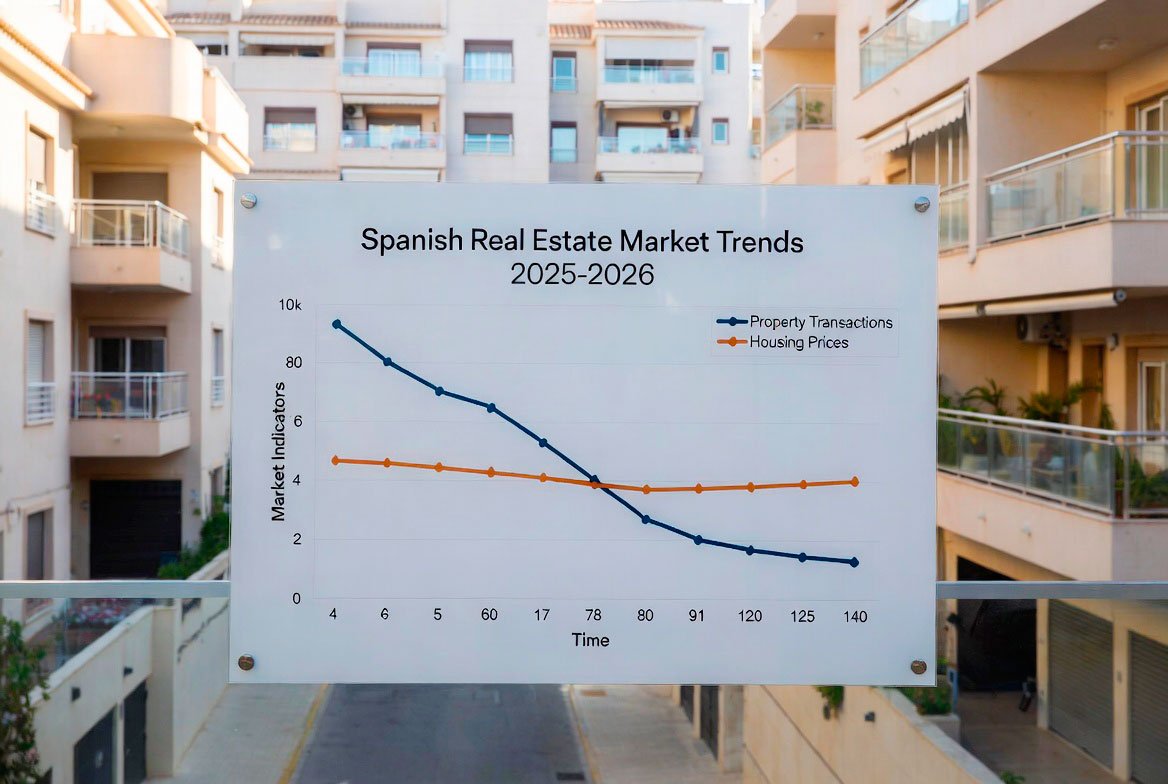
Spain’s real estate market is presenting a situation that defies conventional economic wisdom. The latest statistics show that housing transactions in the second quarter of 2026 fell by 5.7% compared to the previous quarter. Specifically, new home sales reached 34,919 units, a drop of 11.5%, while existing home sales decreased by 4% to 133,015 units. Although June saw a brief 5% monthly rebound in transactions, the cumulative sales volume for the first half of 2026 was still down 2.6% compared to the same period in 2025.
In stark contrast to the cooling transaction volume, house prices continue to rise strongly. In the first quarter of 2026, the national average house price had already seen a 13.9% year-on-year increase. Some financial institutions predict that while total transaction volume for the year may shrink by another 7.3%, the average selling price is expected to increase by at least 12%, continuing the trend of ‘fewer sales, higher prices’.
Supply Bottleneck: A Shortfall of Nearly One Million Homes to Be Filled
The core reason for this market anomaly is a long-standing structural lack of supply. According to multiple warnings from the Bank of Spain, the nationwide housing shortage is massive, with the deficit estimated to be between 700,000 and 900,000 units. Some institutions even assess the gap to be close to one million homes. This shortage is particularly severe in major cities with dynamic economies and population influx, such as Madrid and Barcelona.
The pace of housing construction is far from keeping up with the growth in demand. Data shows that in 2025, only about 159,200 new homes were built across Spain, while the population increased by nearly 500,000 in the same year. This construction volume is a far cry from the levels of 2007 and 2008, when over 630,000 new homes were built annually.
Robust Demand: Population Growth and Diverging Purchasing Power
While supply is constrained, the demand side remains strong due to population growth. According to research by BBVA Research, Spain experiences a net increase of about 550,000 immigrants and adds around 200,000 new households annually, creating sustained pressure on the housing market. Even with the overall decrease in transactions, competition for the limited housing stock is still fierce enough to support price increases.
At the same time, the market is undergoing a clear stratification based on purchasing power. As house prices climb, families with lower incomes or insufficient savings are being forced out of the property market. A report from the real estate portal Fotocasa shows that approximately 54% of current homebuying demand comes from high and upper-middle-income groups. This is leading to an increasingly divided housing market: financially strong households and investors dominate property sales, while young people and those with less savings capacity are increasingly squeezed into the rental market.
Future Outlook: Structural Imbalance Likely to Persist
Analysts widely believe that the current problem in Spain’s housing market is not weak demand, but a structural imbalance caused by a combination of insufficient supply, population growth, and wealth disparity. What’s truly decreasing in the market is not the number of ‘people who want to buy a home,’ but the number of ‘people who can afford to buy one’.
The scarcity of quality properties also confirms this point. Data from the Idealista platform shows that in the second quarter of 2026, about 7% of listed properties were sold in less than a week, reflecting the market’s strong appetite for quality housing. As long as the new housing supply fails to effectively meet the growth in population and households, it is unlikely that prices will see a substantial decline, even if transaction volumes fall further. This ‘sales-down, prices-up’ situation is expected to continue.
