According to the ‘2022 Labour Cost Survey’ released by the Spanish National Statistics Institute (Instituto Nacional de Estadística, INE), the average annual salary in Spain was €25,353, a 4.5% increase from the previous year. However, salary dynamics and challenges vary significantly across different sectors.
Hospitality Sector: The Low-Wage Dilemma Despite High Growth
Data shows that wages for hospitality professionals surged by 22.5% in 2022 compared to 2021, and were 9% higher than before the COVID-19 pandemic. Despite this staggering increase, the average annual salary in the sector is just €13,386 (equivalent to €956 per month in a 14-payment system), nearly half the national average.
This average salary is even below the Statutory Minimum Interprofessional Wage (SMI). The report indicates this is primarily due to the high prevalence of part-time contracts in the industry. This means many employees, due to fewer total working hours, ultimately receive a monthly take-home pay lower than the minimum wage level calculated for standard full-time work (40 hours per week). Although employers are raising wages to attract labor, the structural problem of low pay remains severe.
Tech Industry: The War for Talent Drives Up Salaries
In stark contrast to the hospitality sector, the tech industry is experiencing a fierce war for talent. To attract and retain programmers, cybersecurity experts, data engineers, and other ‘tech talent,’ companies are being forced to significantly increase compensation packages.
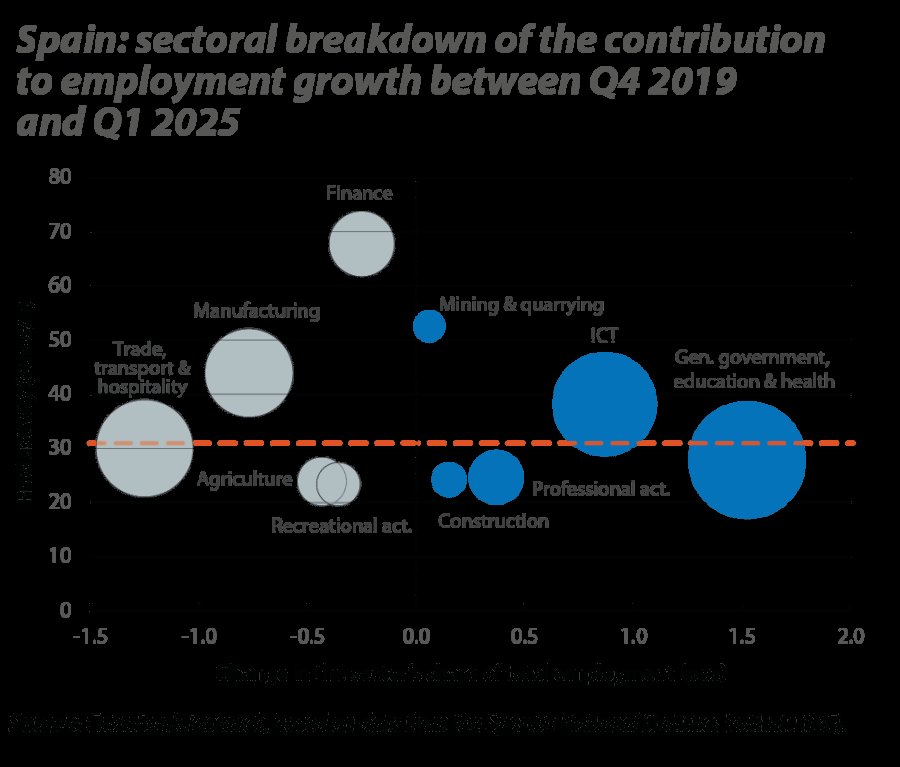
Data reveals that since the COVID-19 pandemic, the salaries of computer scientists have increased by 20%. The average annual salary in this sector has reached €32,521 (equivalent to €2,322 per month in a 14-payment system), well above the national average. During the same period, the overall wage growth in the Spanish economy was just 8%, less than half the rate of salary increases in the tech sector, highlighting the scarcity and high value of its skilled professionals.
Market Polarization: Widening Salary Gap Between Sectors
The data clearly reveals a structural polarization in the Spanish labor market. The average annual income of a tech professional is almost 2.5 times that of their counterpart in the hospitality sector. On one hand, the service industry struggles to escape the predicament of low wages and labor shortages, even with significant percentage increases in pay. On the other hand, technology-intensive industries attract limited professional talent with high salaries, continuously widening the income gap with other sectors. This imbalanced wage structure is becoming a major challenge for the Spanish economy.
