Dispute Over Numbers: Entry and Remaining Migrant Figures Unclear
Since the mass irregular entry on July 30, 2026, the situation in the Spanish autonomous city of Ceuta has been complicated by conflicting statistics from the central government and local authorities regarding the exact number of migrants.
This Monday, Minister of Territorial Policy, Ángel Víctor Torres, confirmed a total of 80,000 migrants had crossed the border irregularly, a figure higher than the 72,000 reported days earlier by Minister of the Interior, Fernando Grande-Marlaska. However, the main point of contention is the number of people still in Ceuta. While the central government claims to have repatriated the vast majority to Morocco, the local government insists that between “8,000 and 11,000” migrants remain on the streets, unable to access basic necessities.
Local Government’s Urgent Plea and Security Concerns
Facing the ongoing chaos, the President of the Autonomous City of Ceuta, Juan José Vivas, has formally requested the Spanish central government to establish a “unified command” to take over crisis management. He urged the development of a national-level response plan and proposed the creation of a temporary migrant reception center to provide humanitarian services while streamlining and expediting repatriation procedures.
Vivas stressed that the current situation is “completely unbearable, unsustainable, and unacceptable.” Citing reports from local residents’ associations, he stated that some neighborhoods have become “uninhabitable” due to security risks and public order issues. Consequently, he has requested a significant increase in the deployment of national security forces and a reinforcement of staffing in immigration offices, the judiciary, and the public prosecutor’s office.
Unaccompanied Minors: A Growing Challenge
The accommodation and management of unaccompanied minors is a particularly thorny aspect of this crisis. Minister of Territorial Policy Torres acknowledged that the number of officially registered minor migrants has risen to 1,400, admitting that this is not the final figure.
“I saw many minors housed in police facilities or waiting in line outside police stations to be registered,” Torres stated after his visit. His comments confirm that the Spanish government has not yet been able to fully account for and properly accommodate all arriving minors, with registration and assistance efforts still underway.
Healthcare System Under Pressure: A Debate Over the Definition of ‘Crisis’
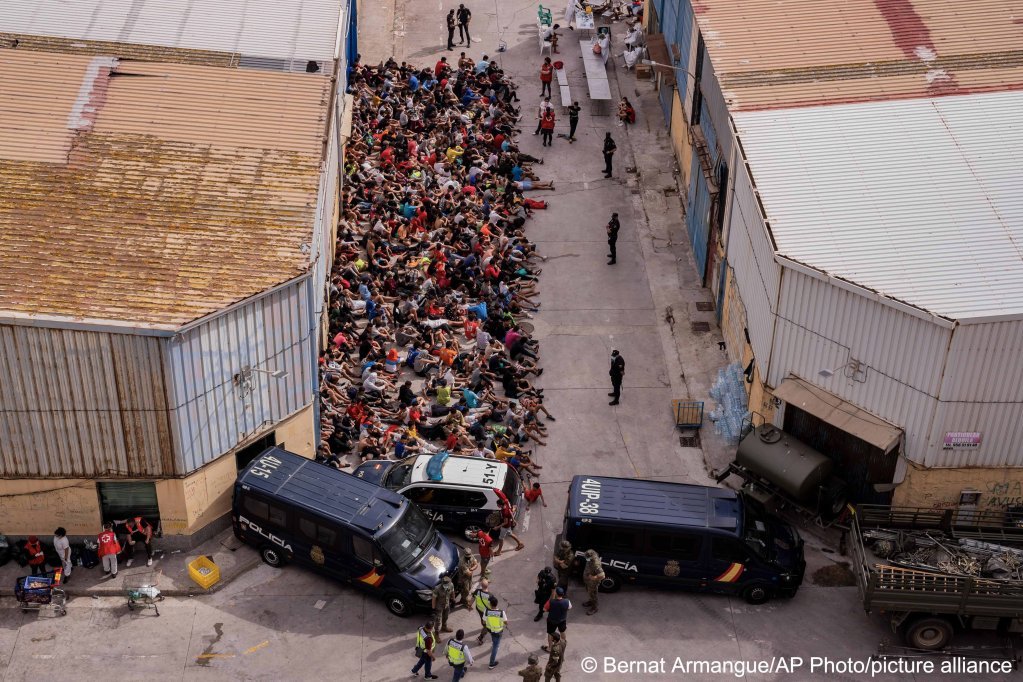
The pressure on Ceuta’s healthcare system from the migrant influx has also sparked debate. Ceuta’s President Vivas warned that the city’s population surge of 10% in a short period has left the local healthcare system “overwhelmed.”
However, Spanish Minister of Health, Mónica García, holds a different view. She stated explicitly that “there is no healthcare crisis” in Ceuta, emphasizing that the healthcare budgets for Ceuta and Melilla have been increased by 70% and that they have “more medical resources than ever before.” García provided data showing that 1,149 migrants received medical attention on the peak day of arrivals, July 30, a number that has since dropped to an average of about 350 people per day in the primary care system. Furthermore, of the 175 beds in Ceuta’s hospital, only 20 are currently occupied by migrants, out of a total of about 95 beds in use.
