To prepare for the rare total solar eclipse on August 12, Spain is facing a massive logistical challenge with large-scale population movement. Hundreds of thousands are expected to flock to the best viewing spots, putting immense pressure on the national transport system. The General Directorate of Traffic (DGT) has activated a special plan to mitigate traffic congestion and safety risks caused by the celestial event.
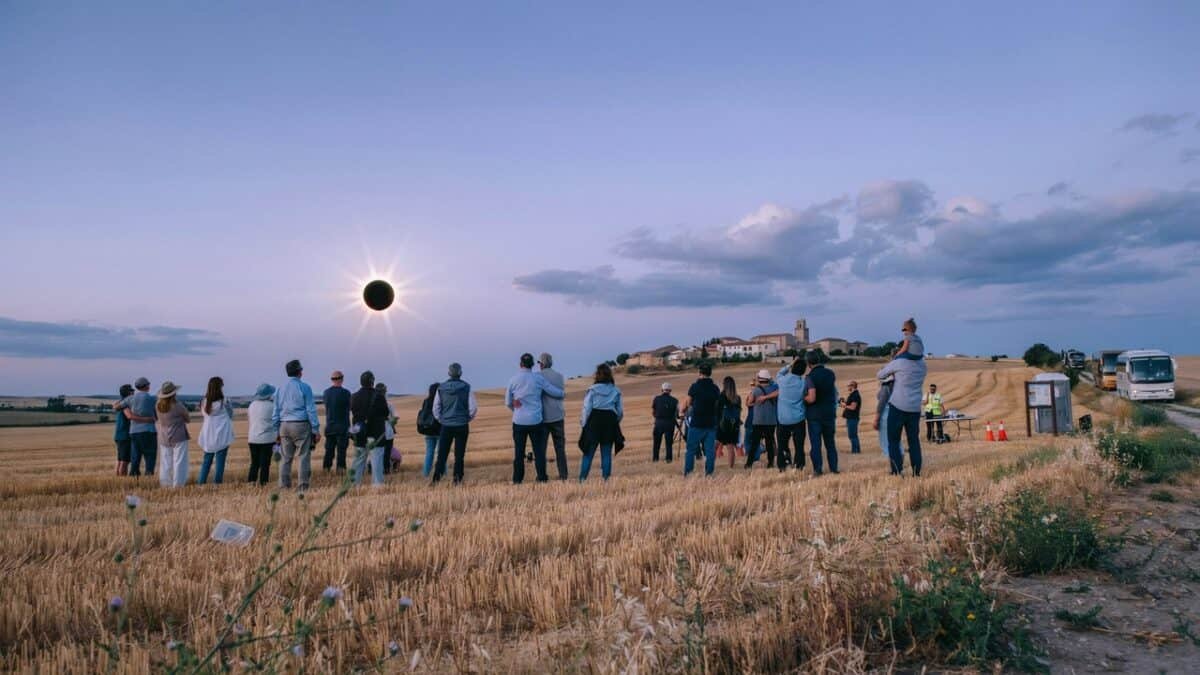
Over 440,000 Tourists Expected in the Path of Totality
This astronomical event is set to significantly boost tourism. According to official forecasts, between August 10 and 16, the provinces within the path of totality are expected to welcome an additional 446,700 tourists. This figure includes approximately 164,000 international visitors and 282,700 domestic tourists from within Spain. Furthermore, a survey indicates that 8.4% of people planning to watch the eclipse will travel to another province to do so, further increasing the strain on the transport system.
Traffic May Increase by 1.5 Million Trips, Authorities Issue Warning
This total solar eclipse coincides with the peak of the August summer holiday season, a time when traffic is already heavy. According to an assessment by Spain’s Ministry of Economy, Commerce, and Enterprise, traffic on major roads along the eclipse path could increase by 30% to 100%. This translates to a potential increase of 400,000 to 1.5 million additional journeys nationwide. The DGT has classified this as a high-priority event and is preparing to implement corresponding traffic management measures.
Eclipse Path Covers 36 Provinces, with Northern and Central Spain as Core Areas
While the eclipse will be partially visible across all of Spain, the ‘total’ phase will only be seen in a strip crossing the northern, central, and eastern parts of the country. This path of totality covers 36 provinces and several autonomous communities, including Galicia, Asturias, Cantabria, the Basque Country, Navarre, La Rioja, Castile and León, the Community of Madrid, Castile-La Mancha, Aragon, Catalonia, the Valencian Community, and the Balearic Islands. These regions will be the main destinations for tourists and astronomy enthusiasts.
DGT Issues Key Safety Guidelines
The DGT has expressed serious concerns about traffic safety during the eclipse and has issued several recommendations to the public. The biggest risk is considered to be the immediate post-eclipse rush, when thousands of vehicles could flood the roads simultaneously in a short period.
To address this, the DGT strongly recommends:
- Stagger Your Return: Linger for a while after the eclipse and wait for the peak traffic to subside before heading home to avoid congestion.
- Plan Ahead: Decide on your viewing spot and a safe parking area in advance. Avoid stopping randomly on the road.
- Watch Locally: If viewing conditions are acceptable from your home or a nearby town, try to avoid long drives to ‘prime’ viewing locations.
- Drive Focused: Do not get distracted by watching or filming the eclipse while driving. Be aware of potential pedestrians on the road and ensure driving safety.
