Nationwide Emergency Response Fully Activated
To manage the upcoming total solar eclipse and the resulting large-scale population movement, the Spanish government initiated a high-level security deployment on August 6th. The Ministry of the Interior has announced the formation of the National Coordination and Management Committee (CECOD), while the General Secretariat for Civil Protection and Emergencies has crafted a detailed special plan for the event. The first phase of the emergency protocol under the General Plan for National Emergencies has been activated, and a unified command structure is now in place at the National Center for Emergency Monitoring and Coordination (CENEM) to bolster the prevention, coordination, and response to potential risks.
Forest Fire Prevention a Top Priority
The eclipse coincides with Spain’s peak season for summer forest fires, making prevention a top government priority. Deputy Prime Minister and Minister for the Ecological Transition and the Demographic Challenge, Sara Aagesen, warned that vegetation in many regions is exceptionally dry, where any carelessness could trigger a catastrophic blaze. Minister of the Interior, Fernando Grande-Marlaska, also urged the public to exercise extreme caution, as the combination of high temperatures, dry vegetation, and large crowds in natural areas significantly elevates the fire risk. Officials have issued clear public reminders: open fires in the wild are strictly prohibited, do not park vehicles on dry vegetation, and ensure roads remain clear for emergency vehicle access.
Over a Million Travelers Trigger Traffic Alerts
Spain’s General Directorate of Traffic (DGT) predicts that viewing the eclipse will generate an additional 400,000 to 1.5 million trips, primarily concentrated in the path of totality across the northern Iberian Peninsula. Officials recommend that travelers plan their routes in advance, check real-time traffic conditions before setting off, and try to stagger their return journeys to avoid the massive congestion expected immediately after the event. Depending on conditions, traffic authorities may implement temporary controls, including restricting vehicle access to certain areas or directing traffic to alternative routes. Updates will be provided in real-time on variable-message road signs.
Eclipse Glasses Safety: Beware of Six Recalled Products
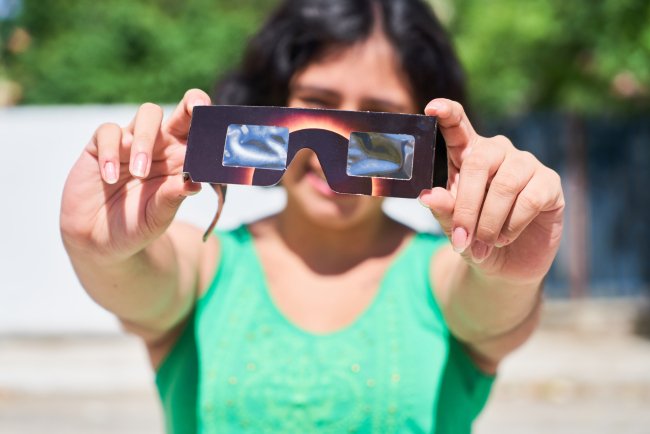
Eye safety is paramount when observing a solar eclipse. The Spanish Ministry of Health emphasizes that everyone must use certified eclipse glasses compliant with the ISO 12312-2:2015 international standard. However, just ahead of the event, consumer protection authorities issued an urgent recall for six brands of eclipse glasses due to a risk of eye injury. The brands involved are: Lionstar, ECP Eye Care Professional, Pelispan, Homanaje, Orro, and Opticalia. A peculiar reason for the recall is that some lenses are ‘too dark,’ with light transmittance falling below the minimum safety threshold. Regulators warn that wearing these glasses might make it impossible to see the sun, prompting users to instinctively remove or adjust them to find it. Even a few seconds of direct exposure could cause irreversible chemical or thermal damage to the retina. Officials urge consumers to buy certified products only through official channels and stress that darker is not necessarily safer; the light filtering performance must also meet the standard.
