Sales and Mortgage Data Show Diverging Trends
According to data from Spain’s National Statistics Institute (INE), a total of approximately 288,200 home sales were completed nationwide in the first five months of 2026, a slight year-on-year decrease of 3.4%. In contrast to this decline in sales, the number of mortgages for home purchases reached about 213,800, marking a 6.2% year-on-year increase.
The data indicates that between January and May this year, the number of all-cash, mortgage-free transactions was approximately 74,400, accounting for 25.8% of total sales. This represents a significant drop from 32.5% in the same period of 2025 (when roughly one in three homes was bought outright) and is the lowest level in the last five years, last seen in 2021.
Rising Prices Push Buyers Towards Mortgages
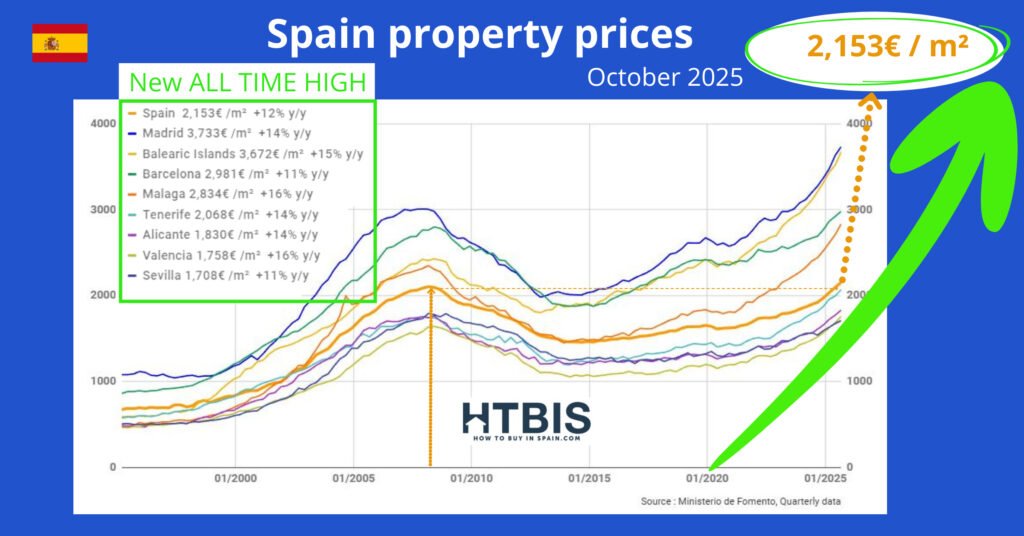
Industry analysts believe the primary reason for the decline in all-cash purchases is that property prices are rising much faster than household savings. Soaring prices are making it increasingly difficult for many buyers—even those with savings, funds from selling a previous home, or family support—to complete transactions with their own capital, forcing them to turn to bank loans.
This trend is also reflected in the rising loan amounts. In May 2026, the average mortgage amount for a home purchase in Spain rose to €174,900, a 9.7% increase year-on-year. This doesn’t mean consumers are actively seeking more debt, but rather that rising property prices are forcing them to finance a larger portion of the purchase.
Dual Impact of Interest Rates and Investment Strategy
On the other hand, the currently attractive mortgage rates are also encouraging borrowing. Data shows that in May 2026, the average interest rate for new mortgages was around 2.98%, with most banks offering products at or below 3%. For some cash-rich investors, even if they can afford to pay in full, they may opt for a mortgage. This strategy allows them to make only a down payment and invest the remaining capital in other assets with potentially higher returns, aiming for profits that exceed the mortgage interest costs.
Mortgage Market Shows Signs of Cooling
Although buying with a mortgage has become the norm, the growth momentum in Spain’s mortgage market is beginning to slow. The year-on-year growth rate for new mortgage agreements has steadily declined from 16.3% in February to 9% in March and 2.3% in April. By May 2026, the figure had fallen by 0.1% year-on-year, the first negative growth in nearly two years, indicating that the market is entering a new adjustment phase.
Market Outlook: The Core Issue Shifts to “Affordability”
Industry experts predict that the market is currently experiencing a normalization or cooling-off period after rapid growth, rather than a sudden evaporation of demand. Looking ahead, as European interest rates may rise, the increased cost of financing could pose a greater challenge for buyers with lower incomes and weaker debt-servicing capacity, making it harder for them to secure loans. Consequently, the core issue in the Spanish real estate market is shifting from ‘whether people want to buy’ to ‘whether buyers can find a home with the right price, location, and financing,’ making affordability an increasingly prominent concern.
