Scale and Impact of the Fire
A large-scale forest fire broke out last Thursday in the Raboconejo area of Niebla, in the southern Spanish province of Huelva. Andalusian authorities have classified the fire as ‘complex and dangerous.’ To date, the blaze remains out of control, with the affected area exceeding 25,000 hectares.
The fire has led to the emergency evacuation of 681 people in the provinces of Huelva (500) and Seville (181). The affected municipalities include Niebla, Villarrasa, Berrocal, Zalamea la Real, Paterna del Campo, and La Palma del Condado. Several roads have been temporarily closed for safety.
Firefighting Operations and Resource Deployment
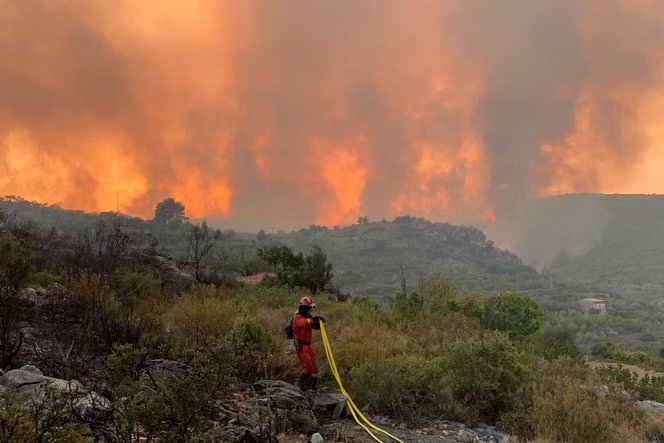
Facing the severe situation, the Spanish government has deployed extensive resources to combat the fire. More than 600 professionals are on the scene, including personnel from the Military Emergencies Unit (UME), the Guardia Civil, the Andalusian Forest Fire Extinguishing Service (Infoca), the Forest Fire Reinforcement Brigades (BRIF), and local fire departments. The UME and Guardia Civil alone account for over 500 personnel.
In terms of equipment, 169 ground units (including 14 bulldozers) and 23 aircraft (including 3 helicopters and 2 light amphibious aircraft) have been mobilized. Ground crews have been working through the night, while air support began operations on Tuesday morning, focusing on the right flank and the north-northeast front of the fire to prevent its spread to critical areas.
Complex Firefighting Challenges
The firefighting effort faces multiple challenges. Firstly, the rugged terrain of the forest area and variable winds have fueled the fire’s rapid spread. Fire officials have stated that although the rate of spread has slowed, the burned area is expected to continue growing before it is fully contained.
Secondly, the fire has generated strong convection, creating a massive smoke plume. This has led to the creation of secondary spot fires, with embers being thrown up to 3.5 kilometers away, easily breaching established firebreaks and significantly complicating suppression efforts.
Official Response and Resident Shelter
The President of the Regional Government of Andalusia, Juan Manuel Moreno, stated that in the face of this ‘difficult, complex, and dangerous fire,’ the top priority is to protect human lives. The government has urged the public to strictly follow evacuation orders and has pledged not to reduce rescue resources until the risk is completely eliminated.
Of the evacuated individuals, 89 have been housed in temporary shelters: 32 at the theater in Zalamea la Real, 5 at a hotel in Valverde del Camino, and 52 at the El Madroño shelter. The remaining evacuees are staying with family and friends.
Currently, the investigation into the cause of the fire is in its early stages, and officials have not yet released any conclusions. It is worth noting that the area also experienced a major fire in 2004, and the scale and complexity of this incident once again pose a severe test for local emergency response capabilities.
