The idea that ‘food dropped on the floor is still safe to eat if you pick it up within a few seconds’ is a widely-held belief, commonly known as the ‘three-second’ or ‘five-second rule.’ However, a scientific experiment from Spain has cast serious doubt on this notion, revealing the hidden health risks behind it.
Experimental Design: The Muffin ‘Drop Test’
To scientifically test the validity of the ‘five-second rule,’ Spanish biochemist Patricia Senent designed a straightforward comparative experiment. She dropped several muffins onto a typical floor surface for different lengths of time: 1 second, 3 seconds, and 5 seconds. After being picked up, these muffin samples were immediately placed in petri dishes for observation.
Shocking Discovery: Microbes Strike in an Instant
After 48 hours of incubation, the results were crystal clear: all muffin samples that had touched the floor, regardless of whether they were there for 1 second or 5 seconds, showed significant growth of microbial colonies. In contrast, a control muffin taken directly from its packaging, which never touched the floor, showed almost no similar microbial growth under the same conditions. This comparison strongly proves that the microorganisms on the samples came primarily from their brief contact with the floor.
Misconceptions: Blowing and Scraping Don’t Eliminate Risks
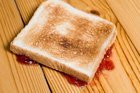
The experimental results further debunk two other common misconceptions. Dr. Senent points out that blowing on dropped food not only fails to effectively remove the microbes that have already attached, but it can also introduce secondary contamination through oral droplets, adding new bacteria to the food. Similarly, trying to scrape off the part of the food that touched the ground is not a foolproof solution, as microscopic germs may have already penetrated the food’s surface structure, invisible to the naked eye.
Comprehensive Assessment: Risk is Determined by Multiple Factors
The study emphasizes that contact time is not the sole determining factor when judging the safety of dropped food. Food safety experts add that the actual risk of illness is related to several variables, including:
- Food Characteristics: Moist, soft, or sticky foods (like cake and fruit) are more likely to pick up and transfer microorganisms than dry, hard foods (like crackers).
- Floor Condition: The cleanliness, material, and moisture level of the floor directly affect the number and types of microorganisms on its surface.
- Environmental Humidity: A high-humidity environment is more conducive to the survival and transfer of microbes.
Therefore, instead of relying on an unreliable ‘time rule,’ the more rational and safer approach is to discard any food that has been dropped on the floor, especially in public places, to avoid potential health risks.
