Social Media Rumors Spark Border Emergency
Just two weeks after the migration crisis at the end of July, which saw tens of thousands surge into the Spanish enclave of Ceuta, a new wave of tension is gripping the border region. Recently, security services in both Spain and Morocco have confirmed monitoring a significant volume of inflammatory messages on social media, calling for a “mass illegal crossing” into Spain’s other enclave, Melilla, as well as Ceuta, on August 15.
Some messages even specifically claim that the Ceuta border will be “open” on August 15—a national public holiday in Spain—in an attempt to exploit the holiday to create chaos and replicate the previous border rush. This development has forced authorities in both countries to enter a state of maximum alert.
Joint Deployment to Fortify the Border
In response to the potential crisis, the Moroccan government has initiated a large-scale security deployment in the town of Fnideq, opposite Ceuta, and its surrounding areas. Hundreds of police and military personnel have been dispatched to the border. Authorities have also urgently reinforced the existing border fence with new barbed wire and concertina wire to enhance the physical barrier’s effectiveness.
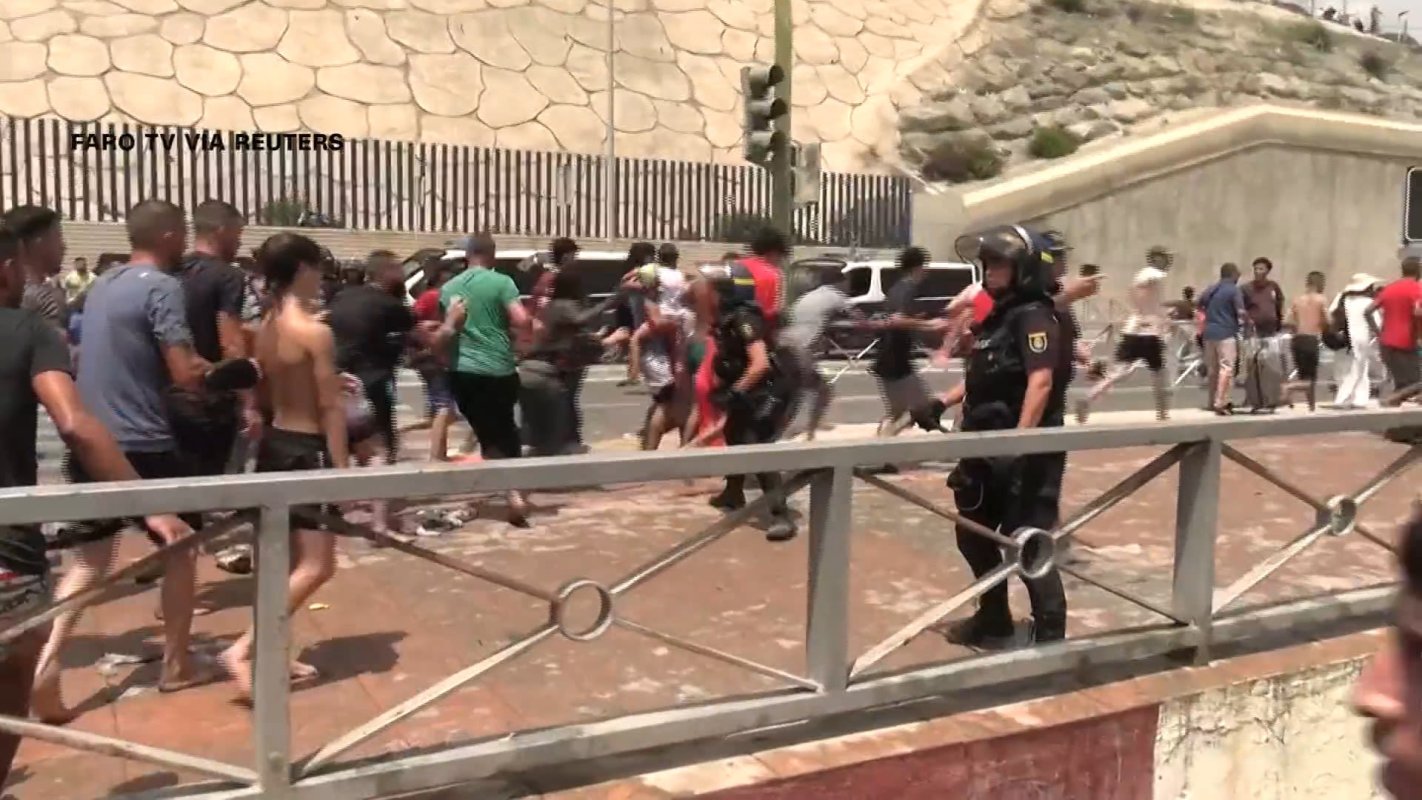
Spain has also activated its highest security response. Approximately 1,600 officers from the National Police and Civil Guard have been deployed to Ceuta, with an additional 2,000 military personnel on standby, ready to provide support. To ensure sufficient manpower, the Spanish Ministry of Defence has officially ordered the cancellation of all leave for military and police personnel stationed in Ceuta during this period.
Stern Warning from Spain’s Interior Ministry
To deter potential crossing attempts, Spain’s Minister of the Interior, Fernando Grande-Marlaska, has issued a clear and firm warning. He emphasized that anyone attempting to enter Spanish territory illegally will “under no circumstances” be transferred to the Iberian Peninsula, nor will they be able to obtain legal residency status. This statement aims to dispel any illusions among would-be migrants and reduce the motivation for attempting the crossing at its source.
The Shadow of the “July Crisis” Lingers
This high level of alert stems from a tragic event that occurred recently. According to official data, on July 30th, nearly 72,000 migrants surged into Ceuta from Morocco in a single day, causing Spain’s border defenses to collapse temporarily. Local Moroccan NGOs reported that the incident resulted in as many as 145 deaths, and the shadow of this humanitarian tragedy has yet to lift. Both governments are determined to prevent a recurrence of such an event.
The Thorny Issue of Repatriating Minors
The Spanish government’s resolute stance on border control is rooted in deeper legal and social challenges. Supplementary information indicates that although Spain and Morocco signed an agreement on the repatriation of unaccompanied minors back in 2007, the number of actual repatriations since the agreement took effect in 2012 has been zero over 14 years. Due to Spain’s strict domestic laws protecting the rights of minors and a lack of cooperation from the Moroccan side on reception procedures, nearly 14,600 Moroccan minors who entered over the past decade have remained in Spain. This context makes “preventing entry” the top priority and core strategy for Spanish authorities when dealing with border crises.
