Within 48 hours following the total solar eclipse in Spain this month, medical systems across the country experienced a minor surge in patient visits. According to consolidated statistics from public health departments in various autonomous communities, over 1,000 people have sought medical assistance for health issues related to the eclipse. The clinical manifestations of the patients mainly include eye stinging, dizziness, and heatstroke caused by high temperatures. Although no large-scale severe health damages have been reported so far, medical experts warn that the incubation period for some retinal injuries can be up to 24 to 48 hours, and the public still needs to closely monitor any subsequent reactions.
Surge in Medical Demand in Key Regions
During this event, the Community of Madrid, where the capital is located, ranked first nationwide in patient intake. As of 9 a.m. last Friday, the region handled 340 related medical assistances, primarily involving dizziness and ophthalmological problems. The region of Catalonia received 153 patients from Wednesday to Friday, among which 72 were explicitly diagnosed with ophthalmology-related symptoms.
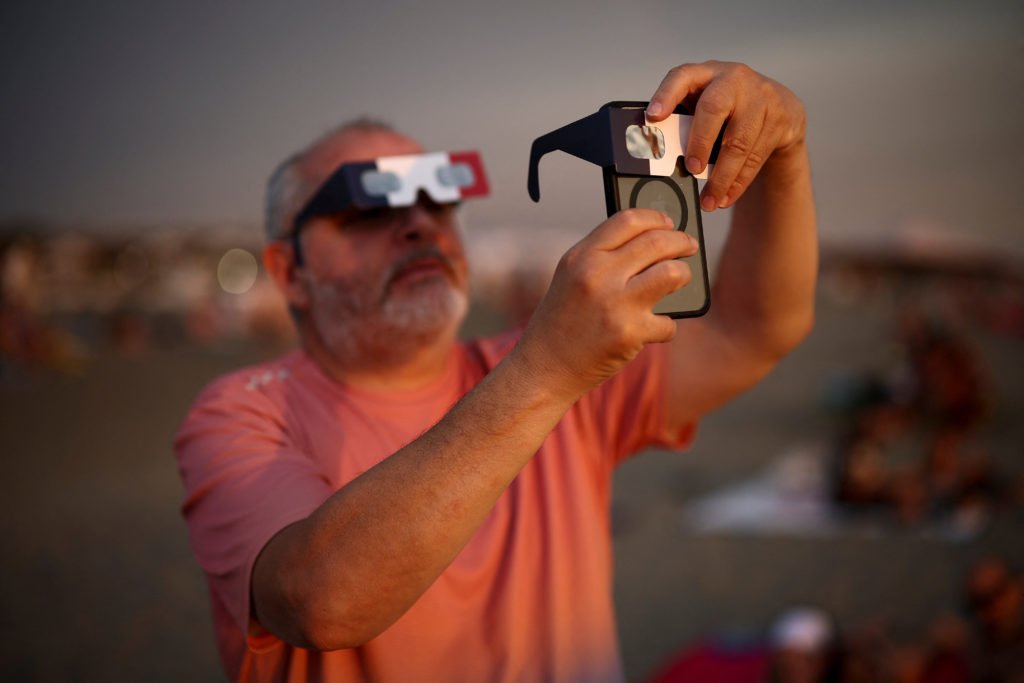
Specialist visits in the Mediterranean coast and northern regions also rose significantly. The Valencian Community reported 147 specialized ophthalmological visits; meanwhile, the Basque Country had 129 patients undergoing interventions for ocular abnormalities. The head of the emergency department at the Donostia University Hospital pointed out that the current cases admitted generally belong to mild pathological reactions, and there have been no cases of severe irreversible damage directly caused by the eclipse.
Sporadic Case Statistics Across Autonomous Communities
Besides the core areas mentioned above, medical networks in multiple autonomous communities nationwide also recorded varying scales of related consultations and admissions. Primary care clinics in Asturias provided 18 related consultations, and another 64 patients went to medical centers for eye-related reasons; Andalusia handled 44 ophthalmological emergencies, fortunately, none required hospitalization.
In addition, the Region of Murcia and Aragon reported 32 individuals and about 30 medical requests respectively. La Rioja reported 23 visits, among which 4 cases of eye damage were clinically determined to be directly related to eclipse exposure; the Balearic Islands had over 30 instances of individuals seeking ophthalmological treatment or phone consultations. Galicia and Castilla-La Mancha each reported nearly 20 incidents, partly attributed to heat exposure and emotional anxiety during the viewing. Regions such as Castile and Leon, Navarre, and Extremadura also recorded single-digit medical requests.
Health Departments Issue Delayed Injury Warnings
In response to this surge in medical visits, health regulatory agencies at all levels in Spain have urgently issued public health alerts. Experts point out that looking directly at a total solar eclipse without wearing professional protective eyewear that meets international standards can easily cause damage to the retina. Some photochemical injuries do not have obvious pain, and related symptoms will not manifest immediately after exposure.
Medical institutions urge the public to remain vigilant in the weeks following the total solar eclipse. If symptoms such as persistent blurred vision, dark spots in the center of the visual field, severe eye pain, or obvious color vision abnormalities occur recently, do not take any chances. Individuals should immediately go to professional medical institutions for a comprehensive examination to avoid missing the optimal intervention window.
