Earthquake Occurrence and Aftershock Monitoring Data
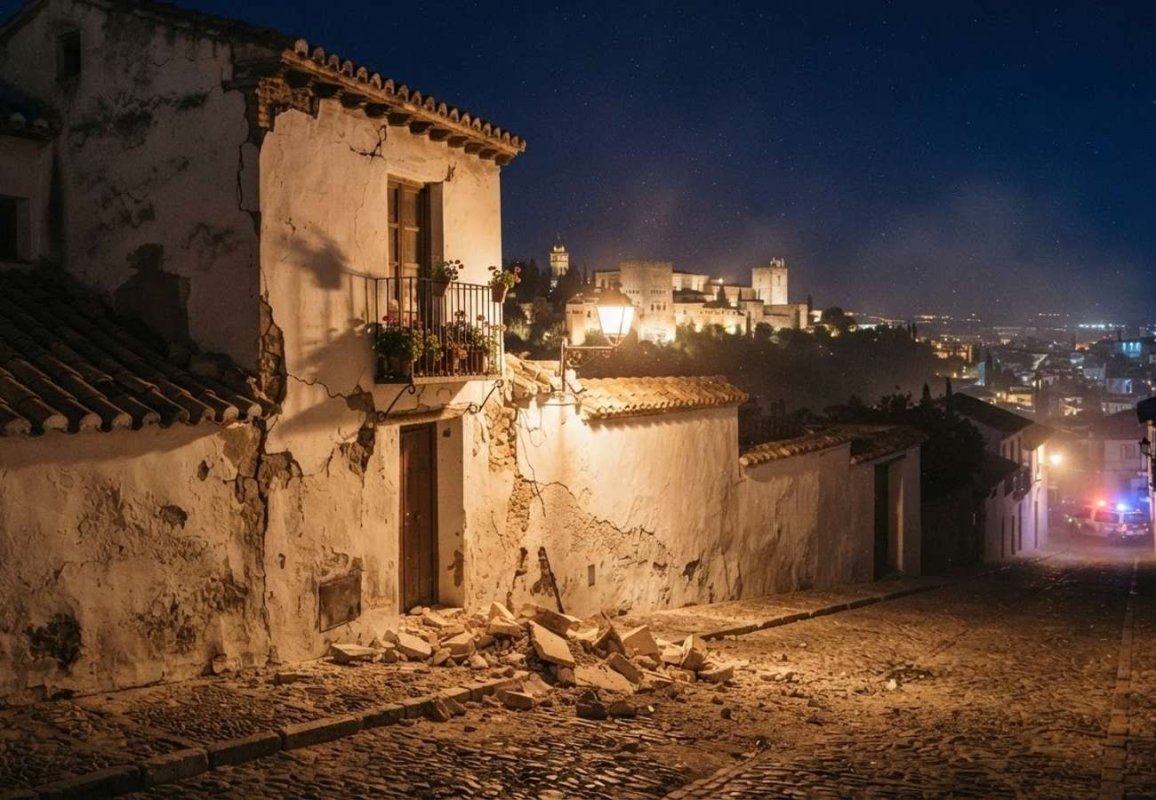
According to official data released by the Spanish National Geographic Institute (IGN), the main earthquake occurred at 1:04 AM on Saturday, reaching a magnitude of 5.0 with a focal depth of 10 kilometers underground, and the epicenter was located in the municipality of Alhendín. About 7 hours prior to the mainshock, a magnitude 3.7 foreshock was recorded in the La Zubia area, reaching an intensity of level 4. Additionally, three smaller micro-earthquakes had occurred continuously in the region on the preceding Friday.
Following the magnitude 5.0 earthquake, geological activity did not subside. Just 6 minutes after the mainshock, the town of Gójar recorded a magnitude 2.6 earthquake with a focal depth of only 1 kilometer. According to statistics, the National Geographic Institute subsequently monitored over 300 weak aftershocks. Although the vast majority were not directly felt by the public, the intense seismic activity still triggered widespread concern.
Impact on Affected Areas and Resident Evacuations
The strong earthquake not only caused intense tremors in the Granada metropolitan area near the epicenter but also extended its impact to six of the eight provinces in the Andalusia region. Except for Cádiz and Huelva, reports of tremors were received from the province of Jaén, the city of Córdoba, and the coastal areas of Almería and Málaga. Residents in northern towns such as Huéscar and Almuñécar also reported feeling significant shaking.
The sudden, violent shaking frightened numerous Granada residents late at night. Many people chose to flee their homes, gathering in outdoor streets and open areas in the early hours of the morning to avoid potential safety risks. As of now, relevant departments in the city of Granada have handled a total of 445 emergencies related to this earthquake.
Official Warnings and Preliminary Disaster Assessment
In response to this sudden disaster, the 112 Emergency Rescue Center of the Andalusia region promptly elevated the earthquake risk emergency plan for the Granada area to a Level 1 emergency state to ensure continuous risk monitoring and preventive intervention. The 112 department urgently advised the public to avoid unnecessarily entering or exiting buildings during the earthquake. If outdoors, it is crucial to stay away from building facades, balconies, and eaves where falling objects might occur.
In the first disaster assessment report, the Mayor of Granada pointed out that although the earthquake caused some building exterior components to fall, partial roof collapses, and cracks on the ground in certain streets, no reports of severe casualties or major property damage have been received so far. Municipal technicians are focusing their efforts on inspecting the safety conditions of buildings, particularly in the Zaidín neighborhood, which was more visibly affected. Inspection results indicate that no buildings within the jurisdiction have suffered fatal structural damage thus far. Officials also urge citizens to remain restrained and calm, and all actions should be based on protective guidelines issued by the government through official channels.
