Morocco’s Strong Action Thwarts Border Breach Attempt
In response to prior calls circulating on social media urging a mass breach of the Spanish overseas territory of Ceuta on Saturday, August 15, Moroccan authorities launched a massive prevention and interception operation. Moroccan security forces reported intercepting a total of 294 migrants attempting to force their way into Ceuta in the border area that day. These individuals primarily consisted of 248 Sub-Saharan African nationals and 46 Moroccan citizens. Furthermore, police arrested 61 suspects accused of inciting and organizing this illegal border crossing via social networks.
Dispersal in Mountainous Areas and Harassment of Journalists
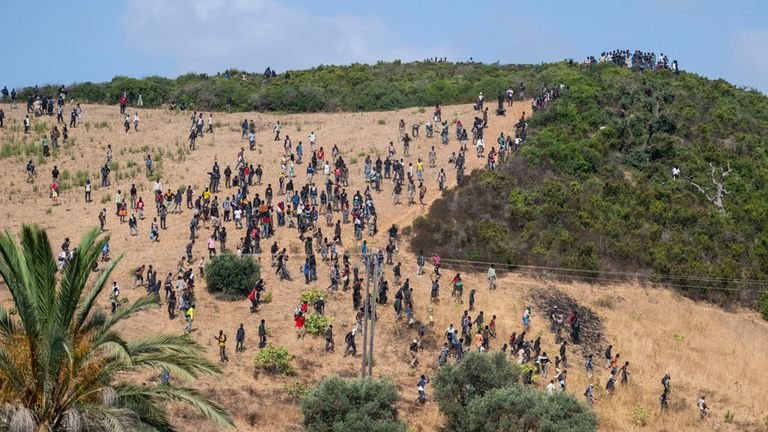
Answering the call, a large number of migrants gathered and hid in the mountainous region southwest of Fnideq (known as Castillejos in Spanish), a Moroccan border town adjacent to Ceuta. On Saturday, Moroccan police blockaded and dispersed these gathered crowds. During the operation, security forces deployed tear gas, coordinated with helicopters from above. Reportedly, journalists from the Spanish news agency EFE and the Spanish state broadcaster RTVE faced pressure from Moroccan Interior Ministry officials while filming the police operation. Threatened with the revocation of their press credentials and the confiscation of their equipment, they were ultimately forced to leave the scene.
Unprecedented Security Measures Ensure Border Stability
To cope with this border breach crisis, Morocco deployed an unprecedented level of security forces. Thousands of auxiliary security forces and gendarmes strictly controlled the border buffer zones and mountainous areas, supported by 24/7 drone surveillance. The Royal Moroccan Navy dispatched six patrol boats to monitor the relevant waters. A week prior, Moroccan authorities had installed a new metal fence, approximately 4 meters high and topped with concertina wire, on the route connecting Fnideq and Ceuta. In the urban area of Fnideq, just 2 kilometers from the border, military and police established multiple checkpoints to strictly interrogate individuals entering from the directions of Tetouan and Tangier.
Spain Remains on High Alert
Meanwhile, Spanish authorities maintained a high state of alert overnight to prevent any sudden incidents and to avoid a repeat of the massive border breach that occurred in late July. Spanish Civil Guard maritime patrol boats conducted surveillance missions in the border waters, while the National Police and the Spanish military maintained high-level security along the land border. Thanks to the tight deployment by both sides, despite heavy fog appearing over the sea at night, the Tarajal and Bab Sebta border crossings in Ceuta generally remained calm throughout the day, with no large-scale breaches occurring.
