4.7 Magnitude Quake Strikes at Zero Depth
According to Spain’s National Geographic Institute (Instituto Geográfico Nacional, IGN), a 4.7 magnitude earthquake struck the province of Granada at 10:37 AM local time on August 18. The epicenter was located in Gójar with a recorded depth of 0 kilometers, classifying it as an extremely shallow and potentially more destructive earthquake. Due to its shallow depth, the tremor was felt intensely throughout Granada city and its surrounding areas. Many residents quickly evacuated outdoors to safe zones after feeling buildings shake. Some also received Google’s earthquake alerts on their mobile phones.
Widespread Tremors and Continuous Aftershocks
The earthquake’s impact extended beyond Granada city, with significant tremors reported in several nearby towns, including Alhendín, Maracena, Albolote, and Alfacar. The shaking was also felt in parts of the more distant provinces of Almería and Córdoba. About 16 minutes after the main shock (at 10:53 AM), a strong 4.0 magnitude aftershock was recorded in the area. Subsequently, smaller quakes of magnitudes 2.9 and 2.6 occurred in places like Padul and Las Gabias, indicating ongoing seismic activity in the region.
Emergency Response and Initial Damage Assessment
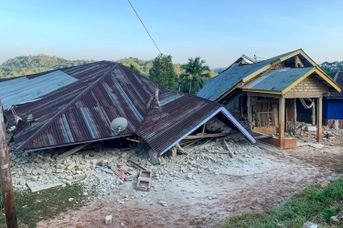
As of now, officials have not reported any casualties. The Andalusia 112 emergency service center revealed it had received over 50 calls, primarily reporting property damage such as cracks in walls and fallen facade elements. To ensure public safety, the Granada metro system has taken precautionary measures, limiting all trains to a speed of 30 km/h to reduce the risk of damage to the tracks. Local police have also issued safety guidelines, advising the public to remain calm and stay away from building facades and balconies to avoid falling debris.
Context of Frequent Earthquakes and Ongoing Monitoring
This 4.7 magnitude earthquake is another significant tremor to hit the area within just four days (96 hours), following the main 5.0 magnitude shock on August 15. According to statistics from the National Geographic Institute, this seismic sequence has generated 186 recorded earthquakes in one week since the main shock on the 15th. For the entire month of August, the total number of monitored earthquakes in the area has reached 207. Scientific institutions are currently monitoring the aftershock activity in the region around the clock. The public has been invited to report their experiences via an online questionnaire on the official IGN website to help experts more comprehensively assess the earthquake’s impact. Authorities are advising residents to remain vigilant, as the risk of aftershocks persists in the coming days.
