Successive Earthquakes Strongly Felt in Southern Province
At 10:35 AM this Tuesday, a magnitude 5.0 earthquake struck the province of Granada, Spain, with its epicenter in the town of Gójar. This is another powerful tremor for the region, following a quake of the same magnitude in the early hours of last Saturday. The earthquake was strongly felt throughout the city of Granada and its metropolitan area.
The main shock was followed by a series of aftershocks, including a magnitude 4.0 aftershock at 10:53 AM in Churriana de la Vega and a magnitude 4.2 aftershock at 11:34 AM in Alhendín. The earthquake’s impact was widespread, affecting not only 20 municipalities in the province of Granada but also being felt in several neighboring provinces of the Andalusia region, and even as far as Ciudad Real, Albacete, and Murcia.
Building Damage and Casualty Reports
Compared to the earthquake a few days ago, the material damage from this event was more severe. The Andalusia 112 Emergency service received over 500 calls on the morning of the earthquake. According to official reports, three people sustained minor injuries, with one requiring hospitalization.
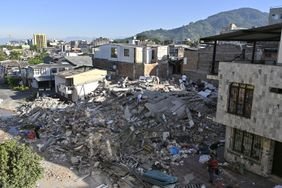
Building damage was the primary loss from this earthquake. Reports indicate numerous cracks in buildings, with falling cornices and debris, and some structural elements posing a risk of collapsing onto public roads. In the city of Granada, confirmed serious incidents include damage to a chimney in the exhibition center area, the collapse of an exterior wall of a sports pavilion, and a fallen elevator.
Official Emergency Response and Precautionary Evacuations
Following the earthquake, the Mayor of Granada, Marifrán Carazo, announced the activation of the Municipal Emergency Plan to mobilize more resources and enhance public information services. Authorities have closed seven streets in the city to manage hazards like falling debris. The mayor’s office stated that initial assessments indicate the damage has not affected the core structures of the buildings.
In the hard-hit municipality of Las Gabias, the city council preemptively evacuated about 100 families from five buildings as a safety precaution. These buildings had already developed cracks after last Saturday’s earthquake, and the new tremor widened them, posing a risk of structural damage. The evacuated residents were temporarily housed in the municipal theater, awaiting further safety assessments by technicians. Meanwhile, other municipalities have taken measures such as opening parks as temporary shelters.
Public Panic Grows as Mayor Urges Calm
Due to the continuous earthquakes and aftershocks over several days, many residents of Granada and its metropolitan area are feeling anxious and nervous. Some have chosen to temporarily leave the city, seeking refuge in second homes or with relatives in neighboring provinces like Málaga or Jaén.
In response to the public panic, Mayor Carazo has publicly called for calm, emphasizing that ‘if homes and buildings have not suffered structural damage, they are safe places.’ Emergency services have also advised the public to obtain information only from official sources, stay away from damaged facades and balconies, avoid using elevators, and keep roads clear for emergency teams.
