Spain’s Housing Market Enters Adjustment Phase as Price-to-Income Gap Widens Significantly
Recent market data indicates a cooling trend in Spain’s real estate sector. However, experts suggest that expecting a sharp drop in prices is unrealistic. The core issue is that rapid price appreciation over the last decade has severely outpaced income growth, making homeownership increasingly unaffordable.
According to data from Spain’s Property Registry, national housing prices have surged by a cumulative 68.4% over the past ten years. In contrast, data from the National Statistics Institute (INE) for the same period shows that the average national salary increased by only 34%. With price growth nearly double that of wage growth, this gap is pushing an increasing number of potential buyers out of the market.
Consecutive Decline in Sales Volume Signals a Clear Cool-Down
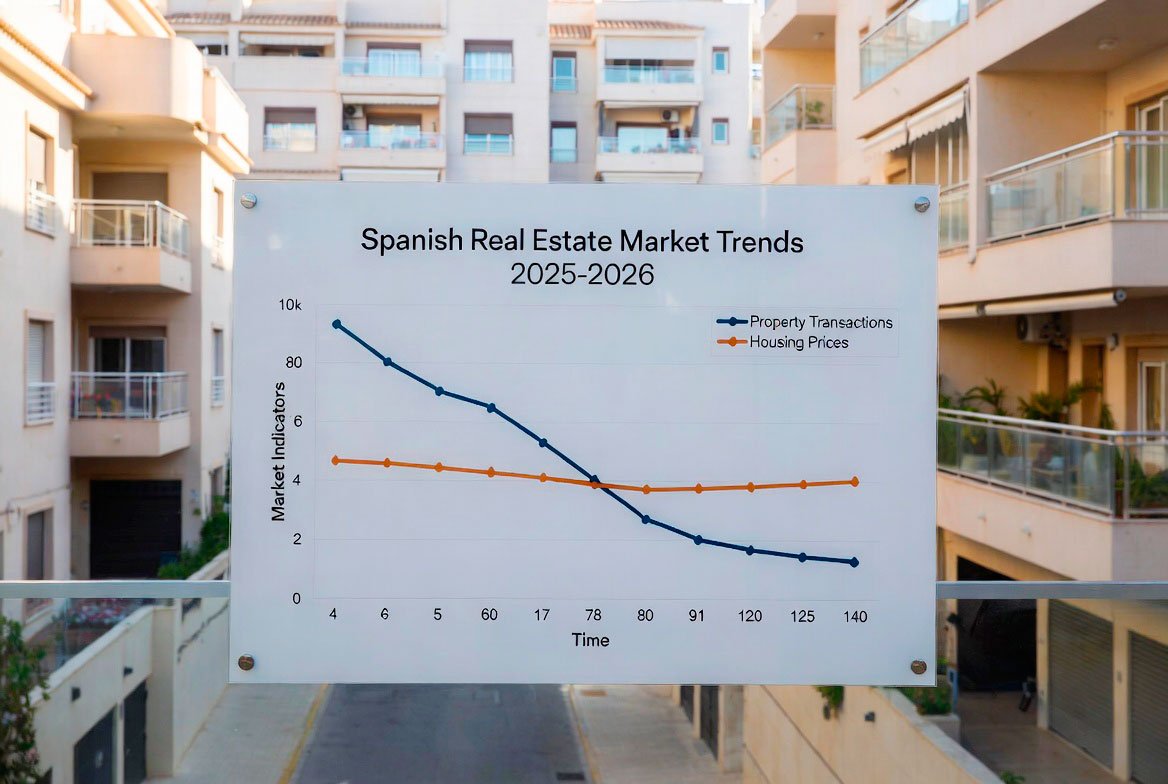
The market’s cooling is primarily reflected in slowing transaction activity. Official data shows property sales have fallen for two consecutive quarters. In the second quarter of 2026 (April to June), a total of 167,934 property sales were registered nationwide, a decrease of nearly 6% from the first quarter and a 2.3% drop compared to the same period last year.
José García-Montalvo, a professor of economics at Pompeu Fabra University, believes the downward trend could continue in the second half of the year, with the decline in transaction volume potentially exceeding 2%. He notes that despite fewer sales, strong market demand and high prices—which are squeezing effective demand—will keep prices elevated in the short term, although the rate of growth will slow significantly.
The Core Issue: A Housing Shortage, Not a Credit Bubble
The current market is fundamentally different from the 2008 real estate bubble era. An analysis by BBVA Research emphasizes that today’s primary problem is a “housing shortage” rather than a bubble inflated by excessive credit. Data shows that household mortgages currently account for 31% of total credit, with real estate development loans making up only 8%. Before the 2008 crisis, these figures were as high as 64% and 40%, respectively, indicating much lower risk exposure for the financial system today.
The supply-demand imbalance is particularly acute. Spain’s new housing supply is only around 90,000 to 100,000 units per year, while new demand from factors like new household formation and immigration reaches up to 250,000 units. This massive supply gap provides strong support for prices. Furthermore, new bottlenecks, such as saturated power grid infrastructure, are beginning to hinder the development of new housing projects.
Expert Forecast: Price Growth to Slow, No Immediate Correction Expected
Considering all factors, economists widely agree that a significant price correction in Spain is unlikely in the short term. Rising mortgage costs are another major constraint. As the “mortgage war” between banks comes to an end, Spain’s National Markets and Competition Commission (CNMC) has launched an investigation into six major banks for allegedly colluding to raise credit costs. The combination of high property prices and increasing financing costs is further eroding households’ purchasing power.
Camilo Ulloa, chief economist at BBVA Research, predicts that the pace of price increases will gradually slow but not reverse. The institution forecasts that Spain’s house prices could still rise by 12% for the full year 2026, before slowing to 5.7% in 2027. In the long term, as housing construction gradually increases and the burden of homeownership reaches its limit, the pace of price growth is expected to continue to moderate.
