According to the latest projections from Spain’s National Statistics Institute (INE) and the Adecco Foundation, Spain is set to face a severe demographic imbalance in the next two decades. It is estimated that from 2030 to 2050, the country’s working-age population will shrink by approximately 1.8 million people, while the cohort of individuals over 64 will surge by about 4.8 million. This dramatic demographic shift signals unprecedented challenges for the nation’s labor market and social security system.
The Dual Challenge of a Shrinking Workforce and a Tidal Wave of Aging
Statistical models show that in the two decades between 2030 and 2050, Spain’s core working-age population (16 to 64) will experience a significant contraction, projected to fall from 33.4 million to 31.6 million, a decrease of 5.4%. In stark contrast to this labor drain, the retired and elderly population over 64 will see explosive growth, expected to leap from the current 11.5 million to 16.3 million, a staggering 41.7% increase.
2033: A Historic Watershed as the Demographic Dividend Fades
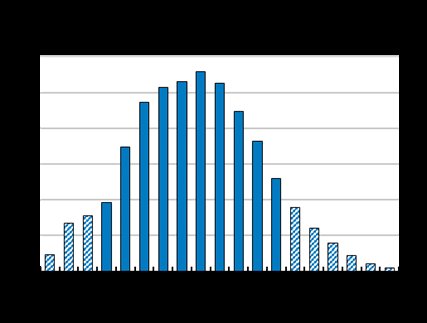
Research institutions identify 2033 as a critical turning point in Spain’s demographic evolution. Projections indicate that the working-age population will reach a historic peak of around 33.7 million in that year before entering an irreversible downward trend. As the elderly population continues to grow, Spain will have to support a vastly larger retired population with a shrinking labor base. Analysts believe that long-term low birth rates, a continuous outflow of young professional talent, and widespread corporate hiring difficulties are amplifying and exacerbating this structural imbalance.
Senior Workers Aged 50-64 Will Dominate the Future Workplace
Against the backdrop of a tightening labor force, ‘senior workers’ aged 50 to 64 are expected to become the backbone supporting the Spanish economy. Current statistics show that the number of workers in this age group is already 31.7% higher than that of the younger 20-34 age group. Even accounting for future generational replacement, the population aged 50-64 will still outnumber the younger cohort by 24.9% in 2050. The Adecco Foundation advises that, with young labor becoming increasingly scarce, companies must shift their traditional employment mindsets, retaining these experienced older employees by providing continuous professional training and creating re-employment opportunities.
A Multi-pronged Approach to Bridge the Million-Worker Gap
Addressing the projected 1.8 million labor shortfall, the Adecco Foundation has issued a clear warning: conventional measures such as encouraging childbirth, promoting immigration, or raising the legal retirement age are no longer sufficient to fill this massive gap. Spanish society needs to adopt a more comprehensive strategy. This includes tapping into the labor potential of groups facing employment barriers, such as women and people with disabilities, while also cracking down on age discrimination in the workplace. Additionally, establishing an orderly immigration system aligned with labor market needs and widely adopting artificial intelligence to boost the productivity of the existing workforce will be indispensable strategic choices to mitigate the impact of aging.
