The Spanish autonomous city of Ceuta has recently experienced a severe migrant crisis, with tens of thousands of Moroccan migrants breaching its borders. Facing mounting social pressure, the European Union has officially urged Spain to repatriate undocumented entrants to their countries of origin, while emphasizing the imperative need to properly protect unaccompanied minors. Currently, the Spanish government has not submitted a formal request for assistance to the EU.
Ceuta Border Migrant Crisis Continues to Escalate
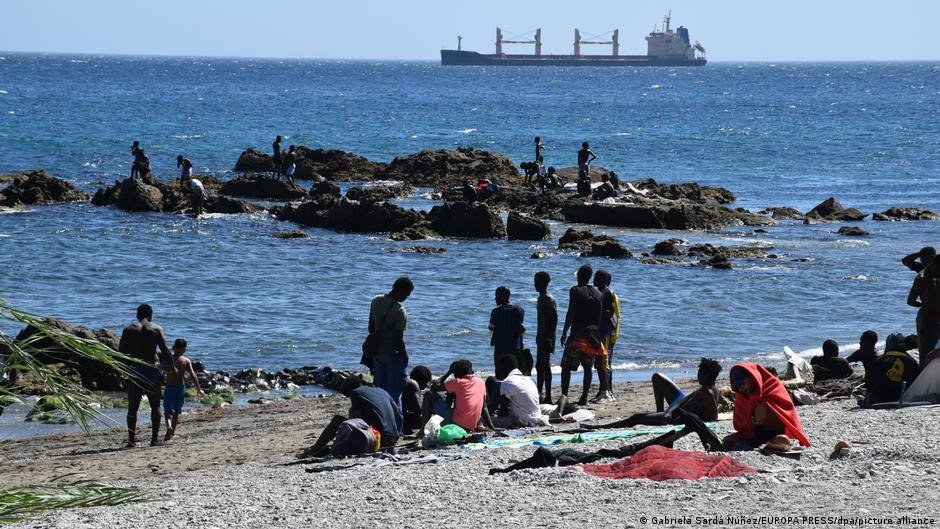
At the end of July this year, nearly 80,000 Moroccan migrants launched a massive breach of the border in the Spanish autonomous city of Ceuta. Nearly three weeks after the incident, social order in the city has not fully recovered, with thousands of unidentified undocumented entrants stranded on the streets. This sudden influx of migrants has brought enormous administrative pressure and security risks to the local area, forcing the regional government to seek higher-level intervention and support.
Local Officials Call for a State of Emergency
Faced with a grim situation, local leaders in Ceuta have frequently spoken out. The President of Ceuta and representative of the Popular Party, Vivas, recently made a public appeal demanding immediate emergency repatriation for the stranded migrants. He emphasized that Ceuta’s carrying capacity has reached its absolute limit and can no longer endure this normalized pressure. Meanwhile, the local branch of the Spanish Socialist Workers’ Party (PSOE) has also made strong demands, suggesting that the central government declare a state of emergency and state of alarm in Ceuta to restore local social order as quickly as possible. However, to date, the Spanish central government has not officially activated any such emergency procedures.
EU Intervenes and Urges Comprehensive Repatriation
In response to the tense situation in Ceuta, the EU has expressed deep concern. EU Home Affairs spokesperson Marcus Lammert clearly stated that the Spanish government must ensure the proper protection of unaccompanied minor migrants, while strongly recommending the repatriation of all adult migrants who entered illegally in late July to Morocco or their countries of origin. The EU expressed its willingness to assist Spain and Morocco in reaching relevant repatriation agreements, strictly respecting international law, to ensure the deportation process is effectively executed.
Spain’s Relocation of Minors and Current Aid Status
Regarding the placement of minors, the Spanish Ministry of Migration has rolled out an initial plan, announcing the transfer of approximately 500 minor migrants from Ceuta to the Iberian Peninsula in mainland Spain. In response to this measure, the EU stated that it only learned of the arrangement through news reports and expects Spanish authorities to provide a more detailed action plan. Furthermore, Lammert confirmed that the European Commission has not yet received any final request for assistance from the Spanish government. He reiterated that once Spain makes the request, the EU will provide comprehensive support, including financial funding, security guarantees, and professional assistance from Europol.
