Euribor Returns to the 3% Era
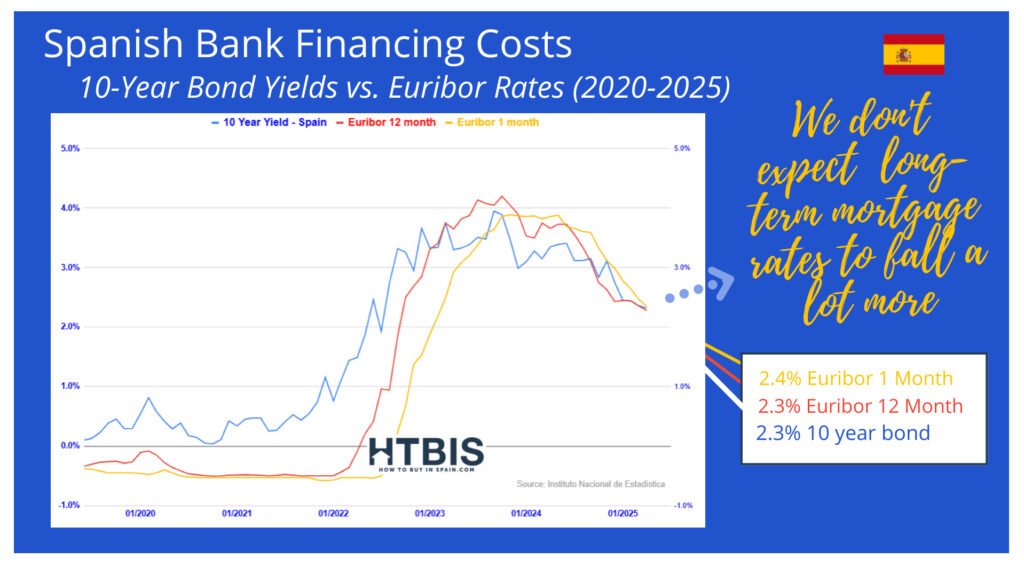
According to the latest data, on Friday, August 21, 2026, the daily rate of the Euro Interbank Offered Rate (Euribor) breached the psychological barrier of 3% for the first time since September 2024. As of that day, the monthly average for August had reached 2.939%. This shift marks the entry of credit costs into a new upward cycle, directly impacting financial products pegged to this rate.
Specific Impacts on Monthly Mortgage Payments
The climb in the Euribor rate will directly translate into higher borrowing costs for households and businesses. Take a typical 25-year, 300,000-euro variable-rate mortgage with an interest rate of Euribor + 1% as an example: if the August monthly average closes at 2.939%, the total annual repayment for the mortgage holder will increase by approximately 1,600 euros, which equals an extra 133 euros per month.
For households with smaller loan amounts, such as a similar mortgage of 150,000 euros, the annual repayment increase reaches roughly 794 euros, meaning an additional monthly expense of about 66 euros. This adjustment will place direct pressure on the budgets of millions of Spanish families.
Underlying Drivers: High Inflation and ECB Rate Hike Expectations
The primary driver behind this Euribor surge is the widespread market expectation that the European Central Bank (ECB) will implement further rate hikes to curb persistent inflation. Data shows that the Eurozone’s inflation rate rose to 2.9% in July, while Spain’s domestic inflation issue is even more severe, hitting 3.6% in the same month, far exceeding the ECB’s 2% target.
Although the Spanish economy achieved a 2.8% growth in 2025, persistent high inflation is eroding its economic competitiveness. This is especially true against the backdrop of sluggish economic growth among its main trading partners, such as France, Germany, and Italy, which intensifies the challenges faced by exports and the broader economy.
Future Outlook: Credit Tightening and Economic Uncertainty
The rise in Euribor not only affects existing variable-rate mortgages but also signals that the threshold and cost for future loan applications (including fixed-rate mortgages) will be higher. The ECB currently faces a dilemma: on the one hand, it needs to tighten monetary policy to control inflation, while on the other, it must avoid excessive intervention that could tip the economy into recession.
Given the ongoing conflicts in the Middle East, high energy prices, and sticky core inflation, the risk of credit costs continuing to rise in the coming months remains. This could further dampen household consumption and corporate investment willingness in Spain, adding more uncertainty to the economic outlook.
