A recent series of small to medium-sized earthquakes in the province of Granada and its surrounding areas has once again brought the geological activity of the southern Iberian Peninsula into the academic spotlight. Beyond these minor tremors, several seismology experts are more concerned about the region’s nearly 140-year ‘seismic gap’—a period without a destructive earthquake—and are issuing systematic warnings about the potential for a future major quake and its devastating impact.
Extended Calm Period Hides Major Quake Threat
Historical data shows that the last severely destructive earthquake in the Granada region occurred in 1884. At that time, an earthquake of approximately magnitude 6.5 struck the Arenas del Rey area, resulting in over 800 fatalities and causing damage or severe harm to about 17,400 buildings. Since that disaster, Spain has not experienced seismic activity of a comparable scale, creating a rare period of seismic calm.
Amadeo Benavent, a professor of earthquake engineering at the Polytechnic University of Madrid (UPM), points out that historically, the Iberian Peninsula has experienced an average of two destructive earthquakes per century. The current extended period of calm is highly unusual, suggesting that a significant amount of energy may be accumulating in the Earth’s crust. He warns that the region has the geological conditions for a major earthquake of around magnitude 7, although its timing is impossible to predict. Due to the logarithmic nature of earthquake energy release, a magnitude 7 quake would unleash approximately 900 times more energy than a recent magnitude 4.8 shallow earthquake.
Outdated Seismic Codes Raise Concerns
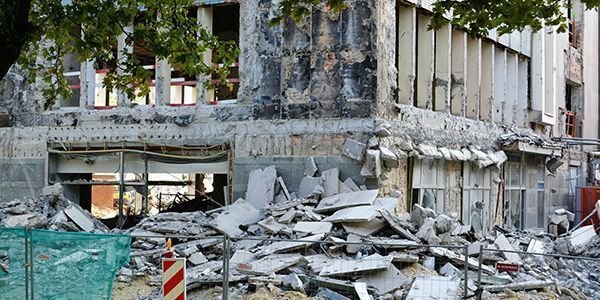
Facing this potential geological threat, Professor Benavent expresses concern about Spain’s current seismic preparedness. He states that the existing seismic building codes are severely outdated and obsolete, and many existing buildings in the region lack the structural integrity to withstand the shockwaves of a magnitude 7 earthquake. If a large-scale earthquake were to strike, the region’s disaster resilience would face a severe test, prompting academic calls for an urgent modernization of building regulations.
Major Quakes Cannot Be Predicted, Experts Urge Rational Preparation
In response to public questions about earthquake prediction, the scientific community has a clear consensus: no technology currently exists anywhere in the world that can precisely pinpoint the time and location of a major earthquake. A statistical model from the Canary Islands Volcanology Institute (Involcan) shows that in Spain’s last 1,000 years of records, there have been 27 strong earthquakes with an intensity of VII or higher. Based on this, the probability of a similar quake occurring within the next 50 years is 74%, and 92% within the next 100 years. However, this serves only as a long-term, macroscopic risk assessment and cannot be used for short-term disaster warnings.
Carlos González, an expert from Spain’s National Geographic Institute (IGN), further explains that while the probability of a mega-earthquake above magnitude 7 in Granada is relatively low, the risk always exists. He emphasizes that an earthquake’s actual destructive power depends not only on its magnitude but also on the depth of its hypocenter. The region has historically recorded a deep-focus earthquake of magnitude 7.8, but because the seismic waves attenuated significantly as they traveled to the surface, it did not cause catastrophic surface damage.
Furthermore, Manuel Regueiro, former president of the Official College of Geologists, explicitly refutes the ‘100-year recurrence cycle’ theory for earthquakes. He states that tectonic plate movement and energy accumulation are full of uncertainties, and major earthquakes do not operate on a fixed schedule. Experts unanimously advise that continuous minor tremors are a normal release of geological stress and the public should not panic. The real solution lies in improving emergency response systems and genuinely enhancing the seismic resilience of infrastructure.
