Frequent Tremors in Granada Prompt Expert Warning
Recently, the Granada region in southern Spain has drawn attention due to a series of consecutive earthquakes. Records show several noticeable tremors occurred in August alone, with two reaching a magnitude of approximately 4.8, causing unease among residents.
Against this backdrop, Amadeo Benavent, a professor of structural engineering and seismic motion expert at the Polytechnic University of Madrid (Universidad Politécnica de Madrid), has issued a public warning. He stated that Spain has not experienced a ‘truly powerful’ major earthquake for about 140 years, and based on the historical seismic patterns of the Iberian Peninsula, a strong quake is ‘almost inevitable’ over the long term.
Risk Assessment: Why Granada is a Focal Point
The expert specifically highlighted the potential risks in the Granada region. Located at the junction of the African and Eurasian tectonic plates, the area has a complex geological structure with active fault systems, making it one of Spain’s most seismically active zones. Professor Benavent analyzed that Granada has a history of destructive earthquakes and that a future quake approaching a magnitude of 7 on the Richter scale cannot be ruled out.
To help the public understand the potential destructive power, the expert explained the non-linear relationship of earthquake energy. For each whole number increase in magnitude, the energy released increases by about 30 times. By this calculation, a magnitude 7 earthquake would release approximately 900 times more energy than the recent 4.8 magnitude tremors, and its consequences would be catastrophic.
Scientific Consensus: Major Earthquakes Cannot Be Precisely Predicted
Despite the long-term risk warning, the scientific community also emphasizes that with current technology, seismologists worldwide cannot precisely predict the specific time, location, and magnitude of the next major earthquake. Therefore, the statement about ‘140 years without a major quake’ is a retrospective analysis based on historical data and does not imply that a large earthquake is on a ‘countdown’.
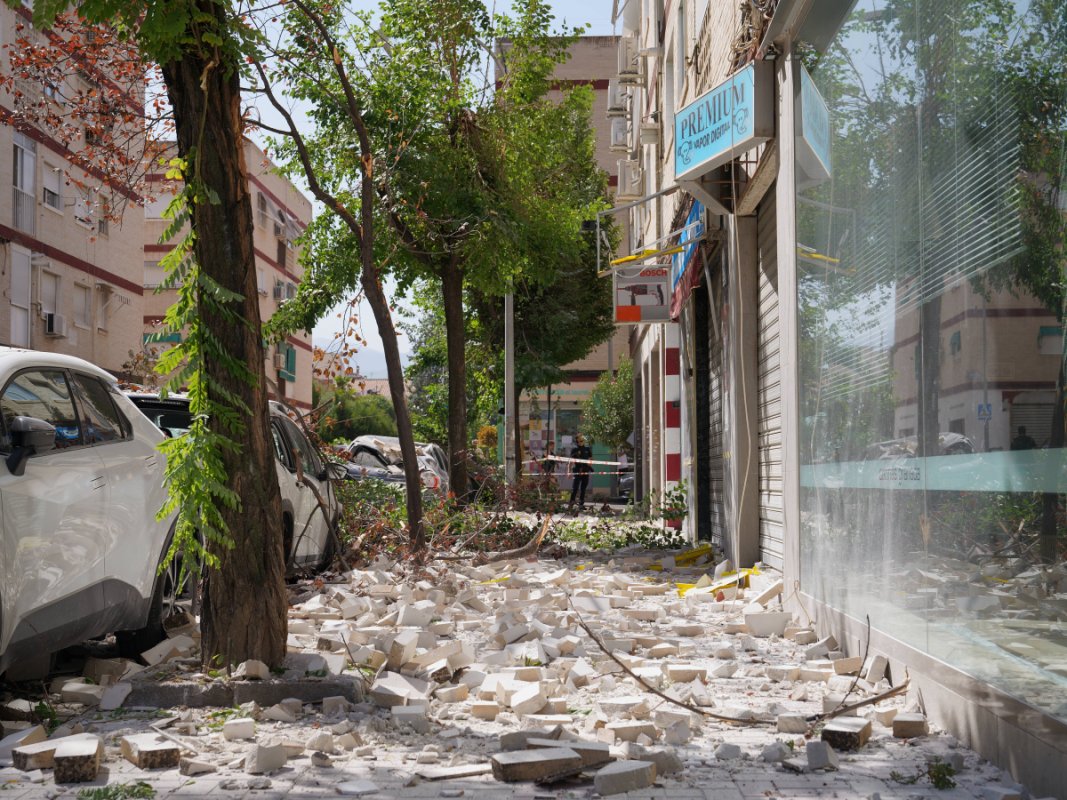
The public should view such warnings rationally and avoid unnecessary panic. The primary goal of experts is to alert the government and society to long-term geological risks, not to create doomsday fear.
Prevention is Key: Strengthening Seismic Resistance in Buildings
Faced with an unpredictable natural disaster, the most crucial response is proactive preparation. Experts agree that the most pressing issue is not guessing when the next earthquake will strike, but rather systematically improving the seismic resilience of society, particularly urban buildings.
For a country like Spain with a significant number of old buildings, conducting seismic performance assessments and retrofitting existing structures is the most effective way to reduce potential casualties and property damage from future earthquakes. Rather than passively waiting, it is better to take proactive measures and prepare for what’s to come.
