Introduction
While money isn’t the sole determinant of happiness, it plays a crucial role in ensuring quality of life and enhancing well-being. A recent report by financial services company Remitly, based on research from Purdue University, quantifies the income needed to live a comfortable life in various Spanish cities. This article analyzes the economic situation for residents in Spain for 2026, combining the report’s findings with actual cost of living and salary data in the country.
The Income Threshold for a Happy Life
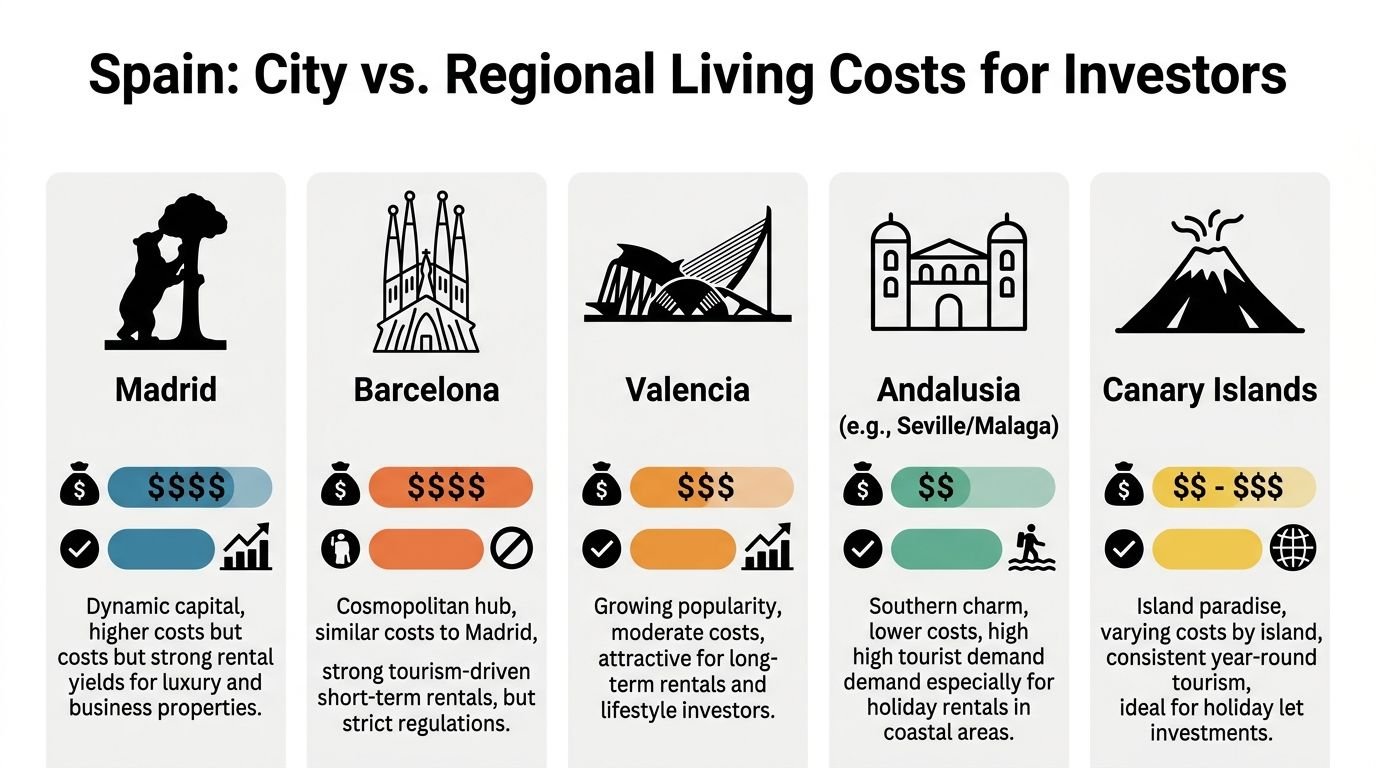
According to the Remitly report, the annual income required for a financially secure and comfortable life in Spain varies significantly due to differences in urban living costs. The capital, Madrid, being the most expensive city, also has the highest “happiness income” threshold. Here are the specifics:
- Madrid: Annual income required: €89,759
- Barcelona: Annual income required: €88,562
- Palma de Mallorca: Annual income required: €88,263
Other major cities also have high “happiness income” standards, such as Bilbao (€81,680), Oviedo (€80,184), Málaga (€76,893), and Valencia (€75,696). These figures reveal the economic foundation needed to maintain a high-quality life in these popular cities.
Ideal vs. Reality: Income Gaps and Values
The nearly €90,000 “happiness income” cited in the report stands in stark contrast to the actual income levels of Spanish residents. It is estimated that in Madrid, only 5% to 10% of residents can achieve an annual income of €89,759. This means that the vast majority of citizens earn far less, and while they can sustain a living, they are a long way from a state of being completely free from financial pressure.
However, Spanish society has its unique way of responding. A report published by the Spanish media outlet 20 Minutos, authored by researchers David Martínez de Lafuente and Ainhoa Osés, points out that Spaniards have a higher preference for work-life balance. The research shows that people are generally willing to accept a 21% pay cut for a less stressful job or a 13% pay cut to shorten their commute, indicating that leisure time and a relaxed lifestyle hold a more important place in their values than the pursuit of higher income.
Basic Cost of Living Budget in Spain for 2026
Beyond the concept of “happiness,” the cost of basic survival is a more practical indicator. According to estimates from the website dineo.es, the basic monthly expenses for different household structures in Spain by 2026 will be as follows:
- Single individuals: Approximately €1,200 to €1,800 per month, with rent being the main expense, especially in large cities.
- Couples without children: Joint monthly expenses are around €1,800 to €2,500, as living together can effectively share housing costs.
- Families with 1-2 children: Monthly expenses are projected to be between €2,500 and €3,500, and could be higher in large cities.
In smaller towns or rural areas with lower living costs, a person can live on €1,000 to €1,100 per month if they own their home or have low rent. However, in large cities, a monthly income below €1,200 would lead to a very tight financial situation.
Overview of Salary Levels in Spain for 2026
Discussing the cost of living is incomplete without understanding salary levels. By 2026, the average gross annual salary in Spain is expected to be between €27,000 and €28,000, which translates to a net monthly income of approximately €1,600 to €1,700.
Regarding minimum income, the statutory minimum wage for 2026 (paid in 14 installments) is projected to be around €1,200 per month (before tax). This leaves many minimum wage earners with a net monthly income of only about €1,000 to €1,050. In major cities, this amount can barely cover basic living costs and is a far cry from the “happiness income” defined in the report.
