Expense Season Exacerbates Household Financial Pressure
With the end of the summer holidays, Spaniards have ushered in the traditional “September expense season.” Particularly for families with school-age children, various additional education-related expenses have surged. Furthermore, the upcoming winter holidays and Christmas have brought forward consumption expectations. Against the macroeconomic backdrop of high prices, the daily cash flow of many households has been severely squeezed, forcing them to turn to external financing channels.
According to the latest consumer loan survey report released by the Spanish Association of Financial Users (Asufin), a staggering 35.90% of Spanish consumers plan to apply for loans from financial institutions within the next six-month window. This indicator has broken the historical record since the statistics began in 2020, showing a robust borrowing willingness among the public.
Maintaining Liquidity Becomes the Main Reason for Borrowing
Unlike past borrowing for lifestyle-improving consumption such as vacations or major purchases, the current structure of credit demand reflects an increase in underlying economic pressure. The survey data analyzed the specific motives of borrowers, finding that 20.10% of applicants seek immediate liquidity to cover daily expenses, while another 16.30% hope to restructure existing debts through new borrowing.
These two reasons directly linked to “financial distress” account for a total of 36.40%. Analysts point out that the continuous erosion of actual purchasing power by inflation is the core factor driving such a high proportion of families to rely on credit to maintain basic living operations.
Loan Interest Rates Significantly Higher Than the Eurozone Average
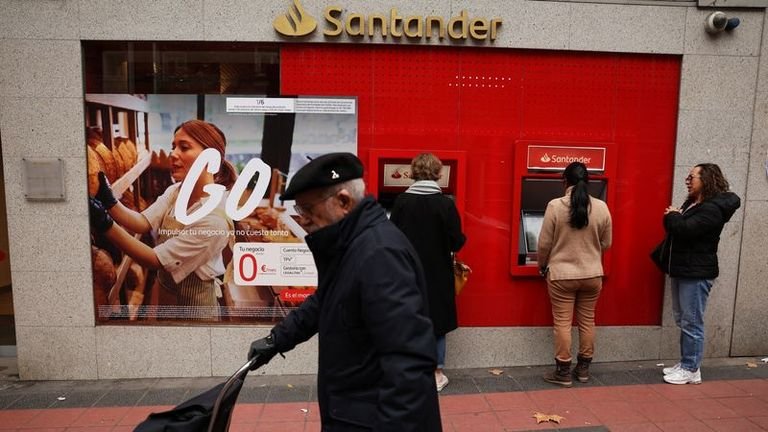
While public borrowing demand surges, domestic credit financing costs in Spain continue to climb. Statistics show that the interest rate for short-term loans with a repayment period of less than five years has risen from 9.88% in 2025 to 10.06% in 2026; meanwhile, the interest rate for medium and long-term loans exceeding five years has edged up from 9.86% to 10.05%.
Notably, the interest burden borne by Spanish consumers is at a relatively high level within Europe. Taking consumer loans with a term of one to five years as an example, the current average interest rate in the Eurozone is 6.93%, whereas the rate for similar products in Spain (10.06%) is 3.13 percentage points higher than the Eurozone benchmark. The Spanish Association of Financial Users (Asufin) emphasizes that despite facing steep borrowing costs, rigid funding gaps still force a large number of Spaniards to take on debt. As a series of year-end consumption milestones approach, the overall debt pressure on Spanish households is likely to intensify further.
