Data released by the Spanish National Statistics Institute (INE) on August 26, 2026, reveals that despite continuously rising property prices, Spain’s mortgage market continues to show robust activity. The figures indicate that after a brief slowdown, the market quickly regained momentum in June.
Mortgage Signings Rebound, Setting New Record for June
According to the report, a total of 45,907 new housing mortgages were signed across Spain in June 2026, an increase of 10.8% compared to the same period last year. This figure not only reverses the slight 0.1% year-on-year dip seen in May but also marks the highest number for the month of June since 2010.
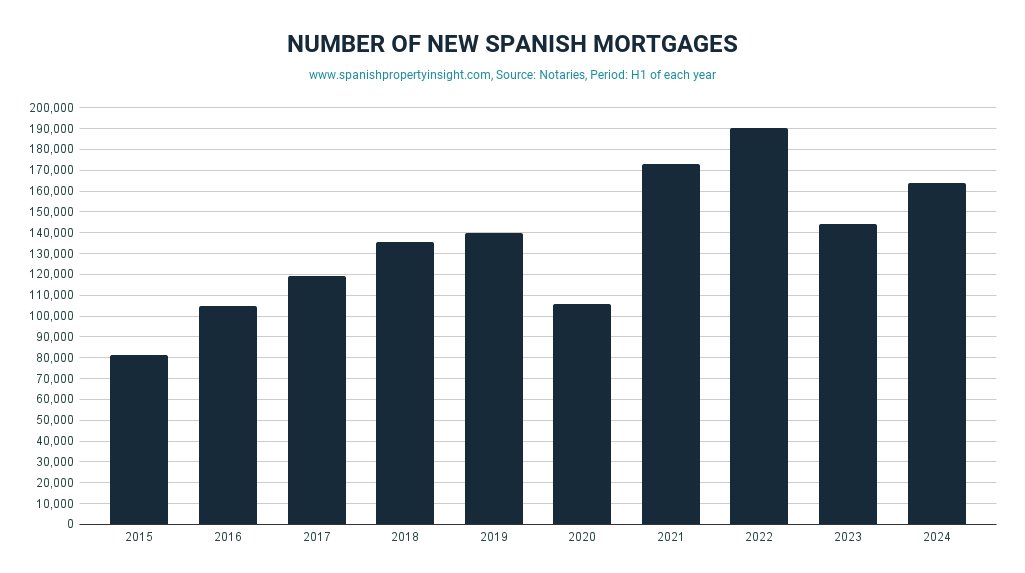
Looking at the first half of 2026 as a whole, the cumulative number of mortgage signings increased by 7% year-on-year, reflecting sustained market activity.
Average Loan Amount Climbs to €178,000
Along with the rise in the number of loans, the loan amounts also saw a significant increase. In June 2026, the average amount for a single housing mortgage reached €178,365, a 6% year-on-year increase.
Driven by this, the total value of housing mortgages granted by the banking system that month reached approximately €8.188 billion, up 17.5% year-on-year. Examining the entire first half of the year, the total loan value grew by 17.5%, while the average loan amount rose by 9.8%. This suggests that homebuyers are applying for larger loans to cope with higher property prices.
Fixed-Rate Mortgages Remain the Mainstream Choice
In terms of interest rates, despite changes in the financing environment, the average interest rate for new housing loans signed in June was 2.96%, slightly lower than May’s 2.98%. The average repayment term remained stable at 25 years.
Regarding loan types, homebuyers’ preference is clear: 61.7% of new loans were on a fixed-rate basis, while variable-rate loans accounted for 38.3%. The average initial interest rate for fixed-rate loans was 2.89%, lower than the 3.07% for variable-rate loans. This indicates that in the current economic climate, most people prefer the stability of fixed-rate products to mitigate future risks.
Volume of Loan Modifications Declines
The data also shows a decrease in the number of modifications to existing loan contracts. In June, 10,261 mortgages had their terms modified, a 19.1% decrease year-on-year.
Specifically, cases of renegotiation within the same bank (7,311) fell by 25.3% year-on-year, while cases of switching lenders (672) decreased by 15.4%. Among all modifications, 83.1% were related to changes in interest rates. Industry experts suggest this may reflect a reduced appeal for renegotiation or refinancing as the era of low-interest rates comes to an end.
