Disaster Overview: Heavy Casualties, Hundreds of Tourists Missing
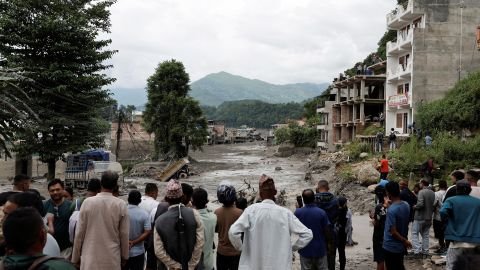
Around 9:15 AM local time on August 27, 2026, a devastating mudslide caused by a river surge swept through the border area between China and Nepal, causing severe damage to multiple towns, roads, bridges, and hydropower stations.
According to the latest data from both governments, the disaster has claimed at least 160 lives. Nepalese police have recovered 157 bodies in the affected areas, while China has reported 3 fatalities in Gyirong County, Tibet.
The number of missing persons is close to 900. China reports 265 people missing. The situation in Nepal is more complex, with the missing including 391 foreign tourists, 93 Nepalese tourists, 44 army personnel, 28 police officers, 13 armed police officers, and 60 hydropower project workers. In the nationality breakdown of missing foreign tourists released by the Nepalese government, over 100 are from India, with others from the United States, Australia, the United Kingdom, Canada, and other nations. The list also mentioned two Spanish citizens, but Spain’s Ministry of Foreign Affairs stated there are currently no official records of Spanish citizens affected or missing, and its diplomatic missions are closely monitoring the situation.
Investigating the Cause: Earthquake or Glacial Collapse
There are currently two main theories regarding the cause of the disaster.
The first is that it was triggered by an earthquake. Nepal’s Foreign Minister, Shishir Khanal, initially suggested the disaster was related to an earthquake. Data from the U.S. Geological Survey (USGS) shows that a 4.4 magnitude earthquake, with a depth of 10 kilometers, occurred about 77 kilometers northwest of Kodari, Nepal, hours before the disaster. This earthquake may have caused a massive landslide that blocked the river, forming a barrier lake that eventually burst and caused the flood.
The second theory is a glacial collapse. Some scientific experts, after analyzing satellite imagery of the region, have proposed that the disaster may have originated from a large block of ice breaking off a glacier at high altitude and falling into the Bhote Koshi River, creating an instantaneous surge of water that triggered the massive flood downstream.
Emergency Response: China and Nepal Launch Full-Scale Rescue Efforts
Following the disaster, the Nepalese government acted swiftly, deploying military and private helicopters for rescue operations to evacuate the injured and trapped to safe areas. According to Nepal’s National Disaster Risk Reduction and Management Authority (NDRRMA), rescue teams have successfully saved 196 people through ground and air efforts.
The Nepalese government has declared a three-month state of emergency in the affected areas and has pledged to provide free medical treatment for the injured, temporary shelter and food for the displaced, and emergency financial assistance to the families of the victims. Additionally, authorities have ordered the expedited repair of destroyed roads, restoration of electricity, communication, and drinking water supplies, and the mobilization of resources for the reconstruction of public facilities.
International Attention: Global Support Pours In
The disaster has garnered significant international attention, with many countries and international organizations offering assistance.
European Commission President Ursula von der Leyen announced that the EU has activated its Copernicus satellite system to help map the disaster zone and is ready to mobilize further aid. Indian Prime Minister Narendra Modi, UK Foreign Secretary Ed Miliband, and the U.S. State Department’s Bureau of South and Central Asian Affairs have also expressed their condolences and willingness to provide support and assistance.
At the non-governmental level, the International Federation of Red Cross and Red Crescent Societies (IFRC) has urgently allocated over €1 million to support the frontline relief efforts of the Nepal Red Cross Society.
