1. Grid Capacity Becomes New Bottleneck, Affecting Twelve Provinces
According to a new report from BBVA Research, housing development in Spain is facing a new structural bottleneck: lagging electricity infrastructure. The report indicates that over 80,000 planned new homes across the country are currently stalled, awaiting necessary grid expansion.
The report emphasizes that the core issue is not a nationwide electricity shortage, but a severe geographical mismatch between the distribution of power infrastructure and hotspots of new housing demand. The most affected areas span 12 provinces, including Madrid, Valencia, Alicante, Murcia, Castellón, Toledo, Granada, Cádiz, Almería, Zaragoza, Lleida, and Jaén. Additionally, densely populated areas like Barcelona, Seville, and Málaga face similar challenges. These provinces combined account for nearly half of Spain’s total population.
2. Madrid and Valencia: Power Dilemmas in Two Major Metropolitan Areas
The report uses two major urban clusters as examples to illustrate the severity of the problem.
In the Community of Madrid, while there is enough planned land to build 126,000 homes over the next five years—covering the local housing deficit of 116,000 units—the current stable grid capacity can only support the electricity needs of about 40,000 homes. This leaves more than two-thirds of the development projects blocked by power supply constraints.
In the province of Valencia, the situation is equally critical. Several key projects, including the Grao district urban renewal and the Central Park development, are restricted by insufficient grid capacity. Currently, only two administrative districts in the city of Valencia have remaining capacity to connect new residential units. The province planned for approximately 20,000 new homes between 2021 and 2025, but the existing stable grid capacity can only meet the needs of about 35,000 homes in total, leaving very limited room for new connections.
3. From Planning to Reality: Completed Homes Cannot Be Delivered
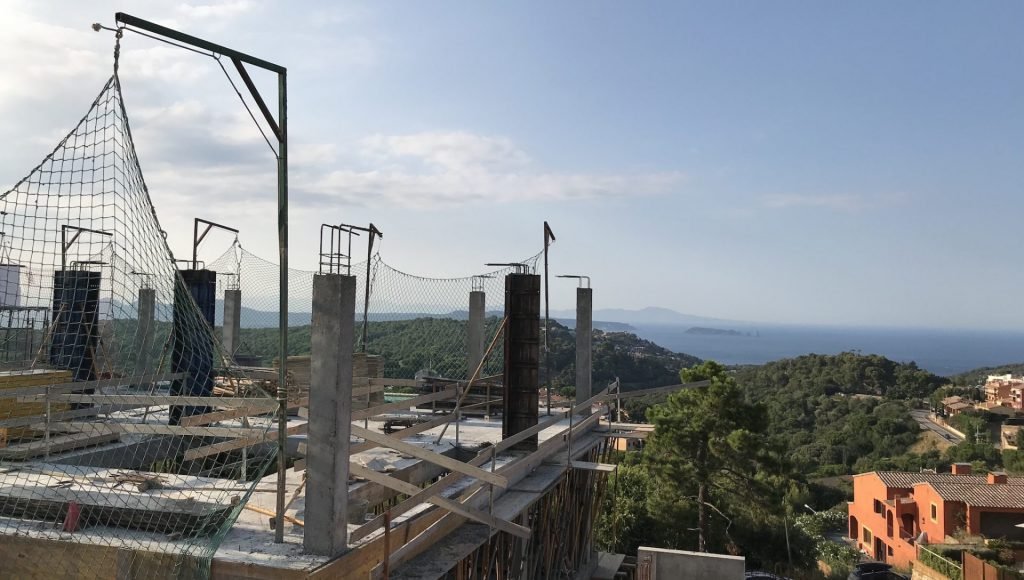
The power shortage is not just a planning issue on paper; it has already turned into a real-world delivery crisis. In Estepona, Málaga, a project with 72 completed homes cannot be legally handed over to their owners because it has yet to be connected to the municipal power grid.
A similar situation has occurred in the Aragon region, where the delivery of several completed housing developments has been delayed by 3 to 4 months while waiting for electricity access. These delays not only disrupt buyers’ plans to move in but also place additional financial burdens and cash flow pressure on developers.
4. A Combination of Factors and a Lengthy Expansion Cycle
The BBVA Research report analyzes that the current grid strain is caused by a combination of factors. On one hand, the rapid growth of renewable energy generation has outpaced the grid’s capacity to transport and absorb it. On the other hand, a simultaneous surge in electricity demand from housing, industry, transportation electrification, and data centers is putting immense pressure on the existing system.
What makes the problem more challenging is the time required for a solution. The report points out that completing a grid expansion project for a large residential area—from planning and environmental assessments to land acquisition and construction—typically takes 5 to 8 years. This means that even if the necessary procedures were initiated immediately, many housing projects would still have to wait several years to be “powered up.”
The report’s conclusion is clear: the real challenge lies not just in increasing investment, but in making that investment “earlier and more precise” to ensure that electricity infrastructure planning is synchronized with urban development and housing needs. Spain’s housing crisis, beyond issues of land, financing, and demand, now faces a new obstacle: a disconnected power line.
