Introduction
Spanish drivers are facing mounting pressure from rising fuel costs as summer draws to a close. Following a significant price hike in July, the government led by Sánchez officially ended the Value Added Tax (VAT) relief on fuel in August. This policy shift has pushed Spain’s fuel price inflation to one of the highest levels in the European Union, directly impacting millions of families traveling during the end-of-summer holiday return period.
High Fuel Inflation Ranks Spain in EU Top Three
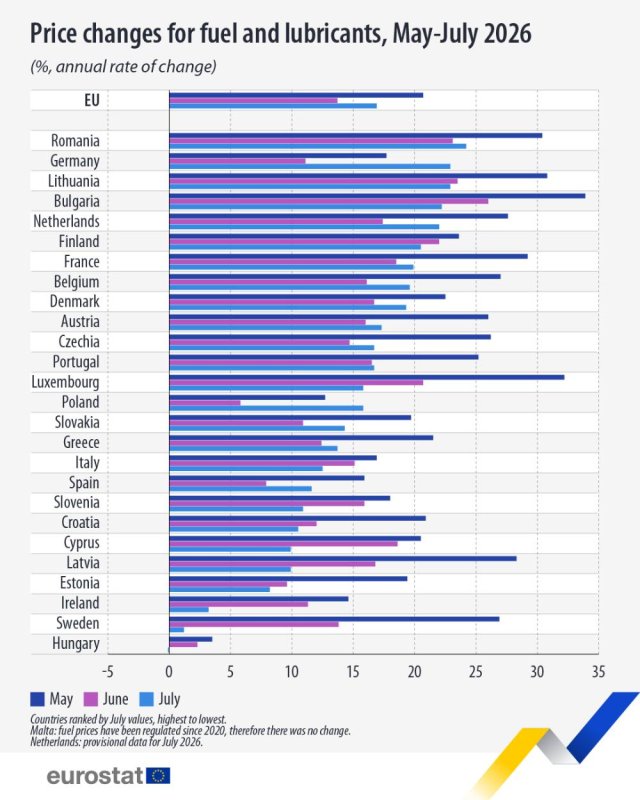
According to the latest data from Eurostat, Spain’s fuel inflation rate in July was particularly striking. Fuel prices in the country saw a year-on-year increase of 5.9%, the third-highest rise among all 27 EU member states, trailing only Poland and Germany.
In sharp contrast, the average fuel inflation rate for the Eurozone during the same period was 4.2%. This means Spain’s increase was 1.7 percentage points higher than the average for countries using the same currency. By eliminating the effect of exchange rate fluctuations, this gap more directly reflects the upward pressure on fuel prices from Spain’s domestic tax policy changes.
Timing of Policy Change Sparks Concern
The government’s decision to end the fuel tax relief took effect in August, a timing that has generated widespread public debate. August is the peak period for the traditional end-of-summer holiday return travel, when a vast number of families drive back to their homes after their vacations.
During this time, fuel demand is naturally high. The termination of the relief measure meant an immediate increase in refueling costs, directly impacting the holiday budgets of many families. For the average person reliant on car travel, this has undoubtedly added to their financial burden.
Government Reserves Room for Future Intervention
Despite ending the subsidy for now, the Spanish government has included a safeguard mechanism in the relevant decree. This clause stipulates that the fuel subsidy will be automatically reinstated if external factors, such as tensions in the Middle East, cause severe market volatility and a surge in inflation.
According to this “automatic trigger clause,” the subsidy would be restored to a level of 20 euro cents per litre. This indicates that while the government currently favors withdrawing from market intervention, it retains policy tools to address potential future energy price crises, providing a degree of stability and predictability for the market.
