A Historic Shift: China Rises to Become Spain’s Top Supplier
Trade data from the first half of 2026 reveals a fundamental change in Spain’s import landscape. According to Spain’s Ministry of Economy, from January to June, the total value of goods imported from China reached €26.6 billion, while imports from Germany stood at approximately €26.017 billion. With an advantage of around €583 million, China has officially surpassed Germany as Spain’s largest goods supplier for the first time.
Although Germany has long been Spain’s primary source of procurement and quickly reclaimed the top spot after a brief overtake by China in 2022, experts widely believe this new pattern is not a short-term phenomenon. Judith Arnal, a researcher at the Foundation for Applied Economics Studies (Fedea), pointed out that despite potential short-term factors, the trend has an “undoubtedly structural” character.
Widening Trade Deficit and Structural Trends
Along with the growth in imports, Spain’s trade deficit with China continues to expand. In the first half of 2026, the deficit reached €22.599 billion, an 11.8% year-on-year increase. Looking back at 2025, Spain’s trade deficit with China already amounted to a substantial €42.278 billion. Over a longer period, since 2019, Spain’s imports from China have surged by 72%, while its exports to China have only grown by 17.2%, showing that Chinese goods are entering the Spanish market far more rapidly than the reverse flow.
Behind this shift is the comprehensive improvement of China’s industrial competitiveness. Raymond Torres, Director of Economic Research at the Foundation of Spanish Savings Banks (Funcas), analyzes that Chinese industrial firms, especially in machinery, equipment, and technology, have significantly enhanced their competitiveness through massive investments. ‘Made in China’ is no longer just a label for low-cost products like textiles and footwear; it is increasingly penetrating the core of European industrial chains, including new energy vehicles and communication technologies.
From a Trade Issue to Supply Chain Security
The significance of this transformation goes beyond simple trade rankings. Santiago Carbó, a professor of economics at CUNEF University, argues that Germany once symbolized the deep integration of Europe’s industrial system and internal supply chains. Now, however, Europe’s supply chains are becoming increasingly dependent on non-EU countries, including China.
The mainstream view among Spanish economists is that the trade deficit itself is not the core issue; leveraging the cost advantages of ‘Made in China’ can even lower production costs for domestic companies. However, a new concern has arisen: over-reliance on the supply chain. When critical products are highly concentrated in a single source and are difficult to replace, an economic issue can evolve into an economic security problem.
A quantitative analysis by CaixaBank Research provides data supporting this concern. The study, using a four-filter screening process (supplier concentration, non-EU dependency, internal EU substitution capacity, and strategic importance), identified 46 products for which Spain is highly vulnerable to supply chain risks. The report specifically notes Spain’s heavy reliance on China in the chemical, pharmaceutical, and mineral sectors. For example, Spain imports 100% of its organic phosphonates, over 90% of its chloropicrin, and more than 80% of its fluorinated gases from China.
A New Phase: Seeking Win-Win Cooperation and Localization
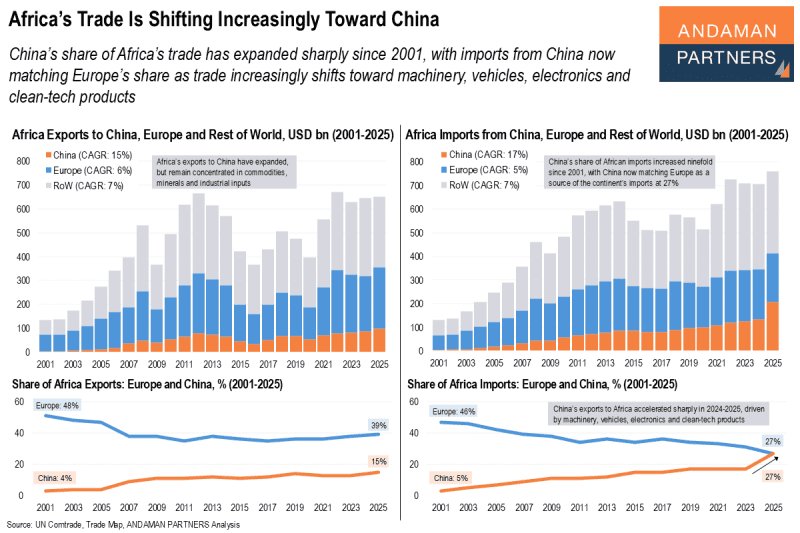
Faced with this irreversible trend, the focus of Spain’s economic strategy and public debate is shifting. The question has moved from “should we do business with China?” to “how can we leverage the advantages of ‘Made in China’ and the competitiveness of Chinese companies to foster our own economic development?”
Spain is now actively seeking new cooperation models, hoping to strengthen its industrial capacity and supply chain resilience by attracting Chinese companies to establish local production in Spain. Particularly in key industries like automotive, bringing in Chinese capital and technology for local investment is seen as a win-win strategy that enables access to the European market while reinforcing the domestic industrial base.
Today, ‘Made in China’ is integrating into Spain’s industrial, energy, technology, and supply chain systems with unprecedented depth. This not only marks a new phase in Sino-Spanish economic relations but also signals a more profound structural economic transformation unfolding across the European continent.
