Introduction
According to data from the Stockholm International Peace Research Institute (SIPRI), the military balance between Spain and Morocco shows significant disparities across different domains. Leveraging its strong economy and NATO membership, Spain maintains overwhelming superiority in naval, air, intelligence, and defense industry capabilities. However, Morocco is building a unique deterrent on land through targeted military modernization and its advantage in numbers.
1. Defense Spending and Overall Force Size Comparison
The gap in defense budgets is vast. Data shows Spain’s projected 2025 defense budget is $40.2 billion, more than six times Morocco’s $6.3 billion. However, when viewed as a percentage of GDP, Morocco’s defense spending is a high 3.54%, far exceeding Spain’s 2.13%, reflecting its strong commitment to military modernization. In terms of personnel, Morocco’s active army numbers 175,000, surpassing Spain’s approximately 120,000 troops.
2. Spain’s Overwhelming Air and Naval Superiority
Spain’s core military advantage lies in its control of the sea and air. Its air and naval forces are characterized by both systematic integration and technological advancement:
- Air Power: The Spanish Air Force’s backbone consists of Eurofighter Typhoons and EF-18 fighter-bombers, supported by A330 MRTT aerial refueling tankers and A400M strategic transport aircraft, ensuring extended operational range and long-distance projection. Critically, Spain is fully integrated into NATO’s joint warning and command system, benefiting immensely from intelligence sharing.
- Naval Power: The Spanish Navy’s strength is second to none in the region. The fleet’s core includes five F-100 series frigates equipped with the Aegis combat system. The strategic projection ship, Juan Carlos I, provides formidable amphibious assault and aviation support capabilities. Furthermore, with the S-81 “Isaac Peral” submarine now fully operational and the S-82 expected for delivery by the end of 2026, Spain’s underwater combat capabilities have taken a quantum leap.
In contrast, while Morocco operates French-made FREMM-class frigates and is in the process of acquiring 25 F-16 Block 72 fighters and upgrading its existing fleet, its navy completely lacks submarines and large amphibious projection platforms. Its air force also lacks the support fleet needed for sustained, high-intensity air combat, making it difficult to challenge Spain in a prolonged conflict over vast sea and air spaces.
3. Morocco’s Land Power and Asymmetric Edge
The land domain is where Morocco is most competitive. It has deployed significant troop concentrations, especially near the Spanish exclaves of Ceuta and Melilla. The core of its ground forces includes 222 American-made M1A1 Abrams main battle tanks. Additionally, Morocco is heavily investing in asymmetric warfare capabilities, having received 13 of its 24 ordered AH-64E Apache attack helicopters and equipped its forces with a large number of Turkish-made TB2 and other drone models. Statistics show that between 2020 and 2024, Morocco received 24 attack drones and has gained valuable combat experience in the Western Sahara.
Faced with this close-range ground threat, Spain, despite possessing technologically advanced Leopard 2E main battle tanks, NASAMS and Patriot air defense systems, and receiving its first batch of 40 “Dragón” 8×8 wheeled armored vehicles in January 2026, would still face a severe test of its rapid response capabilities against drone swarm tactics and high-density artillery fire.
4. Strategic Outlook: Short-Term Conflict vs. Long-Term War Scenarios
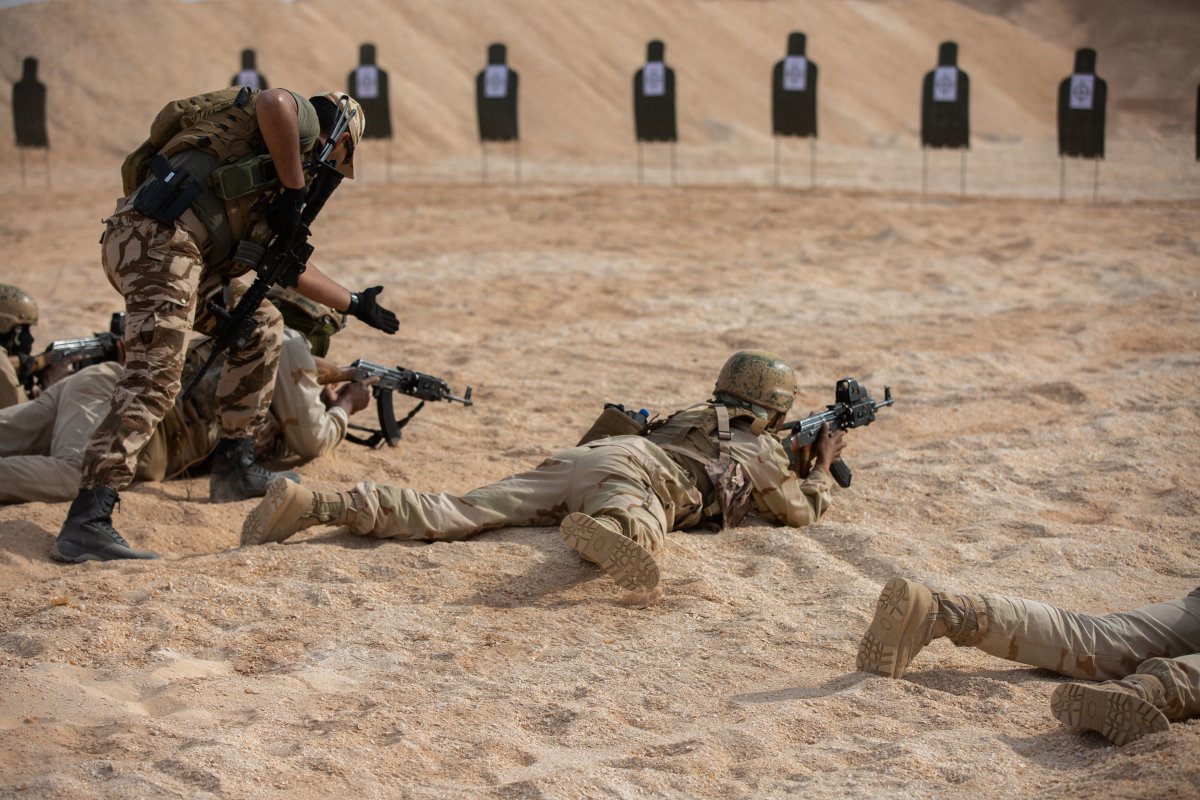
A comprehensive analysis of both nations’ military structures suggests two distinct war scenarios:
- Short-Term Regional Conflict: In a short, high-intensity regional conflict, Morocco could leverage its geographical proximity, large army, and the asymmetric advantage of its drone forces to inflict significant pressure and losses on Spain in the initial stages.
- Long-Term Conventional War: However, if the conflict escalates into a prolonged, full-scale conventional war, Spain’s strategic advantages would be insurmountable. Its robust domestic defense industry (capable of building its own frigates, submarines, and armored vehicles), advanced intelligence support via NATO, and mutual assistance clauses under the EU framework would ensure greater strategic endurance and ultimate victory.
