Key Interest Rate Indicator Continues to Rise
In August 2026, the Euro Interbank Offered Rate (Euríbor), the primary reference indicator for the mortgage market in Spain and the entire Eurozone, continued its upward trend. The final monthly average closed at 2.950%, an increase of 0.095 percentage points from July’s 2.855%. This continuous multi-month rise brings Euríbor just shy of the psychological 3% threshold.
Market Expectations vs. Central Bank Policy
Although the European Central Bank (ECB) is expected to raise rates by only 25 basis points in its September meeting, the market’s focus has shifted beyond a single hike to the long-term outlook for the interest rate path. Pablo Vega, an expert at the financial comparison platform Roams, points out a notable phenomenon: since June, while the ECB’s official rate hikes have been limited (a cumulative 25 basis points), Euríbor has climbed much faster, with intraday quotes even breaking the 3% barrier on several occasions.
“This indicates that the market is already pricing in rate hike expectations for the next 6 to 12 months,” Vega analyzed. “The trajectory of financing costs is driven more by market sentiment than by current official rates.” He added, “The 3% mark is a critical signal that will determine whether interest rates enter a period of consolidation or start a new upward trend.”
Mortgage Payments See Significant Increase
The rise in Euríbor directly translates into higher repayment pressure for mortgage holders. Taking a typical variable-rate mortgage of €150,000 over 25 years (Euribor + 1%) as an example, calculations from the Roams platform reveal significant changes in monthly payments:
- Annual Interest Rate Review: For loan contracts with an annual rate review, the monthly payment will increase by approximately €65, an annualized increase of over 9%. This means the borrower will need to pay an extra €780 per year.
- Semi-annual Interest Rate Review: For loans reviewed every six months, the monthly payment will rise from €728 to nearly €786, an increase of almost €58, or close to 8%. This translates to an additional payment of about €347 every six months.
Fixed-Rate Mortgages Become the Go-To Safe Haven
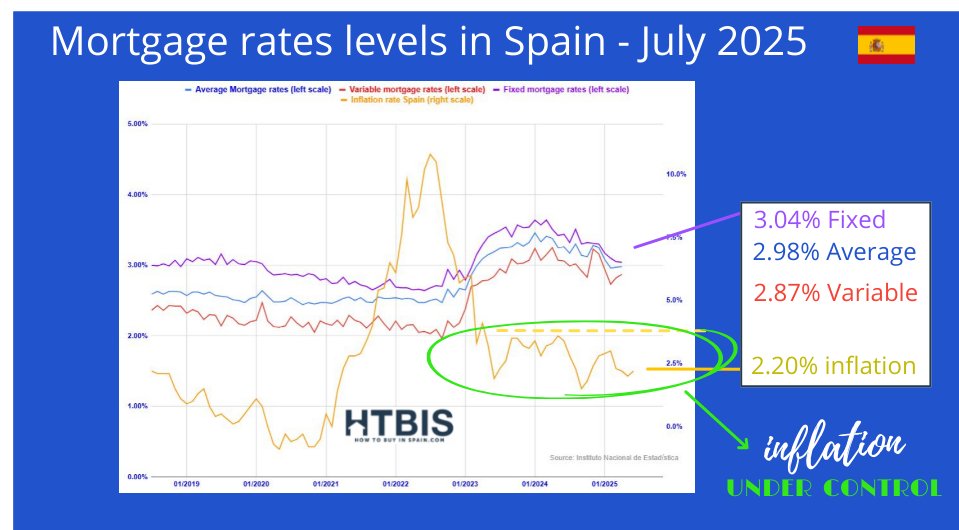
Faced with the uncertainty of rising interest rates, Spanish homebuyers are actively seeking to mitigate risk. According to the latest data from the Spanish National Institute of Statistics (INE), 61.7% of all new mortgage contracts signed in June 2026 were fixed-rate, while only 38.3% were variable-rate. This trend continues the market preference seen in recent months, with consumers opting to “lock in” a stable rate to guard against potential future increases in Euríbor.
Pablo Vega concluded: “When Euríbor is clearly on an upward trend, the appeal of fixed-rate mortgages naturally increases. If Euríbor continues to hover around 3% in the coming months while property prices remain firm, the issue of worsening housing affordability will be more severe than the data alone suggests. This means households will not only need to save for a larger down payment but also bear higher financing costs for their loans.”
