Spain’s August Employment Data Sees Seasonal Dip, but Unemployment Rate Remains at Historic Low
According to data released by Spain’s Social Security department on September 2, 2026, the country’s job market experienced seasonal fluctuations in August. The number of contributors to the Social Security system decreased by 162,840, while the number of registered unemployed individuals increased by 44,419. Official analysis indicates that this change is primarily driven by seasonal factors and does not alter the overall positive long-term trend of the labor market.
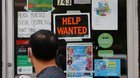
Seasonal Factors Drive Monthly Data Decline
The decline in August employment data is a regular occurrence in Spain. Deputy Prime Minister and Minister of Labor, Yolanda Díaz, explained that at the end of every summer, the conclusion of the peak tourist season and the approaching end of summer holidays lead to a reduction in temporary jobs, thus pushing up unemployment figures. The education sector is one of the most significantly affected areas, with over 78,000 teachers and related professionals temporarily ceasing their Social Security contributions due to contract expirations. Nevertheless, the decrease in Social Security contributors this August was the smallest for the same period since the COVID-19 pandemic began, suggesting an enhanced resilience in Spain’s labor market.
Long-Term Positive Trend Unchanged, Unemployment Rate Hits 18-Year Low
When viewed over a longer period, Spain’s job market performance remains robust. Compared to the same period last year, the country has added approximately 680,000 jobs. More notably, by the end of the second quarter of 2026, Spain’s unemployment rate had dropped to 9.87%, the lowest level since the first quarter of 2008, significantly better than the market forecast of 10.7% and the previous quarter’s 10.83%. The current total of 2.356 million unemployed individuals is also the lowest August figure since 2007. This indicates that a single month’s seasonal fluctuation has not reversed the trajectory of structural improvement in the job market.
The Dual Impact of the Immigrant Regularization Process
This year’s employment data has also been influenced by a key policy: the regularization process for foreign workers. By the end of August, 337,917 foreign workers had been incorporated into the Social Security system as official contributors through this procedure, largely offsetting the negative impact of seasonal factors. Currently, the total number of foreign contributors in Spain exceeds 3.5 million, accounting for 15.9% of the total workforce.
Elma Saiz, Minister of Inclusion, Social Security and Migration, described this as “historic job growth.” However, the process has also had a complex effect on the statistics. On one hand, it has increased the base of the employed population; on the other, some individuals who completed their regularization process immediately registered as job seekers, which technically pushed up the number of registered unemployed in August. Therefore, this month’s rise in unemployment is the combined result of seasonal patterns and statistical adjustments.
Overall Outlook: Structural Resilience Amid Short-Term Fluctuations
Overall, the fluctuations in Spain’s August employment data are the product of multiple overlapping factors, including seasonal patterns, specific industry cycles (like education), and adjustments from immigration policy, rather than a signal of deteriorating economic fundamentals. Both annual and quarterly data confirm that Spain’s labor market remains on a path of sustained recovery and improvement. Future market focus will shift to whether the back-to-school season in September and the autumn hiring rebound can continue the positive momentum of recent years, and how the ongoing immigrant regularization process will continue to affect employment statistics.
