Recently, a ‘heat dome’ phenomenon has caused a continuous influx of dry, warm air mixed with Saharan dust over the Iberian Peninsula. According to the latest alert from Spain’s National Meteorological Agency (AEMET), many parts of the country are set to experience a new round of intense and unusually high temperatures. Although this temperature rise has not yet officially met the criteria for a heatwave, it is already having a significant impact on public daily life and the natural environment.
Heat Dome Triggers Extreme Weather, Multiple Regions on Alert
Meteorological data shows that on Wednesday, a total of eight autonomous communities officially activated high-temperature warnings. Parts of Andalusia are under an orange alert, with daytime highs approaching 40°C. Meanwhile, yellow alerts have been issued for areas including Madrid, Catalonia, Castile-La Mancha, and Extremadura, where temperatures are expected to range between 34°C and 39°C.
In addition to the scorching heat, some areas also face the threat of complex convective weather. The meteorological agency has simultaneously issued yellow warnings for heavy rain and severe storms, with localized downpours potentially reaching 20 liters per square meter, accompanied by destructive winds and hail.
Temperatures to Peak on Thursday, Reaching 42°C in Some Locations
This wave of high temperatures will peak on Thursday, with warnings extending to nine autonomous communities. The Guadalquivir Valley in southern Andalusia will be the epicenter of the heat, with local maximum temperatures expected to soar to 42°C. Parts of Extremadura will also see temperatures reach 41°C. Additionally, several areas in Castile-La Mancha will be under an orange alert due to extreme temperatures of 40°C.
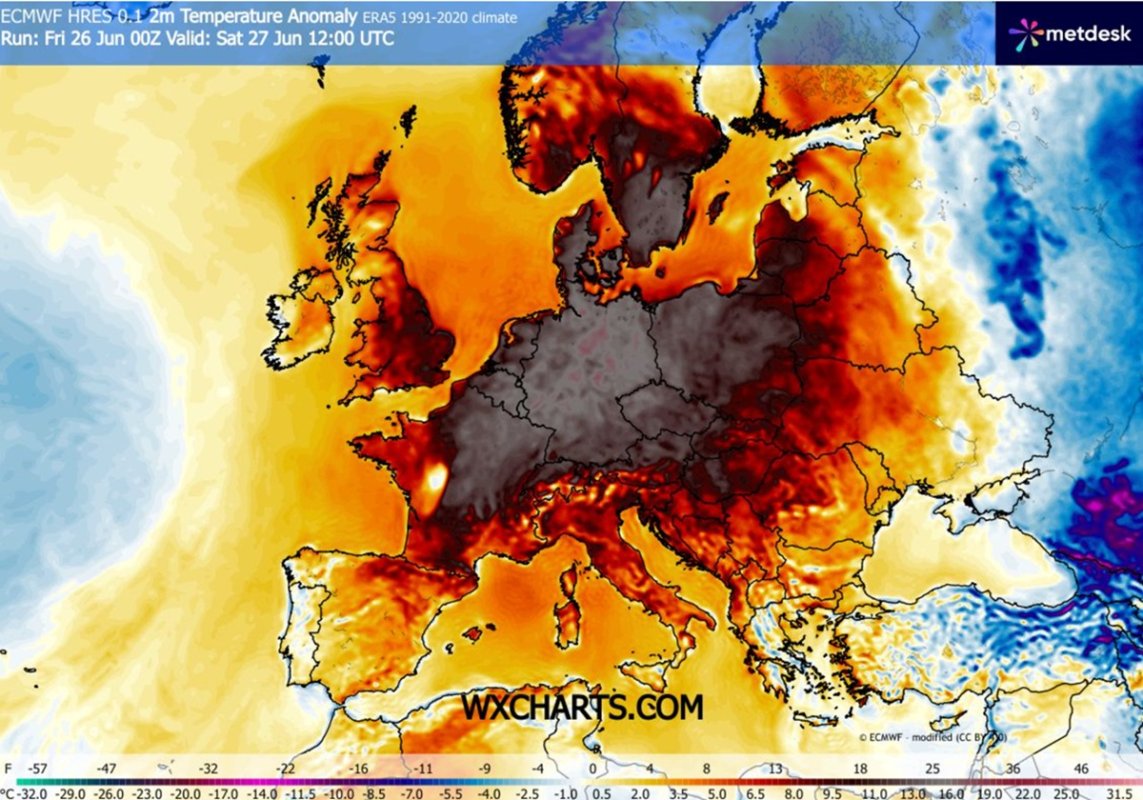
Overall, temperatures in the affected regions are significantly higher than the seasonal average, by 5°C to 10°C. It’s not just the daytime heat; nighttime temperatures in the south, along the Mediterranean coast, and in the Balearic Islands will also remain high, creating extremely uncomfortable, muggy conditions that will severely impact the quality of nighttime rest for the public.
High Wildfire Risk Alert, Temperatures to Drop Over the Weekend
In response to these severe weather conditions, the Spanish meteorological agency is issuing a special warning to the public about the risks of extreme daytime heat. Outdoor workers, the elderly, and individuals with underlying cardiovascular conditions are considered high-risk groups and must take strict precautions to prevent heatstroke. Furthermore, the combination of high temperatures and dry conditions greatly increases the risk of natural disasters. The fire risk index in relevant areas has already climbed to ‘very high’ or ‘extreme’, and some regions should also be alert for dry thunderstorms.
Starting from the weekend, temperatures in western Spain and some coastal areas will begin to slowly decrease due to the influence of Atlantic air currents. However, medium-to-long-range forecasts indicate that overall national temperatures will remain above the historical average for this time of year next week, meaning that heat and fire prevention efforts must not be relaxed.
