Overall Market Recovery: Sales Reach Four-Year High for the Period
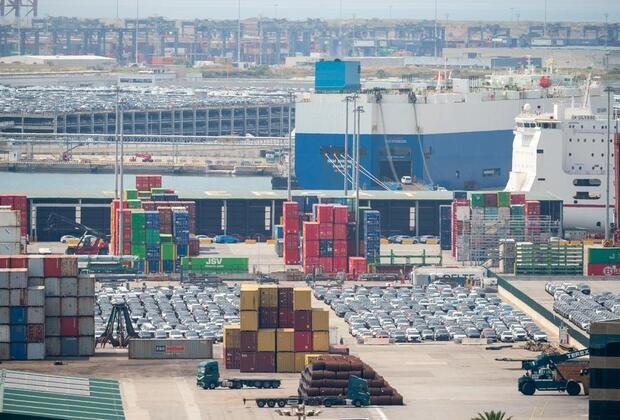
According to the latest data from the Spanish Association of Automobile Dealers (Ancove), the Spanish car market is undergoing a significant recovery. By the end of August 2026, cumulative new car registrations nationwide had reached 818,250 units, an increase of 6.4% compared to the same period last year. This is the first time since 2019 that car sales in the first eight months of the year have surpassed the 800,000 mark, signaling that the market is gradually overcoming the lingering effects of the pandemic, supply chain crises, and chip shortages.
For the month of August, despite it being a traditionally slow period for car sales in Spain, the market still recorded 68,598 registrations, an 11.9% year-on-year increase that further confirms the recovery trend.
Traditional Brands See Mixed Fortunes as Rankings Shuffle
In terms of brand sales rankings, traditional auto giants still dominate the market. By the end of August, Toyota held the top spot with 71,555 units sold, followed by Volkswagen with 52,519. SEAT (47,818), Renault (47,264), and Kia (43,893) ranked third to fifth, respectively.
However, this market growth has not benefited all brands. Some traditional automakers are facing significant sales pressure in 2026. Data shows that Ford’s cumulative registrations dropped sharply by 32% year-on-year, a decrease of about 6,700 units. Hyundai and Renault also saw their sales fall by 17% and 13.7%, respectively. Additionally, Nissan (-12.5%), Dacia (-6.4%), and Citroën (-4.4%) experienced varying degrees of decline. This indicates that competition is intensifying and consumer preferences are shifting.
The Rise of Chinese Brands Reshapes the Competitive Landscape
The most striking phenomenon in this market shift is the rapid rise of Chinese automotive brands. Several Chinese brands have achieved explosive growth in the Spanish market, becoming a key force driving changes in the market structure.
Among them, BYD’s cumulative registrations in the first eight months of 2026 reached an impressive 29,947 units, nearly double the same period last year. The performance of the revived local brand Ebro is equally astonishing, with sales hitting 17,990 units, triple the figure from the previous year. Additionally, Omoda achieved sales of 16,369 units, while Jaecoo’s cumulative sales reached 9,100 units, a 55.5% year-on-year increase. Leveraging their competitiveness in pricing, features, and new energy technology, Chinese automakers are quickly winning over Spanish consumers.
Industry Association Calls for Policy Stability, Eyes Subsidy Future
In response to the rapidly evolving market, the Spanish Association of Automobile Dealers (Ancove) has expressed cautious optimism about the industry’s outlook. The association welcomes the government’s ongoing subsidy program for electric vehicle purchases but also points out that policy uncertainty is causing concern in the market. Reportedly, the current subsidy budget of approximately €400 million is nearly depleted, and the industry is closely watching to see if this financial support will be extended.
Furthermore, Ancove criticized the current subsidy rules for restricting transactions of used electric vehicles, arguing that this fails to cover the demand in Spain’s vast second-hand car market. With the growing popularity of electric vehicles and the expanding market share of Chinese brands, the Spanish automotive market is undergoing a profound reshuffle. Although traditional brands still hold an advantage in sales volume, Chinese automakers are catching up with strong momentum and becoming an increasingly formidable force in the market.
