Introduction
The housing rental pressure in Valencia, Spain, is rippling out from the urban core to its surrounding suburban towns. August data from property portal Idealista shows that residents moving out of the city to escape high rents have pushed prices in neighboring towns to new highs. The rent increases in these areas now far exceed those in the city, creating a new ‘rental siege’ on the outskirts.
Valencia City Rents Rank Sixth Highest in Spain
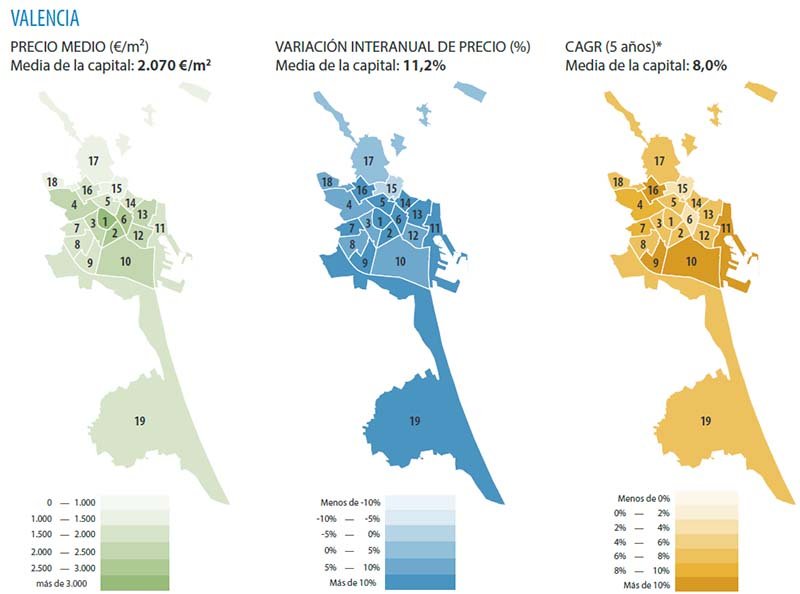
Data shows the average rent in the capital of Valencia has reached €16.3 per square meter, a 5.3% year-on-year increase. At this rate, a 100-square-meter apartment would cost €1,630 per month. Among Spain’s provincial capitals, Valencia ranks sixth for highest rent, trailing only Madrid (€23.3/sqm), Barcelona (€20.2/sqm), Palma (€19.3/sqm), San Sebastián (€18.1/sqm), and Málaga (€16.5/sqm). On a broader scale, the Valencia region’s overall annual rent increase of 6.4% also surpasses the national average (5.8%) and that of the Madrid region (5.9%).
Suburban Rent Hikes Dramatically Outpace the City Center
As the city’s population spills over, the surrounding suburban towns, once considered affordable havens, have seen explosive growth in rental prices, with increases commonly in the double digits. Paiporta leads with a staggering 24.3% annual increase, pushing its average rent to €12.8/sqm. Port de Sagunt follows closely with a 20.1% hike. Other major towns have also recorded significant growth:
- Xirivella: Up 17.6%
- Gandia: Up 16.7%
- Chiva: Up 15.9%
- Paterna: Up 12.6%
- Moncada: Up 10.4%
Additionally, rent increases in Mislata (9.8%), Torrent (9.3%), and Burjassot (9%) are also approaching the 10% mark.
Industrial Investment Intensifies Regional Rental Market Strain
Beyond the general trend of population displacement from the city center, specific industrial projects are adding extra pressure to local rental markets. For example, in the municipality of Sagunt, the construction of the Volkswagen Group’s battery gigafactory is attracting a large influx of industrial workers. This has led to a surge in rental demand and a shortage of available properties, further driving up rental prices in the area (an 8.3% annual increase). In the past, moving to more affordable suburban towns was a viable option for many families. However, this ‘safe haven’ is rapidly disappearing, pushing the cost of living for the average renter across the greater Valencia area to unprecedented highs.
