Street Portraits: An Art Project Connecting Past and Present
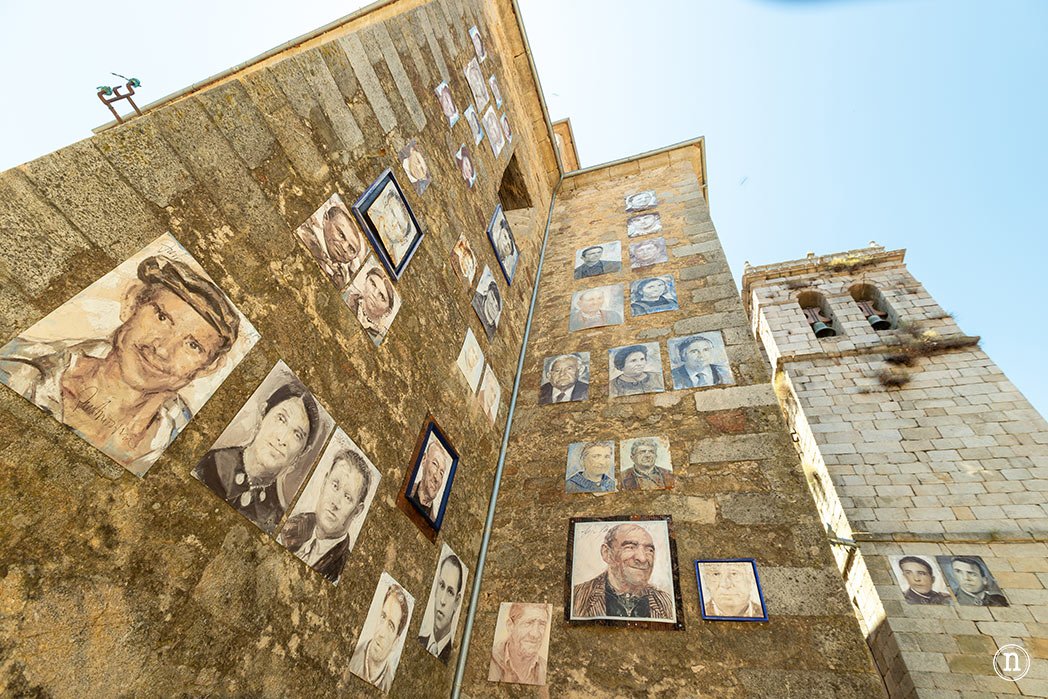
Mogarraz’s most captivating feature is a unique art initiative from 2012. An artist used a collection of old photo negatives from 1967, originally taken for the villagers’ national ID cards, to paint their portraits on the facades of their former homes. Now, approximately 800 portraits of varying sizes adorn the town’s streets. It’s as if generations of residents are silently watching visitors pass by, weaving the village’s history into a collective museum without walls.
Deep Historical Roots and Architectural Heritage
Mogarraz’s history dates back to the Middle Ages when it was a significant settlement for Jewish conversos (Jews who converted to Christianity). This historical background shaped its unique architectural style. The town still perfectly preserves its narrow cobblestone streets with a blend of Arab and Jewish influences, and traditional houses built primarily with timber and stone. At the village center stands the Church of Nuestra Señora de las Nieves, whose magnificent Baroque altarpiece is a key local religious and artistic landmark. Thanks to its well-preserved character and unique cultural landscape, Mogarraz was officially named one of ’Spain’s Most Beautiful Villages’ in 2014.
Natural Scenery and an Artistic Hiking Trail
Beyond the town itself, Mogarraz’s location adds to its natural charm. It is situated within the Las Batuecas Natural Park, surrounded by lush forests and valleys. A hiking route known as the ‘Camino del agua’ (Path of Water) starts near the village and stretches for about 9 kilometers. This trail meanders along the Milanos river valley, offering not only beautiful natural scenery but also featuring several modern art installations and viewpoints with stunning vistas, providing a unique blend of art and nature for outdoor enthusiasts.
Authentic Flavors: Unmissable Local Cuisine
Mogarraz’s cuisine is an integral part of its culture. Local specialties include high-quality Iberian ham, a flavorful mashed potato dish (patatas meneas), crispy roast suckling pig (tostón), and a savory meat pie (hornazo) traditionally eaten during festivals. However, the most distinctive local dish is the ‘limón serrano’ (mountain lemon salad). This unique creation creatively combines ingredients like oranges, hard-boiled eggs, and various Spanish cured meats, resulting in a complex and unique flavor profile. It’s a must-try for anyone looking to experience the local culinary culture.
