The Dual Pricing System of the Spanish Property Market
When transacting property in Spain, market participants encounter two core price metrics: the asking price (Precio de Oferta) published on real estate websites and the final sale price (Precio de Cierre) recorded at the public notary. These two prices reflect the seller’s market expectations and the market’s actual purchasing power, respectively. The difference between them is key to understanding the Spanish real estate market.
Asking Price: The Seller’s Market Expectation
The prices buyers see on major property portals like Idealista are the owner’s public asking price. This price typically includes the seller’s profit expectations, a subjective valuation of the property, and a built-in margin for negotiation, often leading to a somewhat inflated figure. For instance, in Madrid city, industry data from June 2026 showed the average asking price on Idealista was approximately €6,013 per square meter. This number represents the current market’s ‘asking’ level, not the final transaction value.
Notarized Sale Price: The Market’s True Record
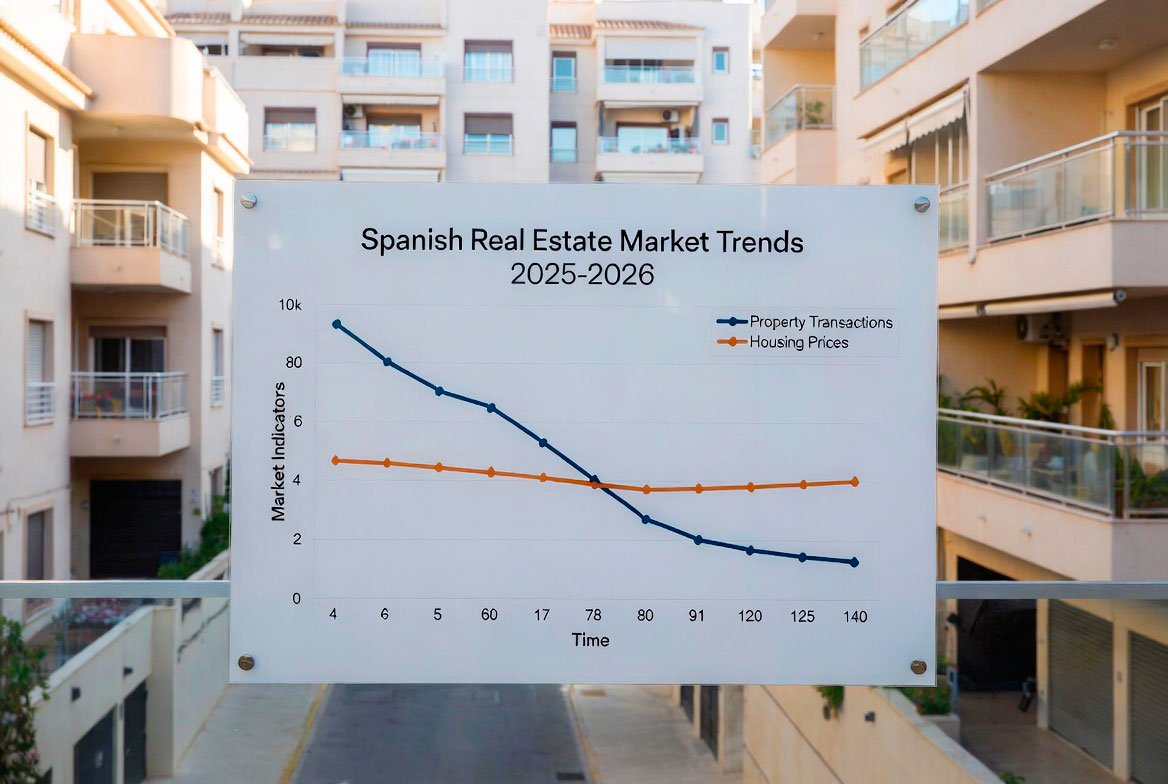
In contrast to the asking price is the notary data (Datos del Notariado). This is the actual price paid, officially registered at the notary’s office when the buyer and seller finalize the transaction by signing the deed (Escritura). This data strips away all negotiation inflation and serves as the ultimate proof of the market’s true value. According to notary statistics for the same period, the average actual sale price in Madrid over the last 12 months was approximately €5,100 per square meter. Compared to the asking price, this reveals a gap of nearly 15%.
Data Timeliness and Application Strategy
Besides the price difference itself, the two data types also differ fundamentally in their timeliness. Asking prices on property websites are updated in real-time, reflecting the latest market sentiment and seller activity. In contrast, notary data typically lags by 2 to 3 months before it’s compiled and published. This is due to the process involving signing a deposit agreement, bank loan approvals, and the final deed transfer. Therefore, notary data reflects market transactions that occurred a few months prior.
Implications for Market Participants
For buyers, a smart strategy involves:
- Use the notarized sale price as a baseline: Understand the true market value floor for your target area and property type.
- Refer to website asking prices: Assess the asking prices of competing listings on the market to gauge how much of a premium is on your desired property.
- Combine both for negotiation: A property priced significantly above the notarized average indicates substantial room for negotiation. Use this data to inform your negotiation strategy.
For sellers, the approach should be to:
- Consult notarized sale prices: Set a reasonable price range for your property that aligns with the market’s actual capacity to pay, avoiding long periods on the market due to overpricing.
- Analyze website asking prices: Understand your competitors’ pricing strategies to make your own property more competitive.
In summary, whether you are a buyer or a seller in the Spanish property market, you should not rely on a single price metric in isolation. By combining real-time asking prices with the delayed but factual notarized sale prices, you can more accurately gauge the market’s pulse and make decisions that best serve your interests.
