I’m new to the forum and seeing everyone discuss various aspects of life in Spain, I thought I’d share my experience at my alma mater—the Complutense University of Madrid, or UCM for short. I imagine many of you thinking about studying in Spain have probably heard of it, right? After all, it’s one of Spain’s oldest and largest public universities. I studied here for several years, encountered some challenges, but also gained a lot. I hope this can be a helpful reference for future students.
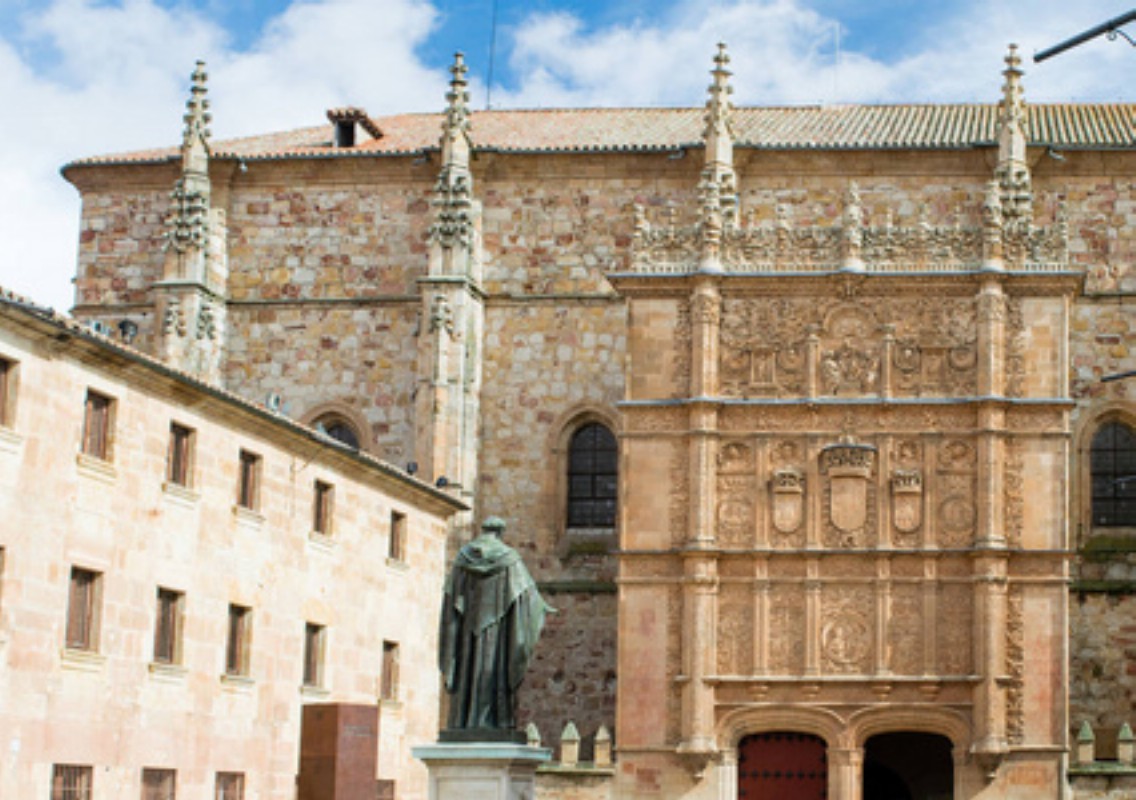
The UCM campus is massive, with two main locations: Moncloa and Somosaguas. Most faculties are in Moncloa, which is like a huge university city, connected to the campuses of UPM (Polytechnic University of Madrid) and UNED, creating a very strong academic atmosphere. Walking around campus, you’ll see historic buildings and green spaces everywhere. On a sunny day, relaxing and reading on the lawn is just an incredibly pleasant feeling. The picture below is our Faculty of Medicine. Pretty impressive, isn’t it?
UCM’s Academic Strengths and Top Programs
When it comes to academics, UCM is definitely top-tier in Spain. Many of its programs are highly ranked both nationally and globally. The humanities, social sciences, and health sciences are its traditional strengths. For example, Philology, History, Pharmacy, Journalism, and Fine Arts are all flagship programs. You might want to focus on these when choosing your major. I’ve put together a list of some popular faculties and their campus locations for your reference:
| Faculty | Campus |
|---|
| Faculty of Philology | Moncloa |
| Faculty of Information Sciences | Moncloa |
| Faculty of Economics and Business Sciences | Somosaguas |
| Faculty of Psychology | Somosaguas |
The International Student Application Isn’t So Complicated
For us Chinese students, the application process might seem different from what you might read about other schools like IE University in Spain, but it boils down to two main steps: having your high school diploma officially recognized (homologación) and taking the Spanish university entrance exams. For the recognition, you need to prepare your documents in advance, which can be done either in China or after arriving in Spain. The entrance exam part now mainly consists of taking the PCE (Pruebas de Competencias Específicas) exams organized by UNEDasiss, where you’ll be tested on a few subjects related to your desired major. Language proficiency is crucial. A B2 level is the basic requirement, but to understand the lectures and graduate successfully, your language skills must be very solid. The whole process can be a bit tedious—you know how Spanish bureaucracy can be—but as long as you follow the requirements step-by-step, it’s manageable.
Studying at UCM is a truly valuable experience. You get to interact with top professors and classmates from all over the world, and the library resources are incredibly rich. Of course, as a huge public university, you might sometimes face challenges like difficulty registering for certain courses or slow administrative procedures. But the pros far outweigh the cons; the platform and perspective it offers are priceless. I hope my sharing has been helpful! Are there any fellow UCM alumni or prospective students here? Feel free to leave a comment below to chat!
